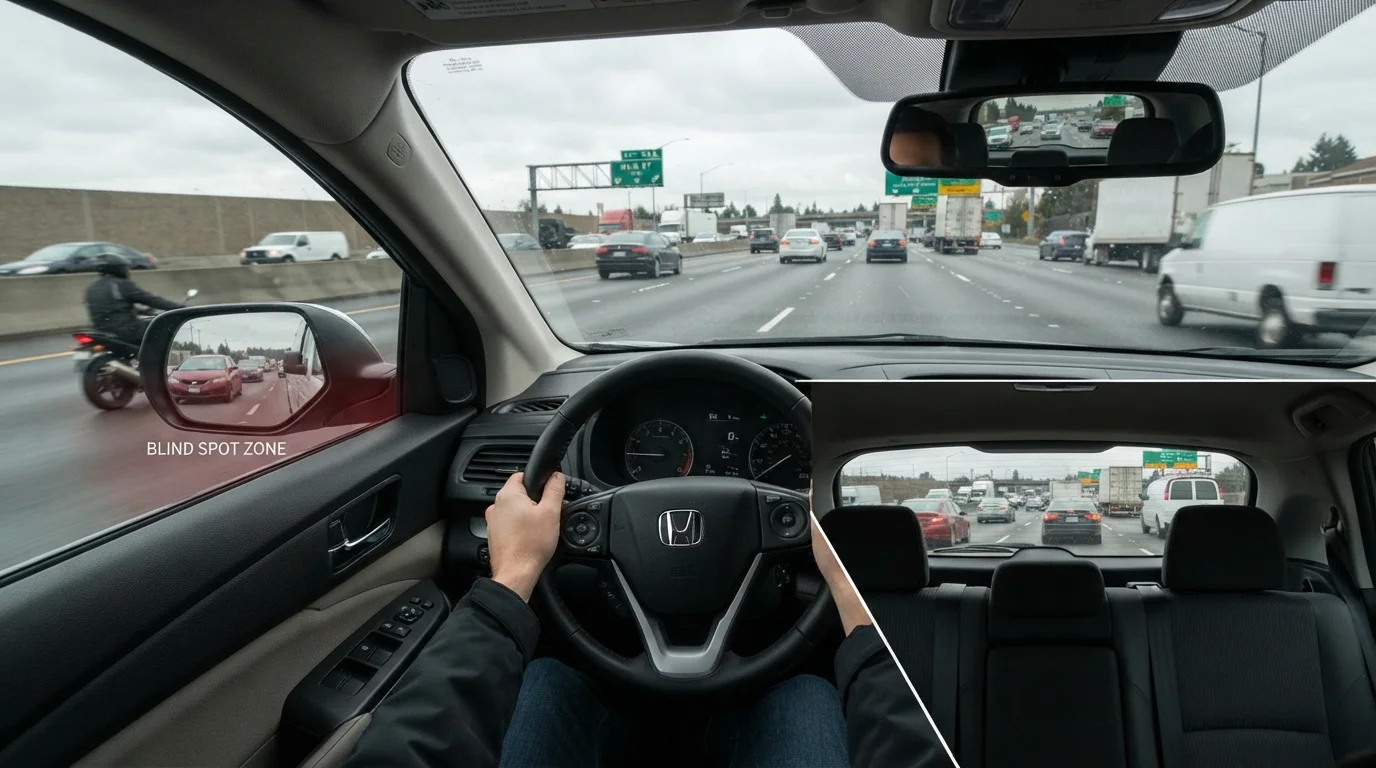
Defensive Driving: What It Actually Means and Why It Matters
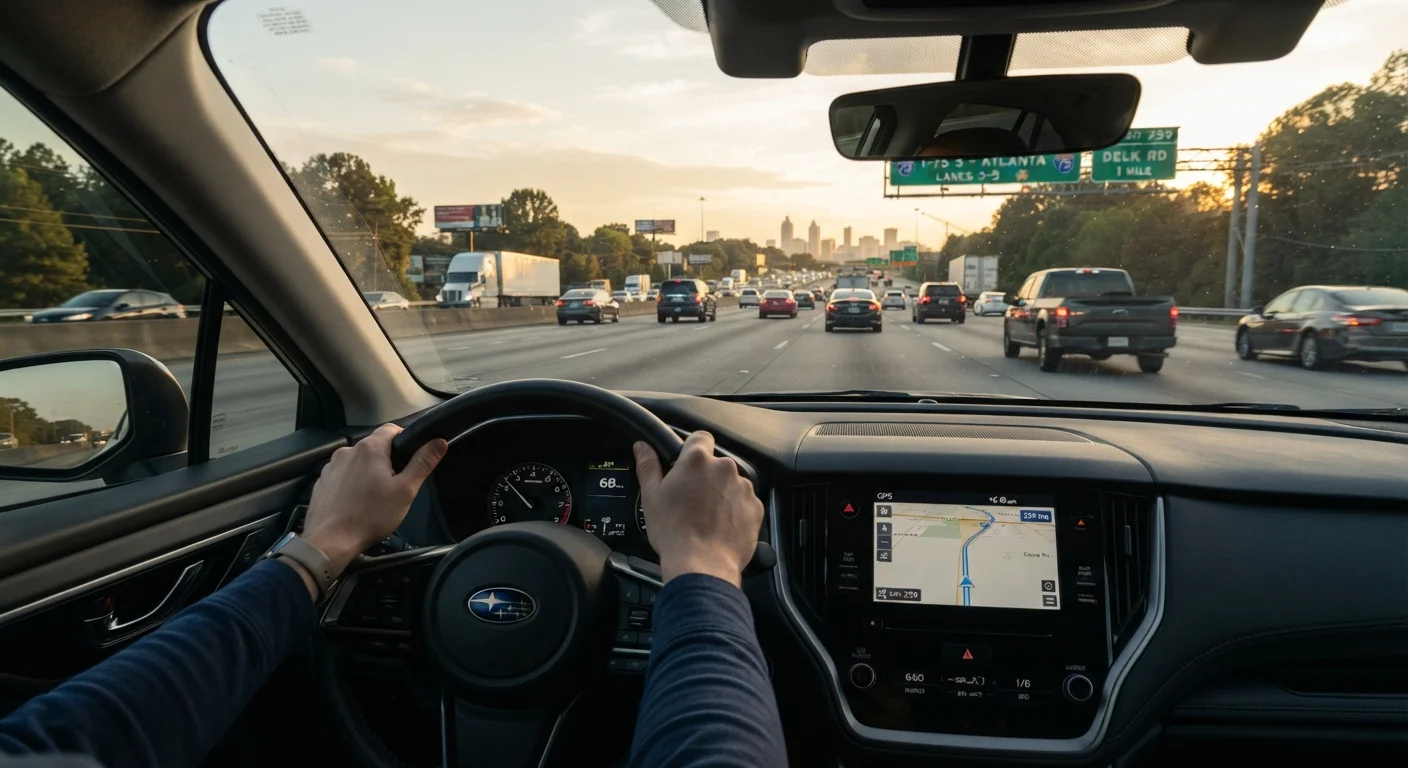
Photo credit: InGlimpse.com | Where Curiosity Finds Answers
In this article
Defensive driving goes beyond following rules. Learn the core principles that help you anticipate hazards and stay safe on American roads.
Key Takeaways
- Defensive driving means anticipating hazards, not just reacting to them after the fact.
- It requires actively scanning your environment, not just watching the car directly ahead.
- Maintaining adequate following distance is one of the most effective defensive habits.
- Fatigue, distraction, and overconfidence are among the biggest threats to defensive driving.
- The approach applies equally on highways, city streets, and in adverse weather.
More Than Following the Rules
Most drivers think of safe driving as obeying posted speed limits, stopping at red lights, and using turn signals. These habits are necessary — but they describe the legal floor, not the safety ceiling. Defensive driving occupies a higher standard: it's about actively managing risk, not just avoiding obvious violations.
The core idea is simple. You cannot control what other drivers do. A car running a stop sign, a pedestrian stepping off a curb unexpectedly, a tire blowing out in an adjacent lane — none of these are in your hands. What is in your hands is how prepared you are to respond when something goes wrong. Defensive driving is the discipline of staying ready.
For a broader view of how this mindset applies across road types and weather conditions, see the comprehensive road safety guide.
94%
Crashes attributed to human error
According to the National Highway Traffic Safety Administration (NHTSA), approximately 94% of serious crashes involve human choice or error as a contributing factor.
~38,000
Annual U.S. traffic fatalities
NHTSA data consistently shows roughly 35,000–40,000 people die in motor vehicle crashes in the United States each year, underscoring why proactive driving habits matter.
3 sec
Minimum recommended following distance
Traffic safety organizations recommend a minimum three-second following gap under normal conditions, with greater distance required in poor weather or at highway speeds.
The Core Principles in Practice
Defensive driving rests on a handful of habits that work together rather than in isolation.
- Scan ahead, not just immediately in front. Experienced defensive drivers look 10–15 seconds down the road — roughly a block in city traffic, further at highway speeds. This gives more time to identify slowing traffic, debris, or merging vehicles before they become an immediate problem.
- Maintain adequate following distance. Tailgating is one of the most common contributors to rear-end collisions. The widely cited three-second rule gives you a baseline gap; in wet, icy, or heavy-traffic conditions, that gap should increase. See our guide on following distance for the science behind this habit.
- Manage your speed to conditions, not just the posted limit. A posted limit is set for ideal conditions. Rain, fog, construction zones, and heavy traffic all call for lower speeds regardless of what the sign says. Understanding how speed limits work helps you apply them correctly.
- Eliminate distractions actively. Hands-free phone use still diverts cognitive attention. Defensive driving means treating distraction as a genuine hazard, not an acceptable trade-off.
Build the Habit One Trip at a Time
You don't need a formal course to start driving more defensively today. Pick one habit — such as adding an extra second to your following distance — and focus on it consistently for a week. Once it feels automatic, add another. Small changes compounded over time produce genuinely safer drivers.
The Mental Side of Defensive Driving
Technique matters, but mindset drives the technique. A defensive driver approaches every trip with an assumption: something unexpected may happen, and I need to be ready for it. That's not pessimism — it's risk awareness.
Emotional state plays a real role here. Aggressive driving — tailgating out of frustration, speeding through yellow lights, reacting to perceived slights — is the opposite of defensive driving. Research on driver behavior consistently links high emotional arousal with riskier decision-making behind the wheel.
Fatigue is equally corrosive. Drowsy driving impairs reaction time in ways that closely mirror alcohol intoxication, yet many drivers underestimate how tired they actually are. A defensive driver recognizes when they are not fit to drive and acts accordingly.
It's also worth noting that some widely held beliefs about safe driving don't hold up. Several common driving safety myths — from the safety of hands-free calls to correct hand positioning — are outdated or simply wrong.
“The goal of defensive driving is not to assume the worst about other drivers — it's to remain capable of handling whatever they do. Anticipation is the skill; patience is what makes it possible.”
— Autos Editorial Team, Automotive safety researchers and journalists
Who Benefits Most — and Why Everyone Should Care
Defensive driving is often emphasized for new drivers, and for good reason. Teen drivers face a statistically higher crash risk, largely because experience builds the pattern recognition that makes hazard anticipation faster and more automatic.
But the same principles matter for every driver. Overconfidence is a documented risk factor among experienced motorists — familiarity with a route can dull attention to what actually changes on it each day. A well-maintained vehicle also supports defensive driving; brakes, tires, and lights all affect your ability to respond to hazards. Keeping up with basic car maintenance is part of the safety picture, not a separate concern.
Ultimately, defensive driving is less a set of rules than a habit of mind — one that treats every trip as an environment requiring active management. The drivers who internalize this tend to avoid crashes not because they're lucky, but because they've consistently reduced the conditions under which crashes occur.
Frequently Asked Questions

Author
Autos Editorial Team
Autos Editorial Team is the collective byline for our editorial team and contributor network. Articles published under this byline or an editorial pen name are researched, written, and reviewed according to our editorial standards for clarity, consistency, and independence before publication.
View all articles →