
Decorating Myths That Lead Homeowners Astray
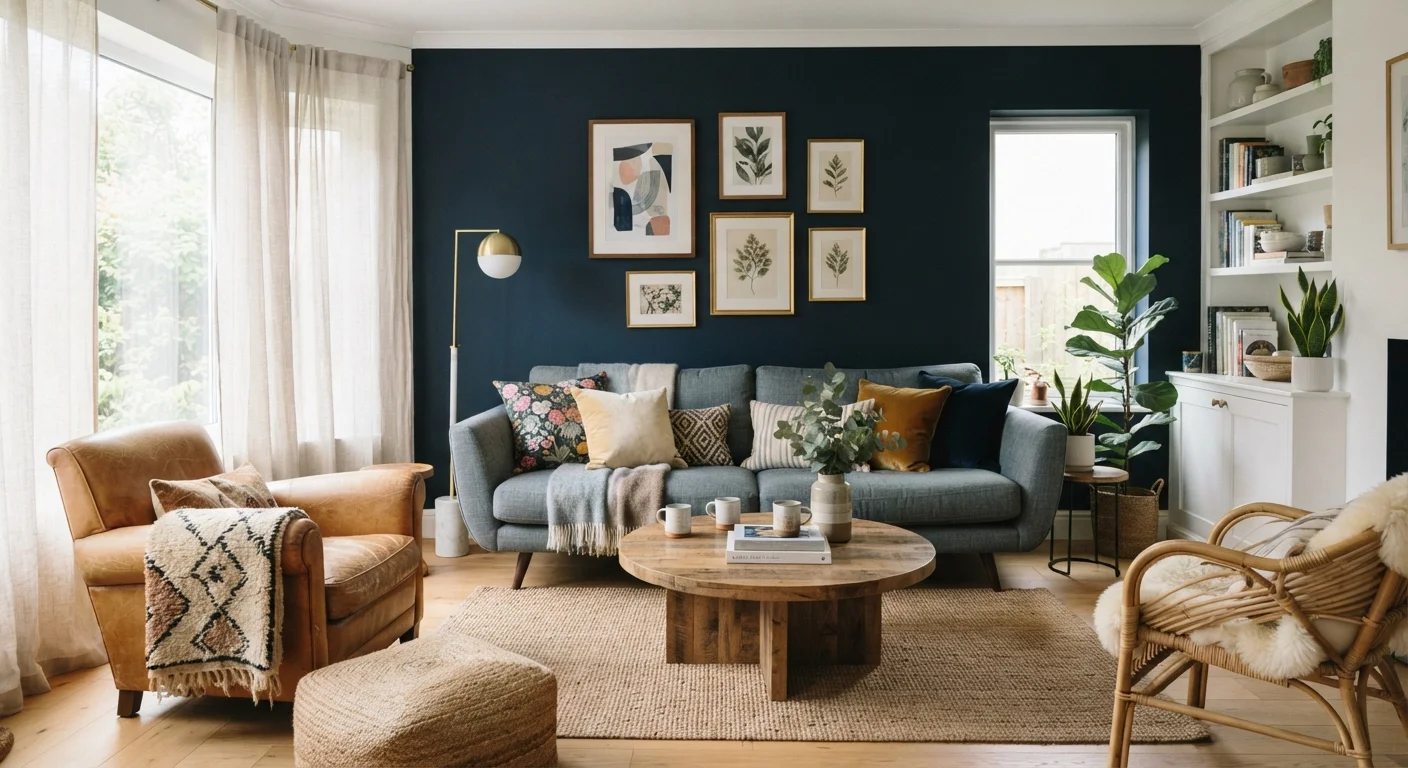
Photo credit: InGlimpse.com | Where Curiosity Finds Answers
In this article
From 'dark colors shrink a room' to 'everything must match,' common decor beliefs often steer people wrong. Here's what the evidence actually shows.
Key Takeaways
- Dark paint colors don't automatically shrink a room — light levels and furnishings matter more.
- Matching everything too precisely can make a space feel flat and lifeless.
- Small rugs are one of the most common and costliest decorating mistakes in living spaces.
- Decorating trends are optional — personal comfort and livability should come first.
- Mixing furniture styles intentionally creates character rather than visual chaos.
Why Decorating Myths Persist
Home decorating advice travels fast — through social media, well-meaning relatives, and decades-old design columns. The problem is that much of it hardens into unchallenged rules that don't hold up in real rooms. Rigid guidelines about color, furniture arrangement, and scale often cause homeowners to make choices they later regret, or to avoid bold, effective moves out of unfounded fear.
This article tackles the most stubborn myths head-on. For each one, we look at what the evidence actually shows and what a more practical approach looks like. If you want a broader framework for thinking about how color, pattern, and texture interact, this breakdown of the three core design levers is a useful starting point.
Myth
Dark colors make a room feel smaller and more closed-in.
Fact
Dark colors can actually make a room feel more intimate and defined — and in the right conditions, just as spacious as lighter shades.
This myth oversimplifies how color perception works. A room's sense of space is shaped by multiple factors: ceiling height, the amount and direction of natural light, the scale of furniture, and how reflective the surfaces are. A dark navy or charcoal wall in a room with good natural light and appropriately scaled furniture can read as dramatic and intentional rather than oppressive. Conversely, a small room painted bright white but stuffed with oversized furniture won't feel open at all.
How natural and artificial light behave in a room has more influence over perceived size than paint color alone. Accent walls — which apply dark or bold color to a single surface — are one way to experiment without full commitment. See accent wall options explained for a practical breakdown.
Myth
Everything in a room should match — furniture, finishes, and fabrics.
Fact
A fully matched room typically looks more like a showroom floor than a lived-in home. Intentional variation creates depth and personality.
The drive to match everything — the wood tones, the metal finishes, the pattern repeat on every textile — is understandable, but it tends to produce spaces that feel flat and impersonal. Interior design professionals generally work toward cohesion, not uniformity. Cohesion means that elements feel like they belong in the same room without being identical.
Mixing furniture styles, for example, is a technique used deliberately in well-designed spaces. A mid-century sofa paired with a rustic wood coffee table and a contemporary floor lamp can work beautifully when the pieces share a common element — similar proportions, a repeated color, or a complementary material. Thinking about rooms as connected spaces rather than isolated matching sets produces more satisfying results overall.
Myth
Small rooms need small furniture to avoid feeling crowded.
Fact
Undersized furniture in a small room often makes the space feel more cluttered and disjointed, not more open.
Scale matters enormously, and it works differently than most people expect. A small sofa flanked by a small side table, small lamp, and small rug creates visual fragmentation — the eye has too many disconnected elements to track. One appropriately sized sofa (even if it feels bold in the space) gives the room an anchor. Fewer, larger pieces tend to read as more intentional than many small ones.
The rule of thumb used by many designers: choose the largest rug that fits the space rather than the smallest one that covers the seating area. A rug that's too small is one of the single most common decorating mistakes in living rooms. For more on making compact spaces work without sacrificing style, practical strategies for small living rooms covers this in detail. Understanding what designers mean by scale also helps clarify why this principle holds.
Myth
You should decorate according to current trends to keep your home looking fresh.
Fact
Trend-driven decorating often leads to expensive refreshes every few years and spaces that feel dated quickly.
Trends cycle faster in home decor than most people anticipate. A color or material that dominates shelter magazines one year can feel overexposed within two or three. Chasing trends also tends to produce spaces that look stylish in photographs but don't reflect the people living in them.
A more durable approach: treat structural and large-ticket elements (flooring, major furniture, cabinetry) as long-term investments selected for quality and personal resonance, and reserve trend experimentation for lower-cost, easily swappable elements — throw pillows, artwork, plants, and textiles. This gives a home visual freshness without requiring constant overhaul. Houseplants, for instance, refresh a room at minimal cost and can be rotated seasonally.
Myth
Art should always hang at eye level.
Fact
The right hanging height depends on the room, the furniture arrangement, and the relationship between the artwork and surrounding elements.
The "57-inch center" guideline — hanging artwork so its midpoint sits about 57 inches from the floor — is a gallery convention, not a universal law. In a room where art hangs above a sofa, the bottom of the piece is typically positioned 6 to 8 inches above the furniture to create visual connection between the two. Hanging art at standard gallery height above a low sofa can make the wall feel disconnected and the ceiling oppressively high.
For grouped arrangements like gallery walls, the relationship between pieces matters more than the height of any individual one. Planning a gallery wall carefully before committing holes to plaster saves significant frustration. Visual weight principles also explain why poorly placed art makes a room feel lopsided even when nothing else has changed.
Putting It Into Practice
Letting go of rigid rules doesn't mean decorating without intention — it means making decisions based on your actual space, light conditions, and lifestyle rather than inherited assumptions. Before committing to any significant change, test it. Paint large swatches and observe them at different times of day. Tape out a rug's footprint on the floor before purchasing. Rearrange furniture before buying new pieces.
68%
Homeowners who regret at least one major decor purchase
According to a survey conducted by Houzz, the majority of homeowners report at least one significant decorating regret, with furniture scale and color choices cited most frequently.
~$1,500
Average cost of a living room furniture refresh
Industry estimates suggest a mid-range living room furniture update in the US typically runs between $1,000 and $2,500, making informed first decisions considerably more cost-effective than replacing poor choices.
If you're working room by room, a structured audit checklist can help you identify high-impact, low-effort changes in each space. Renters navigating what they can modify should also check out renter-friendly decorating strategies before making any permanent decisions. The goal is a home that works for the people living in it — not one that simply follows the rules.

Author
Home Editorial Team
Home Editorial Team is the collective byline for our editorial team and contributor network. Articles published under this byline or an editorial pen name are researched, written, and reviewed according to our editorial standards for clarity, consistency, and independence before publication.
View all articles →