
Dog Food vs. Cat Food: Why Feeding Them the Same Meal Is a Problem
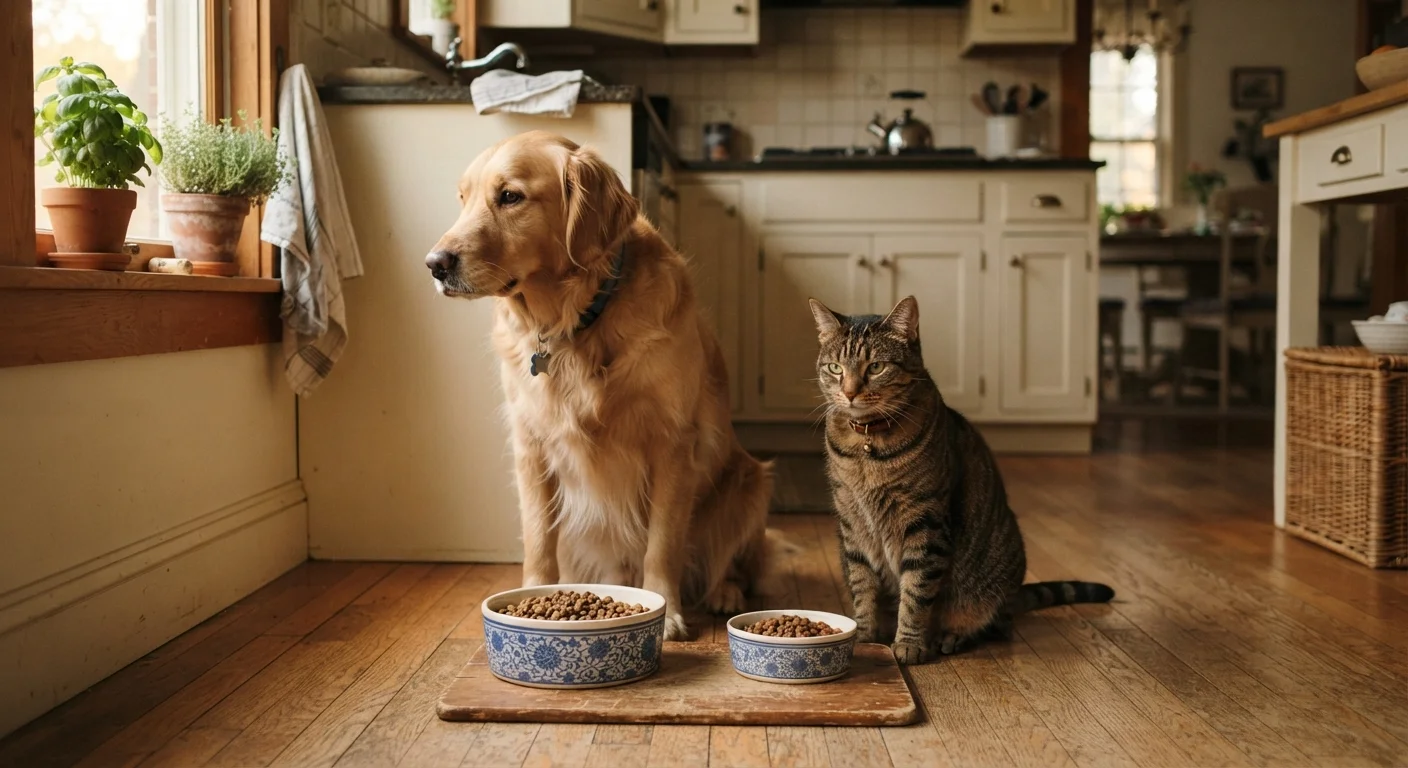
Photo credit: InGlimpse.com | Where Curiosity Finds Answers
In this article
Dogs and cats have very different nutritional needs. Here's why species-specific diets matter and what can go wrong when they're swapped.
Key Takeaways
- Cats are obligate carnivores and require nutrients found only in animal tissue that dogs can produce themselves.
- Feeding cats dog food long-term can cause serious deficiencies in taurine, vitamin A, and arachidonic acid.
- Dogs eating cat food regularly risk weight gain and digestive issues due to excess protein and fat.
- AAFCO nutritional standards differ between species — a food labeled complete for dogs is not complete for cats.
- Multi-pet households should feed pets separately to prevent food swapping.
Why Dogs and Cats Have Fundamentally Different Nutritional Needs
Dogs are classified as omnivores — they can derive nutrition from both animal and plant sources. Cats, by contrast, are obligate carnivores, meaning their bodies are biologically dependent on nutrients found primarily in animal tissue. This isn't a preference; it's physiology.
The distinction matters because it shapes every aspect of how commercial pet foods are formulated. The AAFCO sets separate nutritional profiles for dogs and cats, and a product certified as "complete and balanced" for dogs does not meet those standards for cats — and vice versa.
Cats lack certain metabolic pathways that dogs possess. For example, cats cannot synthesize taurine (an amino acid critical for heart and eye health) in sufficient quantities from dietary precursors, so it must come directly from their food. Dogs can produce taurine endogenously in most cases. Similarly, cats cannot convert beta-carotene into usable vitamin A efficiently and must consume preformed vitamin A from animal sources. Dogs handle beta-carotene conversion adequately. These aren't minor technicalities — they're the reason why swapping foods between species carries real health risks. For a broader look at how nutritional needs shift across an animal's life, see our guide to feeding pets through every life stage.
What Happens When a Cat Eats Dog Food
An occasional stolen bite of dog food is unlikely to cause immediate harm to a cat. The danger lies in regular or exclusive feeding. Dog food is not formulated to include the levels of taurine, arachidonic acid, or preformed vitamin A that cats require.
| Criterion | Dog Food | Cat Food |
|---|---|---|
| Species target | Omnivore (dogs) | Obligate carnivore (cats) |
| Taurine content | Low — dogs synthesize it | High — cats require dietary source |
| Protein level | Moderate | High |
| Fat content | Moderate | Higher |
| Vitamin A form | Beta-carotene acceptable | Preformed vitamin A required |
| Arachidonic acid | Not required — dogs synthesize it | Must be present in food |
| AAFCO standard | Canine nutritional profile | Feline nutritional profile |
| Safe for the other species? | Unsafe for cats long-term | Unsuitable for dogs regularly |
- Taurine deficiency in cats can lead to dilated cardiomyopathy (an enlarged, weakened heart) and feline central retinal degeneration, which can cause blindness. These conditions can develop gradually and may not be obvious until significant damage has occurred.
- Vitamin A deficiency can impair immune function, vision, and coat health in cats.
- Insufficient protein: Dog foods typically contain lower protein levels than cat foods. Cats have a uniquely high protein requirement — their livers are metabolically geared to use protein as a constant energy source, unlike dogs or humans.
If you have a cat that persistently seeks out food even after eating, metabolic and dietary imbalances can be a contributing factor — our article on why cats keep begging after eating explores this in depth.
What Happens When a Dog Eats Cat Food
Dogs are generally more metabolically flexible, so the risks differ. Cat food is calorie-dense, high in protein, and high in fat — ratios that exceed what most dogs need daily.
~52%
US pet owners who own both a dog and a cat
According to the American Pet Products Association, a significant share of US households include both species, making cross-species food access a common everyday concern.
3x
Approximate protein requirement difference
Cats require roughly three times more dietary protein than dogs on a metabolic weight basis, according to veterinary nutrition references including the National Research Council.
Regular consumption of cat food by dogs can contribute to:
- Weight gain and obesity, particularly in less active or middle-aged dogs
- Gastrointestinal upset, including loose stools or vomiting, due to the richer fat content
- Pancreatitis risk in dogs prone to the condition — high dietary fat is a known trigger
Some dog owners mistakenly assume that if cat food has more protein, it must be "better." In reality, excess protein beyond a dog's requirement is either used for energy or excreted — it doesn't build more muscle or provide additional benefit, and it puts extra load on the kidneys over time. For a deeper look at how protein source quality varies, visit our article on protein sources in pet food.
This article provides general pet nutrition information and is not a substitute for personalized veterinary guidance. Consult your veterinarian about your pet's specific dietary needs.
Practical Tips for Multi-Pet Households
Keeping dogs and cats on their respective diets takes a little routine management, but it's straightforward once habits are established.
A Note on Occasional Sharing
A single accidental meal of the wrong food is unlikely to cause lasting harm in a healthy adult pet. The health risks described in this article apply primarily to regular or long-term feeding of species-inappropriate food. That said, if your pet ate a large amount of the wrong food and is showing signs of vomiting, lethargy, or discomfort, contact your veterinarian.
- Feed in separate rooms or at separate times. This removes the opportunity for food swapping entirely and lets you monitor how much each animal is eating.
- Store foods clearly labeled and apart. Kibble bags can look similar — labeling storage containers avoids accidental mix-ups.
- Raise cat bowls out of dog reach. Elevated feeding stations or rooms with a pet gate are effective barriers, particularly for cats who prefer to graze throughout the day.
- Don't rely on "shared" treats. Many commercial treats are also species-specific in their formulation — check labels carefully.
If you're curious about persistent nutrition myths surrounding species-appropriate diets — including the idea that cats can thrive long-term on dog food — our article on pet nutrition myths vets want to debunk addresses these directly.

Author
Pets Editorial Team
Pets Editorial Team is the collective byline for our editorial team and contributor network. Articles published under this byline or an editorial pen name are researched, written, and reviewed according to our editorial standards for clarity, consistency, and independence before publication.
View all articles →