
Budgeting Methods Compared: Envelope, Zero-Based, Pay Yourself First, and More
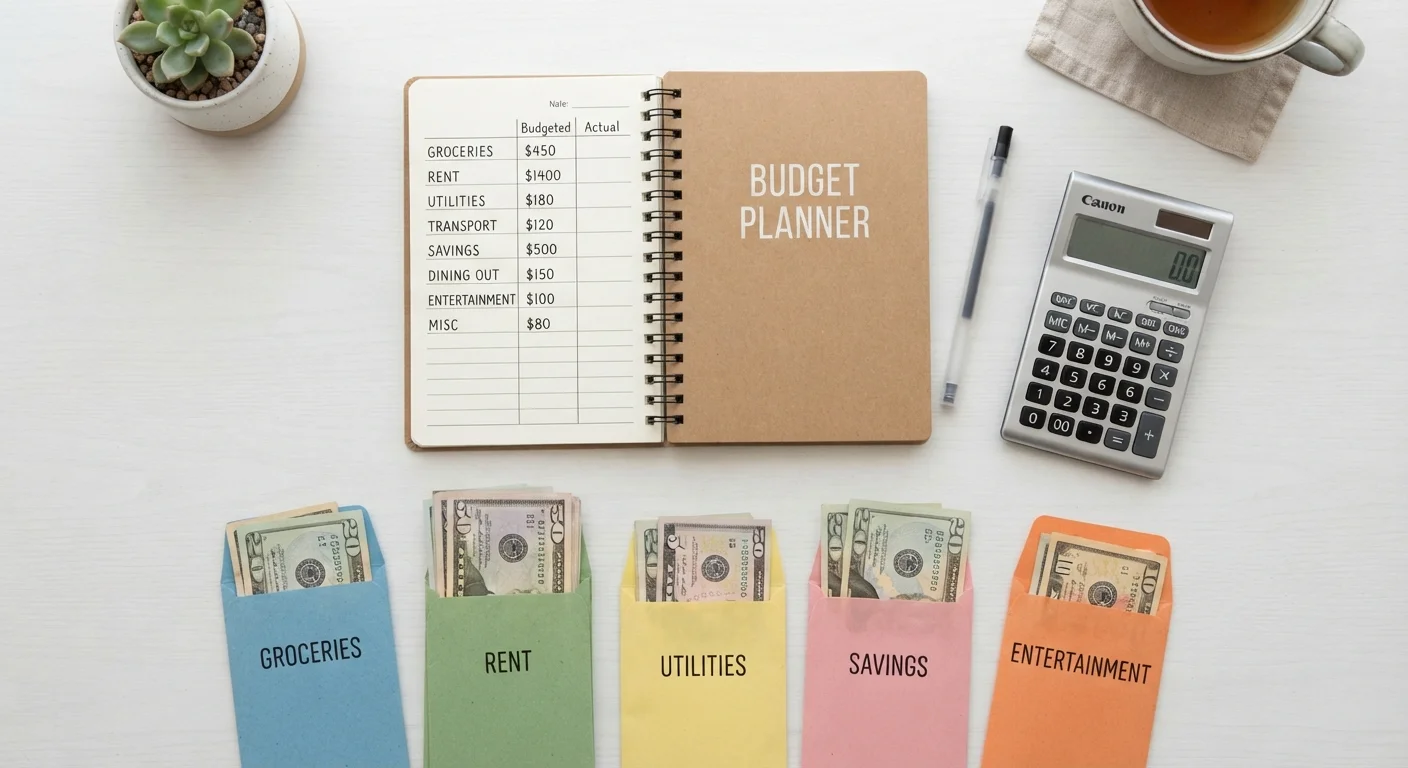
Photo credit: InGlimpse.com | Where Curiosity Finds Answers
In this article
A side-by-side look at the most widely used personal budgeting frameworks to help you identify which approach suits your situation.
Key Takeaways
- No single budgeting method works for everyone — your income type, habits, and goals all shape the right fit.
- Zero-based budgeting offers the most control but requires the most time and discipline to maintain.
- The Pay Yourself First method prioritizes saving automatically, making it effective for long-term wealth building.
- The envelope method is one of the most powerful tools for curbing overspending in variable categories like groceries and dining.
- The 50/30/20 rule is the most approachable framework for budgeting beginners with steady income.
Why Your Choice of Budgeting Method Matters
A budget is only as effective as your ability to follow it consistently. That means the framework matters almost as much as your financial numbers. If a method feels punishing or requires more time than you can spare, you're more likely to abandon it — and no budget works if it's abandoned.
If you're new to budgeting altogether, start with the foundational concepts before diving into method comparisons. For those ready to choose a system, this side-by-side look at four widely used frameworks — the envelope method, zero-based budgeting, Pay Yourself First, and the 50/30/20 rule — breaks down how each works and who it suits best.
| Envelope Method | Zero-Based | Pay Yourself First | 50/30/20 Rule | |
|---|---|---|---|---|
| Time commitment | Medium — set up envelopes monthly | High — assign every dollar monthly | Low — automate and go | Low — three broad categories only |
| Best income type | Steady or variable | Steady; adaptable for variable | Steady and predictable | Steady and predictable |
| Spending control | High — hard category limits | Very high — full visibility | Low — no category tracking | Medium — broad buckets |
| Savings prioritization | Moderate — one envelope | High — savings is a category | Very high — savings comes first | Built-in at 20% |
| Difficulty for beginners | Moderate | High | Low | Very low |
| Works well with irregular income | Yes | With adjustments | Yes | Less reliably |
The Envelope Method: Spending Limits You Can Feel
Originally a cash-based system, the envelope method divides your take-home pay into physical envelopes labeled by spending category — groceries, gas, dining out, entertainment. Once an envelope is empty, spending in that category stops for the month.
The tactile nature of handling physical cash is its core strength: research in behavioral economics consistently finds that people spend more freely when using cards versus cash. The envelope method exploits this by making spending visceral and finite.
The method's main limitation is its friction with modern, card-based life. However, the underlying principle translates well to digital tools — as explored in depth in our guide to envelope budgeting adapted for digital spending. Dedicated sub-accounts or budgeting apps can replicate the same category-cap logic without physical cash.
Digital Envelope Alternatives Worth Knowing
If carrying cash isn't practical, consider using a bank that offers multiple sub-accounts or savings 'buckets,' or a budgeting app that replicates envelope-style category caps. The behavioral effect of seeing a category balance deplete in real time is similar to watching a physical envelope empty. The key is checking that balance before — not after — a purchase.
Best for: People who overspend in specific variable categories and respond better to hard limits than mental tracking.
Zero-Based Budgeting: Every Dollar Has a Job
Zero-based budgeting (ZBB) requires that your income minus your total planned expenses equals zero by month's end. This doesn't mean spending everything — savings and investments count as expense categories. The goal is that no dollar goes unassigned.
ZBB demands a complete monthly accounting of all income and all planned outflows. It typically takes 30–60 minutes to build initially and shorter check-ins throughout the month. The payoff is granular visibility: you know exactly where every dollar went and can make intentional trade-offs between categories.
The challenge is variability. Months with irregular income or unexpected expenses can require mid-month budget revisions. For variable-income earners, ZBB works best when built around a conservative income baseline. For those carrying debt, ZBB pairs particularly well with structured repayment strategies — see how the debt avalanche and snowball methods integrate into a zero-based plan.
Best for: Detail-oriented planners, people with irregular spending patterns who need to build awareness, and anyone aggressively paying down debt.
Pay Yourself First: Save Before You Spend
Pay Yourself First (PYF) flips the conventional order of budgeting. Instead of saving whatever remains after expenses, you direct a fixed amount to savings or investments the moment income arrives — then live on what's left.
The behavioral logic is sound: money you never see in your checking account is money you're unlikely to spend. Automating transfers to a savings or retirement account on payday removes the temptation and the decision entirely. Building saving into your budget structure rather than treating it as a discretionary line item is one of the most durable habits in personal finance.
PYF doesn't require tracking every purchase category, which makes it low-maintenance. The risk is that if your essential expenses (housing, utilities, food) consume most of your take-home pay after saving, the remaining buffer may be too tight — leaving you raiding savings for ordinary expenses. Sequencing decisions around saving versus debt payoff are also worth examining; our comparison of emergency funds versus investment accounts addresses this directly.
Best for: Goal-oriented savers, people with steady income, and those who struggle to save consistently using traditional methods.
The 50/30/20 Rule: A Simple Starting Framework
Popularized as an accessible budgeting guideline, the 50/30/20 framework divides after-tax income into three broad buckets: 50% toward needs (housing, utilities, groceries, minimum debt payments), 30% toward wants (dining, entertainment, subscriptions), and 20% toward savings and debt repayment above minimums.
Its simplicity is both its strength and its limitation. For someone just beginning to budget, 50/30/20 removes the paralysis of tracking dozens of categories. However, for those living in high cost-of-living areas, housing alone can consume 40–50% of income, leaving the framework misaligned with reality.
~74%
Americans living paycheck to paycheck
Multiple consumer financial surveys conducted in recent years suggest a large majority of U.S. adults report spending most or all of their monthly income, underscoring the need for structured budgeting.
20%
Savings target in 50/30/20 framework
The 50/30/20 rule recommends allocating at least 20% of after-tax income toward savings and additional debt repayment, a threshold widely cited by personal finance educators.
The 50/30/20 rule is best treated as a diagnostic starting point rather than a permanent prescription. If your needs consistently exceed 50%, it signals a structural issue — either income needs to increase, housing costs need to decrease, or another adjustment is necessary. For a fuller perspective on what strict adherence to any budgeting rule costs you in flexibility, our look at the real trade-offs of strict budgeting is worth reading alongside this comparison.
Best for: Beginners, those with straightforward finances, and anyone who wants a budget requiring minimal maintenance.
This article is for general informational and educational purposes only and does not constitute personalized financial advice. Consult a qualified financial professional before making decisions about your specific financial situation.

Author
Finance Editorial Team
Finance Editorial Team is the collective byline for our editorial team and contributor network. Articles published under this byline or an editorial pen name are researched, written, and reviewed according to our editorial standards for clarity, consistency, and independence before publication.
View all articles →