
Envelope Budgeting in a Digital Age
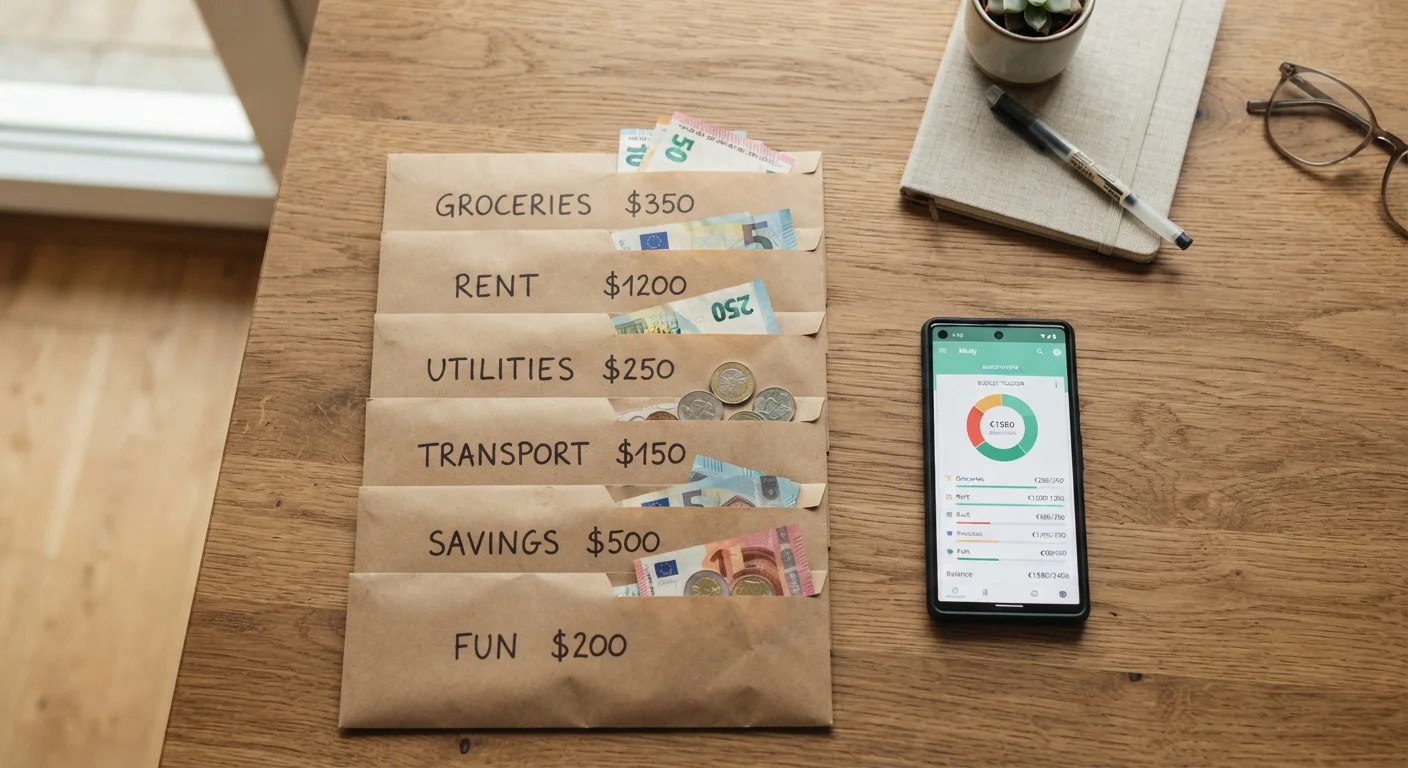
Photo credit: InGlimpse.com | Where Curiosity Finds Answers
In this article
The classic cash envelope method adapted for modern spending. Explore how the core idea translates to digital tools and bank accounts.
Key Takeaways
- Envelope budgeting assigns every dollar to a specific spending category before you spend it.
- Digital sub-accounts or budgeting apps can replicate physical envelopes without handling cash.
- The method works best when spending categories reflect your actual lifestyle, not an idealized one.
- Regular weekly or bi-weekly check-ins are essential to keeping digital envelopes accurate.
- Overspending one category requires a conscious transfer from another — preserving the method's discipline.
What Envelope Budgeting Actually Does
The envelope method is one of the oldest personal budgeting frameworks around. In its original form, you divide your take-home pay into physical envelopes — one for groceries, one for gas, one for dining out, and so on. When an envelope is empty, spending in that category stops until the next pay period. The constraint is the point.
What makes it effective is a concept behavioral economists call mental accounting: when money is visibly earmarked for a purpose, people treat it differently than a lump-sum balance. A checking account balance of $2,400 feels abstract. An envelope labeled "Groceries" with $180 left feels concrete and finite.
If you're new to the broader landscape of budgeting strategies, the foundational budgeting guide covers core concepts worth understanding before you pick any single method. And if you're weighing envelope budgeting against alternatives like zero-based or pay-yourself-first approaches, this side-by-side comparison can help you decide what fits your situation.
What You'll Need Before You Start
Setting up a digital envelope system takes a bit of preparation. Gather the following before working through the steps below.
What you will need
Bank sub-accounts or savings buckets
Act as physical envelopes by holding designated funds in separate named accounts, making balances visible and distinct.
Spreadsheet (e.g., Google Sheets)
Manually track envelope balances and spending without requiring a third-party app.
Budgeting app with category allocation
Automates transaction categorization and tracks remaining balances per envelope in real time.
Recent bank and credit card statements
Provide accurate historical spending data so your envelope amounts reflect actual behavior, not guesses.
How to Set Up Your Digital Envelope System
Follow these steps to translate the envelope method into a format that works with modern bank accounts and digital tools. The process typically takes under an hour to set up and becomes a quick routine after that.
Calculate your monthly take-home income
Add up all reliable after-tax income sources for a typical month. If your income varies, use a conservative estimate — the average of your three lowest recent months is a sound starting point. This number is the total you have to allocate across all envelopes.
List and categorize your spending
Review two to three months of statements and group every transaction into meaningful categories: housing, utilities, groceries, transportation, dining out, subscriptions, personal care, entertainment, and so on. Be specific enough to track real behavior but broad enough to stay manageable — aim for 8 to 12 categories total.
Assign a dollar amount to each envelope
Allocate your take-home income across your categories. Start with fixed obligations (rent, loan minimums, insurance), then assign amounts to variable categories based on your spending history. Your allocations must sum to your total income — this is the zero-based principle that gives the method its teeth. If the numbers don't balance, adjust variable categories until they do.
Set up your digital envelopes
Choose your implementation method. If your bank allows free sub-accounts or savings buckets, open one per variable category and name each clearly. Transfer the budgeted amount into each sub-account when you get paid. Alternatively, use a budgeting app that lets you define spending limits per category and links to your existing accounts. A labeled spreadsheet works too — it just requires manual entry.
Track spending against each envelope throughout the month
Every purchase should reduce the balance in its corresponding envelope. If you're using sub-accounts, pay from the relevant account or transfer the spent amount out immediately after purchase. If you're using an app, categorize transactions as they appear. The goal is a live, accurate picture of what's left in each category at any moment.
Review and reset at the end of each period
At the close of each pay period, review every envelope. Leftover balances can roll over into next month's envelope (building a small cushion), be transferred to savings, or be redistributed. Envelopes that run dry early every month signal either an under-allocation or a spending habit worth examining. Adjust allocations every two to three months as your spending patterns evolve.
Start With Fewer Envelopes
New to this system? Begin with just five to six categories covering your highest-spend areas. A simpler setup is far easier to maintain. You can always add more envelopes once the habit is established and you have a clearer picture of where granularity actually helps you.
One common gap: irregular and annual expenses that most people forget to budget for entirely. See spending categories most people overlook for a practical checklist to fold into your envelopes.
This article is for general informational and educational purposes only and does not constitute personalized financial advice. Consult a qualified financial professional regarding your specific circumstances.
Making It Stick: Maintenance and Adjustments
The setup is the easy part. What separates people who maintain a budget from those who abandon it within a month is the review habit. Schedule a 10-minute check-in every week or after each pay period to compare actual spending against your digital envelopes. Most banking apps and budgeting tools make this straightforward with transaction categorization.
When you overspend a category — and eventually you will — resist the urge to simply top it off. Instead, make a deliberate transfer from another envelope. That friction is intentional: it forces you to decide what matters more this month. That single decision-making moment is the core behavioral benefit of the method.
Never Quietly Refill an Envelope
Adding funds to an overdrawn envelope without moving money from another category defeats the entire system. The method's power comes from treating each envelope as a hard limit. If you repeatedly need to top up the same category, that's a signal to formally revise your budget allocation — not to bypass the constraint silently.
As your system matures, you may find that saving deserves its own envelope treatment. The principles in building a budget with saving built in align closely with the envelope approach — treating savings as a non-negotiable category rather than whatever is left over. For a broader look at growing wealth over time, explore the Saving & Investing hub.

Author
Finance Editorial Team
Finance Editorial Team is the collective byline for our editorial team and contributor network. Articles published under this byline or an editorial pen name are researched, written, and reviewed according to our editorial standards for clarity, consistency, and independence before publication.
View all articles →