
Accent Walls Decoded: Paint, Wallpaper, Wood Panels, and Beyond
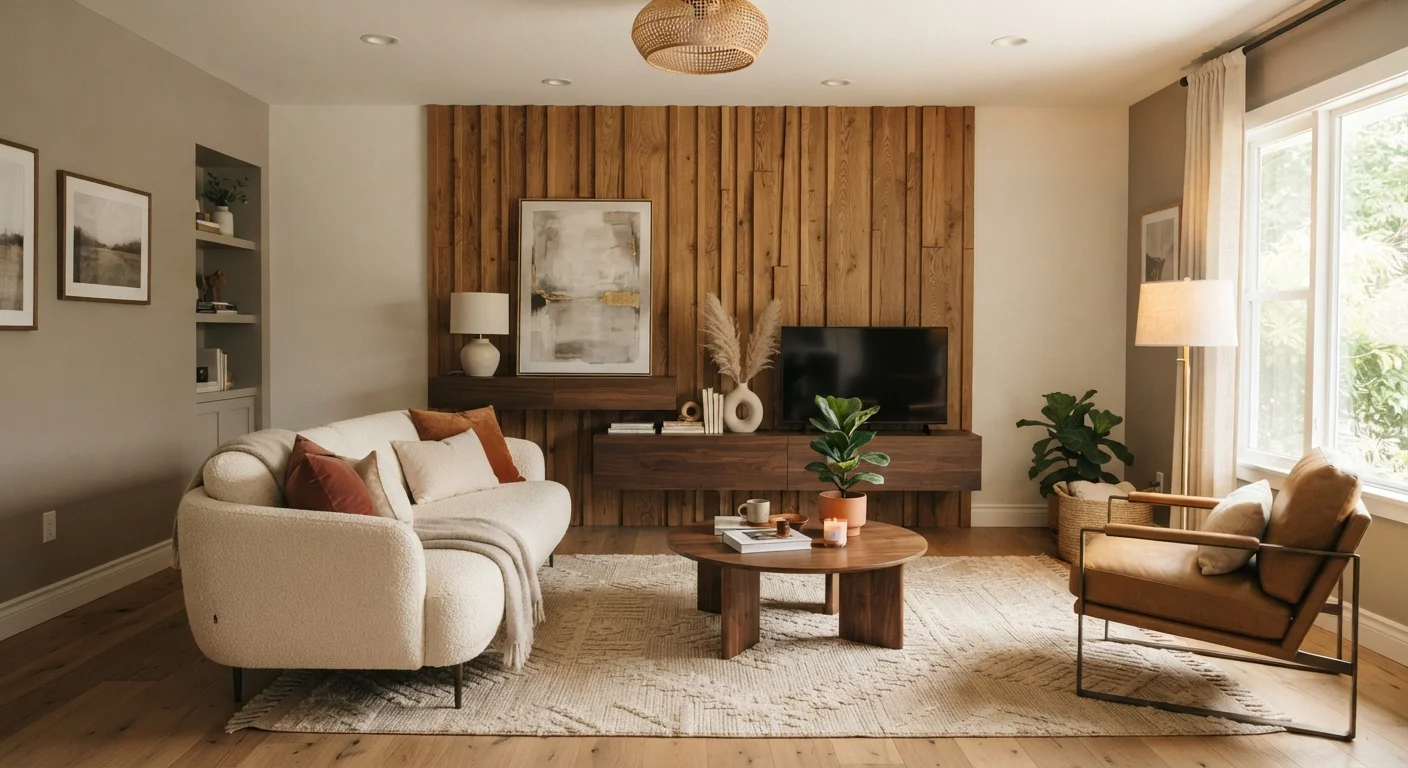
Photo credit: InGlimpse.com | Where Curiosity Finds Answers
In this article
A clear breakdown of popular accent wall approaches—what each involves, what it costs in effort, and which rooms they suit best.
Key Takeaways
- Paint is the lowest-cost and most reversible accent wall option, making it ideal for renters or first-timers.
- Wallpaper delivers bold pattern and texture but requires more surface prep and careful removal later.
- Wood panels and shiplap add architectural depth but involve more labor and moderate material costs.
- The right approach depends on your room's size, existing finishes, and how permanent you want the change to be.
- One strong accent wall per room is generally more effective than multiple competing focal points.
What Makes an Accent Wall Work
An accent wall is a single wall treated differently from the others in a room — through color, material, or texture — to create a visual focal point. Done well, it grounds furniture arrangements, draws the eye to an architectural feature, or adds depth to an otherwise flat space. Done carelessly, it can feel arbitrary or busy.
The foundation of any effective accent wall is intentionality. The wall you choose should already have some logic behind it: the wall a bed sits against in a bedroom, the fireplace wall in a living room, or the wall directly opposite the entry point in a dining room. These locations have natural visual weight, so an accent treatment reinforces what's already happening rather than fighting it.
Before committing to a method, it helps to understand how color, pattern, and texture interact in a room — your accent wall will pull heavily on at least one of those levers, and knowing which one helps you avoid overdoing it elsewhere.
Comparing the Main Approaches
Each accent wall method has a distinct effort level, cost range, and visual result. Here's how the four most common options stack up.
| Paint | Wallpaper | Wood Panels/Shiplap | Fabric/Upholstered Panels | |
|---|---|---|---|---|
| Typical material cost (single wall) | $30–$80 | $100–$400+ | $150–$600+ | $100–$500+ |
| Reversibility | Very easy — repaint over it | Moderate — removal takes effort | Difficult — fastened to wall | Moderate — panels can be unmounted |
| DIY skill floor | Low | Medium | Medium–High | Low–Medium |
| Visual effect | Color and contrast | Pattern and texture | Architectural depth | Softness and warmth |
| Best room fit | Any room | Powder room, bedroom | Living room, bedroom | Office, nursery, media room |
| Renter-friendly | Yes | Depends on type | No | Generally yes |
A few notes on reading this table: reversibility matters most if you rent, plan to sell soon, or like to redecorate frequently. Skill floor reflects the minimum competence needed for a result that looks intentional rather than rushed. Most approaches are manageable for a patient DIYer, but some — especially large-format wallpaper with complex patterns — benefit significantly from professional installation.
Paint: Low Barrier, High Flexibility
A painted accent wall is the most accessible starting point. A gallon of interior paint typically covers roughly 350–400 square feet — more than enough for a single wall — and application requires only basic supplies: painter's tape, a roller, and a brush for edges. The whole project can often be completed in an afternoon.
The most effective paint approaches go beyond a single flat color. Deep, saturated hues (navy, forest green, charcoal) create strong contrast in rooms with lighter existing palettes. Color blocking — painting only a portion of a wall or carrying color down onto the floor — adds a more deliberate, design-forward look. Limewash paint, which creates a naturally mottled, aged effect, has grown in popularity as a way to add texture without materials.
Test Your Color Before Committing
Paint a 12-by-12-inch swatch directly on the wall and observe it at different times of day — morning light, midday, and evening artificial light can all shift how a color reads. Most paint suppliers offer small sample sizes specifically for this purpose. It's a low-cost step that prevents expensive repaints.
One common misconception worth addressing: dark colors don't automatically make a room feel smaller. A dark accent wall on the far end of a long room can actually make proportions feel more balanced. For more on where received decor wisdom falls short, see common decorating myths debunked.
Wallpaper, Wood Panels, and Beyond
Wallpaper offers pattern and texture that paint simply can't replicate. Modern peel-and-stick options have made temporary installation far more realistic — though they work best on smooth, primed walls and don't always adhere reliably to older plaster or textured surfaces. Traditional paste wallpaper is more durable but requires more surface prep, careful seam matching, and patience during removal. Wallpaper works especially well in smaller rooms like powder rooms, where the impact is high and the square footage is low.
Wood panels and shiplap add genuine architectural dimension. Shiplap — horizontal boards with a slight gap between them — became widely recognized through home renovation media and remains popular for its clean, layered look. Board-and-batten (vertical boards with flat horizontal crosspieces) suits more formal or traditional rooms. Both require cutting, fastening, and finishing, making them the most labor-intensive DIY option. Material costs vary widely depending on whether you use real wood, MDF, or engineered panels.
Fabric and upholstered panels are a quieter option that adds softness and acoustic dampening — useful in home offices, nurseries, or media rooms. Pre-made fabric panels can be mounted with minimal tools, though bespoke upholstered walls are typically a professional installation job.
If you're weighing an accent wall against other approaches to adding visual interest — like a curated display — planning a gallery wall is worth comparing as an alternative that avoids any permanent wall treatment.
For a broader audit of what each room in your home might benefit from, the room-by-room decor refresh checklist can help you prioritize where an accent wall would have the most impact.

Author
Home Editorial Team
Home Editorial Team is the collective byline for our editorial team and contributor network. Articles published under this byline or an editorial pen name are researched, written, and reviewed according to our editorial standards for clarity, consistency, and independence before publication.
View all articles →