
Capsule Wardrobe: What It Is and Why It Works
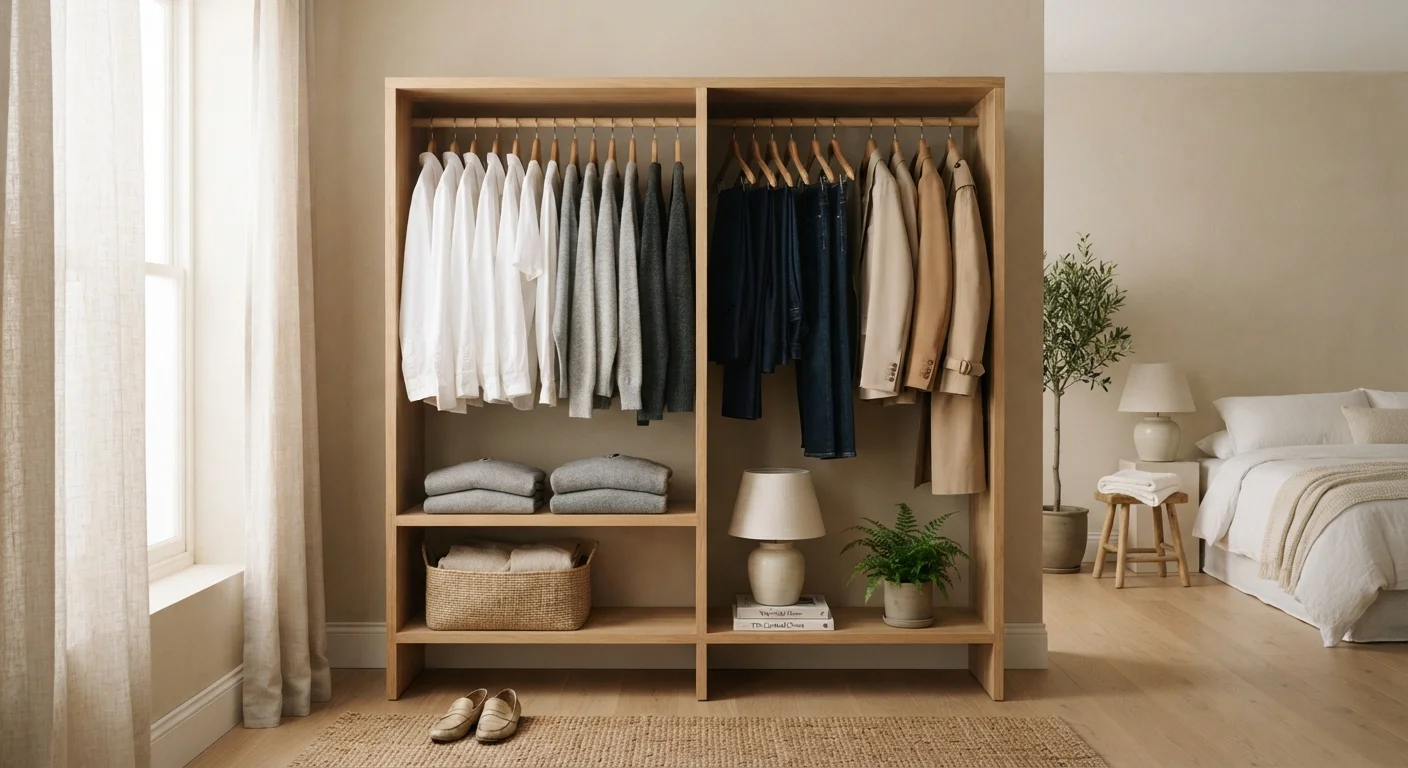
Photo credit: InGlimpse.com | Where Curiosity Finds Answers
In this article
A capsule wardrobe is a small, intentional clothing collection. Learn the core idea behind it and why it simplifies getting dressed every day.
Key Takeaways
- A capsule wardrobe is a small, intentional clothing collection where every piece earns its place.
- Items are chosen for versatility — each should pair easily with multiple other pieces in the collection.
- The approach reduces decision fatigue and makes daily outfit assembly faster and more consistent.
- A capsule wardrobe is personal — there is no universal item count or fixed list that works for everyone.
- Building one typically starts with a wardrobe audit to identify what you already own and actually wear.
The Core Idea Behind a Capsule Wardrobe
At its simplest, a capsule wardrobe is a curated set of clothing pieces that all work together. Rather than accumulating items over time without a clear strategy, a capsule wardrobe is built with intention — each piece is selected because it fits your lifestyle, flatters your frame, and coordinates with what else you own.
The central promise isn't minimalism for its own sake. It's coherence. When every item in your closet can pair with multiple others, the number of outfit combinations available to you grows dramatically even as the total item count shrinks. If your closet currently feels full but still leaves you with nothing to wear, this is often the core problem — a lack of cohesion between pieces rather than a shortage of clothing.
~33
Average items worn from a typical wardrobe
Research cited by fashion sustainability advocates suggests most people regularly wear only around a third of the clothes they own.
7x
Minimum wear target per item in a capsule
Sustainable fashion frameworks often encourage choosing pieces you can envision wearing at least seven different ways before purchasing.
Why It Works in Practice
The practical benefit of a capsule wardrobe is reduced decision fatigue. When your options are intentionally limited to pieces that all coordinate, choosing an outfit in the morning becomes a much faster, lower-stress task. You spend less mental energy on your closet and more on the day ahead.
There's also a quality dimension. Because you're buying fewer items, it becomes easier to invest more thoughtfully in each one — prioritizing durability, fit, and versatility over impulse or trend. Over time, this tends to shift spending patterns away from frequent low-cost purchases toward a more deliberate approach.
Start With What You Already Wear
Before adding anything new, spend a week noticing which items you actually reach for. Those pieces are the natural foundation of your capsule. Building outward from what you already love and wear tends to produce a more cohesive result than starting from a prescribed list.
The wardrobe also tends to stay more manageable seasonally. Rather than a chaotic annual swap, a capsule approach makes seasonal transitions more structured and intentional — you're rotating a known, finite set of pieces rather than confronting a disorganized mass of clothes.
How to Start Building Your Own
The starting point for most people is an honest look at what they already own. A structured wardrobe audit helps you identify which items you actually reach for, which have gone unworn for months, and where the real gaps are. This step often reveals that you already own more capsule-ready pieces than you realized.
From there, the focus shifts to building around a foundation of versatile basics. These are pieces that show up across the widest range of everyday situations — the kinds of wardrobe essentials that anchor a functional everyday wardrobe. Think well-fitted trousers, a few solid-color tops in different weights, a reliable outer layer, and shoes that bridge casual and slightly more polished occasions.
The exact composition will vary by person. Your job, your climate, your daily routine — all of these shape what a capsule wardrobe actually looks like in practice. There is no universal list, only the principle that every item should genuinely earn its place.
Frequently Asked Questions

Author
Style Editorial Team
Style Editorial Team is the collective byline for our editorial team and contributor network. Articles published under this byline or an editorial pen name are researched, written, and reviewed according to our editorial standards for clarity, consistency, and independence before publication.
View all articles →