
Wardrobe Essentials for American Casual Life: What Holds It All Together
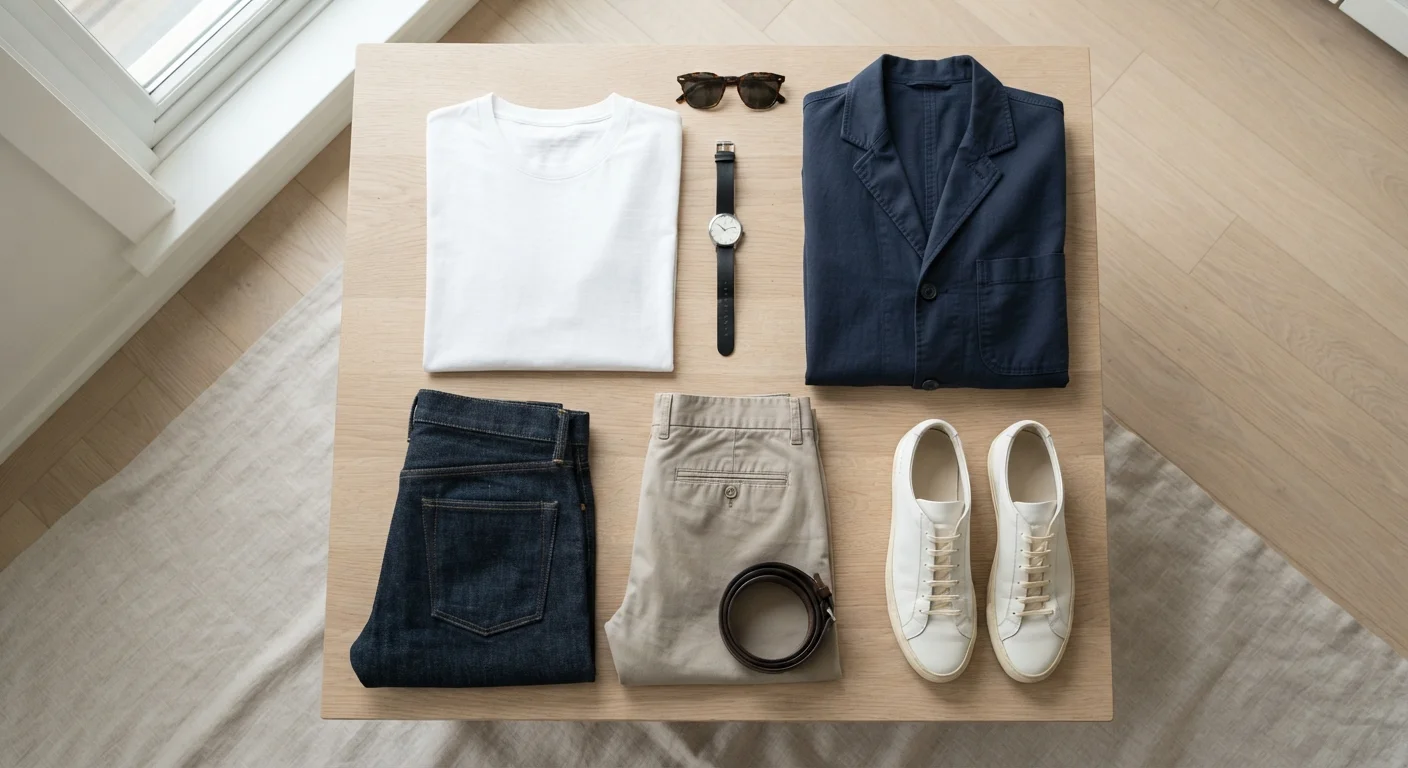
Photo credit: InGlimpse.com | Where Curiosity Finds Answers
From weekend errands to casual Fridays, these are the foundational pieces that show up across the widest range of everyday American situations.
Key Takeaways
- A small set of versatile pieces covers the widest range of everyday American situations.
- Fit and fabric quality matter more than quantity when building a reliable casual wardrobe.
- Neutral colors anchor a wardrobe because they mix easily with almost everything else.
- The most useful pieces transition smoothly from weekend errands to relaxed workplace settings.
- Knowing what you already own helps you identify genuine gaps rather than impulse purchases.
Why Foundational Pieces Matter More Than a Full Closet
Most Americans get dressed for a surprisingly narrow set of occasions: errands, casual socializing, informal workplaces, and low-key weekends. Yet closets often overflow with items that rarely see daylight. The solution isn't more clothes — it's identifying the pieces that actually show up across the widest range of situations and making sure those work hard.
This isn't about minimalism as a lifestyle statement. It's about practicality. When your wardrobe is anchored by genuinely versatile pieces, getting dressed takes less time, you make fewer impulse purchases to fill perceived gaps, and your overall look becomes more consistent. Before filling any gaps, it helps to run a quick wardrobe audit to see what you're actually working with.
The essentials below aren't trend-driven. They're the workhorses — the pieces that hold a casual American wardrobe together regardless of age, body type, or personal style.
A well-fitted white or light grey crew-neck tee
The plain crew-neck tee is the single most versatile item in casual American dressing. It layers under almost everything — an open button-down, a crewneck sweatshirt, a casual blazer — and stands on its own in warm weather. Fit is everything here: too boxy and it reads sloppy, too fitted and it limits layering options. Aim for a cut that skims the body without pulling.
Fabric weight matters too. A mid-weight cotton (roughly 180–200 gsm) holds its shape through repeated washing and doesn't go sheer. Lighter fabrics tend to look worn out quickly, undermining the clean foundation the tee is supposed to provide.
Fit and fabric weight separate a workhorse tee from one that looks worn out after three washes.
Dark-wash straight or slim jeans
Dark denim is the casual-wardrobe equivalent of a neutral suit — it dresses up or down depending on what surrounds it. Paired with a clean tee and white sneakers, it works for weekend errands. With a button-down and loafers, it crosses into smart-casual territory comfortably.
Straight or slim cuts tend to be the most broadly useful because they're proportionally balanced on a wide range of body types. Avoid heavy distressing if you want one pair to cover the widest range of situations — a clean, unfaded wash reads as more intentional.
Dark denim earns its place because it shifts from relaxed weekend to polished casual without effort.
Neutral chinos or casual trousers
Every casual wardrobe benefits from at least one non-denim trouser option. Chinos in khaki, olive, navy, or stone fill this role effectively — they're acceptable in most casual-Friday workplaces, comfortable enough for daily wear, and pair naturally with nearly every top in the wardrobe.
A flat-front cut in a mid-weight cotton-blend fabric tends to hold its shape well through regular wear. The key is maintaining a clean crease and ensuring the hem falls at the right length — slight ankle exposure is widely flattering and avoids the dated look of fabric pooling at the shoe.
A well-fitting pair of chinos covers the gap between jeans and anything requiring more formality.
A clean, versatile sneaker in white or a neutral tone
American casual style is sneaker-friendly in a way that few other cultures are, and a clean low-profile sneaker in white, grey, or a simple neutral carries almost any casual outfit credibly. The operative word is clean — visually busy or heavily branded silhouettes narrow the range of outfits they work with.
A low-top, minimal-detail silhouette works with jeans, chinos, and even casual shorts equally well. Keeping one pair in solid rotation — and keeping them clean — does more for an overall look than owning multiple pairs in varied styles.
One clean, low-profile sneaker in a neutral tone works harder than several noisier alternatives.
A solid-color button-down shirt in a casual fabric
A button-down in chambray, oxford cloth, or a lightweight linen-cotton blend sits in the sweet spot between casual and put-together. Worn open over a tee with the sleeves rolled, it's relaxed. Tucked into chinos with the buttons fastened, it shifts noticeably upward. This range of use is what earns it a foundational slot.
Stick to solid colors or very subtle patterns — fine stripes, micro-checks — to maximize pairing options. Saturated solids like navy, mid-blue, or a warm white travel particularly well across seasons and skin tones.
A casual button-down works equally well open over a tee or tucked in for a more composed look.
A mid-layer jacket or overshirt for year-round use
In most American climates, a true mid-layer — something between a tee and a heavy coat — is the most-reached-for item across nine months of the year. A simple chore coat, unstructured blazer, or bomber jacket in a neutral color fills this role. It adds visual structure to otherwise flat outfits and handles the practical reality of unpredictable indoor-outdoor temperature swings.
The key quality to look for is an unlined or lightly lined construction that keeps the jacket from feeling too formal. A relaxed fit that layers comfortably over different top weights extends its seasonal range considerably.
A versatile mid-layer adds polish and practicality across more months of the year than almost any other piece.
Putting It All Together
These pieces work because they respect each other. Neutral tones and clean silhouettes mix without friction, which means more outfit combinations from fewer items. The goal is a wardrobe where almost anything pairs with almost anything else — reducing decision fatigue and eliminating the "nothing to wear" feeling even when the closet is half empty.
Start With Fit, Not Quantity
Before adding new pieces, assess what you already own through a fit lens. An item that fits well will always look more intentional than a trendier piece that doesn't. Tailoring a few key items — particularly trousers and button-downs — is often more cost-effective than replacing them entirely. Small adjustments at the waist, hem, or sleeve length can transform how a garment reads.
Once you're confident in the essentials, it's worth understanding how these pieces translate across dress-code contexts. Our breakdown of business casual and smart casual shows how the same foundational items can be styled up or down depending on the setting. And if you're starting from scratch or want a more structured approach, the guide to building a capsule wardrobe offers a clear starting framework.

Author
Style Editorial Team
Style Editorial Team is the collective byline for our editorial team and contributor network. Articles published under this byline or an editorial pen name are researched, written, and reviewed according to our editorial standards for clarity, consistency, and independence before publication.
View all articles →