
Emergency Fund vs. Investment Account: Where Should Your Money Go First?
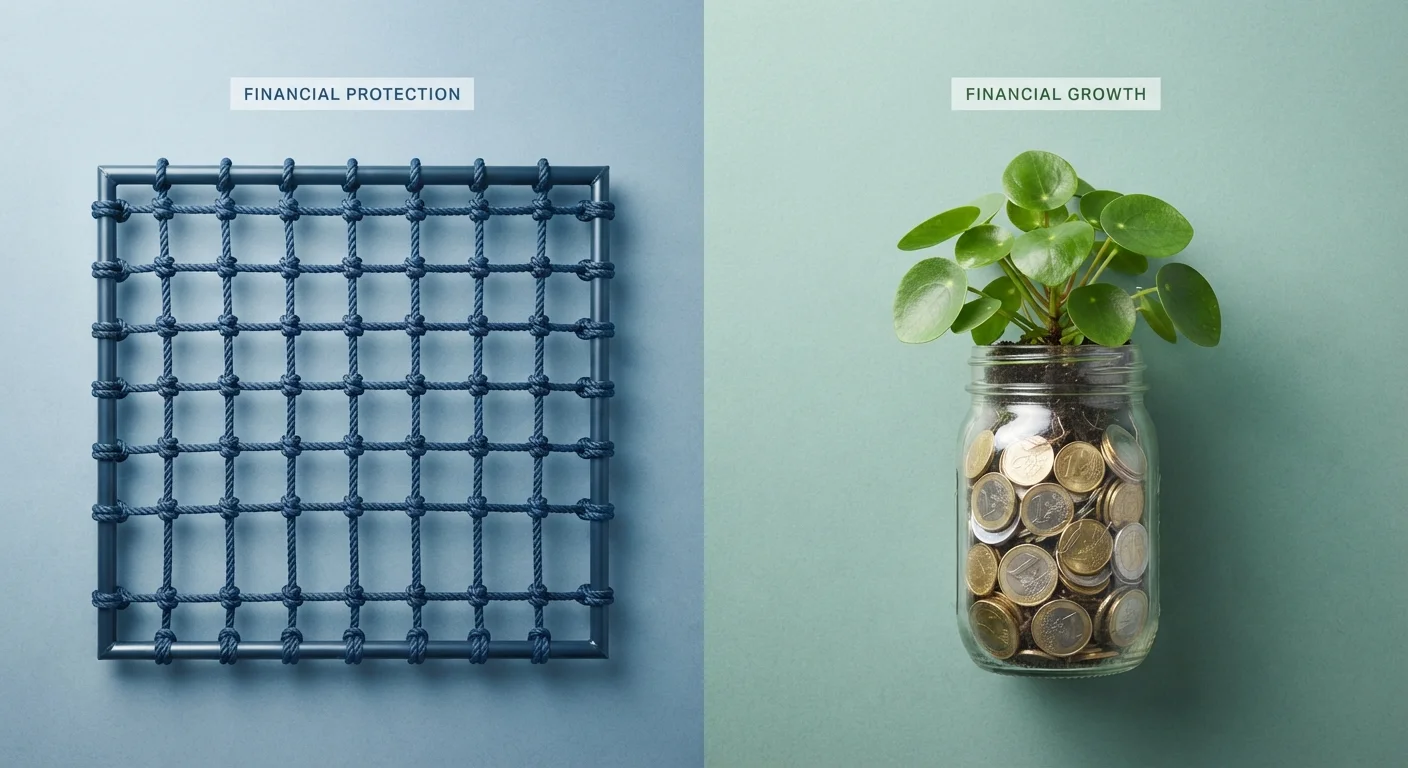
Photo credit: InGlimpse.com | Where Curiosity Finds Answers
In this article
Should you build an emergency fund before investing? Explore how these two financial priorities work together and how to sequence them.
Key Takeaways
- An emergency fund should generally be funded before aggressive investing begins.
- Most financial guidance recommends three to six months of essential expenses in liquid savings.
- Investing without a cash buffer can force you to sell assets at a loss during emergencies.
- Employer 401(k) matches are an exception — capturing that match is typically prioritized early.
- Both tools serve distinct purposes and work best in sequence, not in competition.
Why the Sequencing Question Matters
For many households, every extra dollar at month's end faces a genuine fork in the road: park it somewhere safe, or put it to work in the market. The instinct to invest early is financially sound in principle — time in the market is one of the most powerful forces in personal finance. But investing before establishing a cash reserve introduces a risk that's easy to underestimate.
Without liquid savings, a single unexpected expense — a medical bill, a furnace replacement, a period of unemployment — can force you to raid investment accounts at the worst possible moment. Selling during a market downturn locks in losses and can permanently impair long-term returns. This is why the sequencing of these two priorities matters as much as the amount you save or invest.
To understand each tool's role clearly, see The Difference Between Saving and Investing — a foundational look at how these two approaches serve different purposes in a financial plan.
| Criterion | Emergency Fund | Investment Account |
|---|---|---|
| Primary purpose | Financial protection and liquidity | Long-term wealth accumulation |
| Typical vehicle | High-yield savings or money market account | 401(k), IRA, or brokerage account |
| Liquidity | Fully liquid; accessible immediately | Variable; early withdrawal may incur penalties or losses |
| Return potential | Low (savings interest rate) | Higher over time, with risk of loss |
| Risk level | Very low (FDIC-insured accounts) | Moderate to high depending on allocation |
| Tax treatment | Interest is taxable income | Tax-advantaged options available (401k, IRA) |
| Ideal target size | 3–6 months of essential expenses | As much as goals and timeline warrant |
The Case for Building an Emergency Fund First
An emergency fund is a dedicated pool of liquid, accessible cash — typically held in a high-yield savings account or money market account — designed to cover essential expenses during a financial disruption. The widely cited benchmark is three to six months of essential living costs, though the right target varies by income stability, household size, and risk tolerance.
The core argument for prioritizing it first is straightforward: it functions as insurance for your other financial decisions. If you invest without one, you're essentially betting that no significant emergency will occur during the months or years it takes to build wealth. That's a bet most financial professionals wouldn't recommend.
~37%
Americans who couldn't cover a $400 emergency with cash
Federal Reserve surveys have consistently found that a significant share of U.S. adults lack sufficient liquid savings to handle a modest unexpected expense.
3–6 months
Commonly recommended emergency fund target
Most mainstream financial guidance, including that from the Consumer Financial Protection Bureau, points to three to six months of essential living expenses as a prudent target.
50%+
Typical employer 401(k) match rate on contributions
Many employers match 50 to 100 cents on every dollar contributed up to a set percentage of salary, making the match one of the highest-value financial moves available to eligible workers.
A secondary benefit is behavioral. Knowing you have a buffer reduces financial anxiety, which research in behavioral economics links to better long-term decision-making. People with emergency savings are less likely to panic-sell investments during downturns — precisely because they don't need to liquidate to cover immediate needs.
For help incorporating an emergency savings target into your monthly plan, Building Your First Budget with Saving Built In offers a structured approach to making saving automatic rather than optional.
The Case for Investing Alongside (or Before Fully Funding) Your Emergency Reserve
The "emergency fund first, always" rule has a meaningful exception: employer-sponsored retirement matching. If your employer matches contributions to a 401(k) or similar plan, passing that up to build cash savings means forfeiting compensation that's already earned. Most financial educators treat capturing the full employer match as a near-universal priority.
Beyond that exception, the opportunity cost of holding too much cash is real. Money sitting in savings earns a modest interest rate; money invested in diversified assets has historically grown at a higher rate over long periods — though past performance never guarantees future results, and all investing involves risk of loss.
For those new to what an investment account actually holds, Stocks, Bonds, and Cash: The Core Building Blocks of Any Portfolio explains how different asset classes function and work together.
Tax-Advantaged Accounts Deserve Early Attention
Roth IRAs and traditional 401(k)s offer tax benefits that compound significantly over time. Annual contribution limits apply, and unused contribution room generally cannot be carried forward in the same way for 401(k)s. Starting contributions early — even small ones — can help maximize the years of tax-advantaged compounding available to you. A licensed financial adviser can help you determine which account types suit your tax situation.
The practical takeaway: once an employer match is captured and a starter emergency reserve (often cited as roughly $1,000) is in place, many households choose to split additional dollars — directing some toward completing the emergency fund while simultaneously contributing to tax-advantaged investment accounts.
A Practical Framework for Sequencing Both Goals
Financial educators often describe the following general order — though individual circumstances always warrant personalized guidance from a qualified financial adviser:
- Build a starter emergency reserve (often around $1,000) to prevent small surprises from becoming debt.
- Capture any available employer retirement match in full — this is the closest thing to a guaranteed return in personal finance.
- Pay down high-interest debt, such as credit card balances, which typically carry rates that outpace investment returns. See Debt Avalanche vs. Debt Snowball for repayment strategy options.
- Complete the full emergency fund (three to six months of essential expenses).
- Maximize tax-advantaged investment contributions (IRAs, 401(k) beyond the match) and, where applicable, taxable brokerage accounts.
This sequence isn't rigid — life rarely is. But it reflects a risk-adjusted approach: eliminate near-term financial fragility before optimizing for long-term growth. For readers still building out their overall spending plan, Building Your First Monthly Budget provides a solid starting foundation.
This article is for general informational and educational purposes only and does not constitute personalized financial, investment, tax, or legal advice. Please consult a qualified financial adviser or licensed professional before making decisions based on your individual circumstances.

Author
Finance Editorial Team
Finance Editorial Team is the collective byline for our editorial team and contributor network. Articles published under this byline or an editorial pen name are researched, written, and reviewed according to our editorial standards for clarity, consistency, and independence before publication.
View all articles →