
The Difference Between Saving and Investing — and Why Both Matter
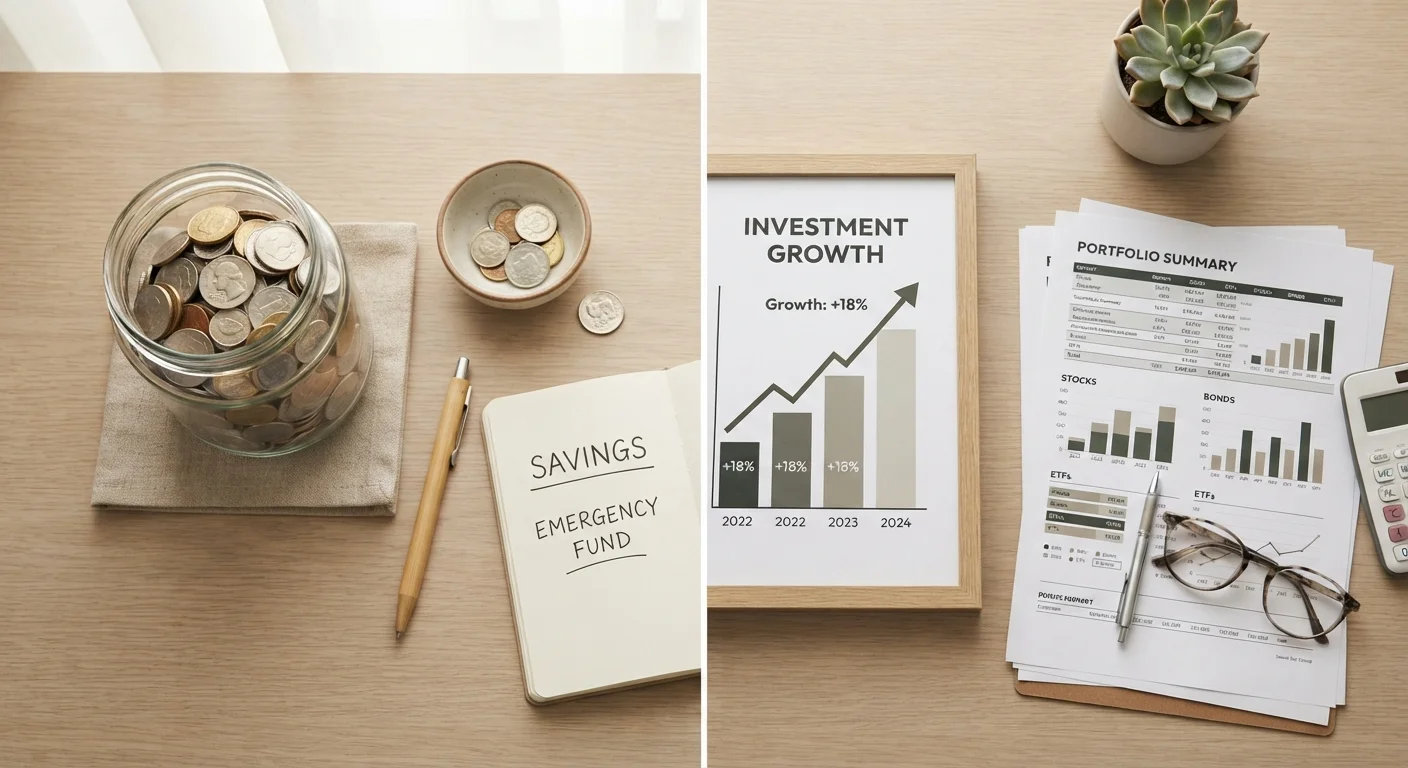
Photo credit: InGlimpse.com | Where Curiosity Finds Answers
In this article
Saving and investing serve different purposes in a financial plan. Learn what sets them apart and when each approach makes sense.
Key Takeaways
- Saving is best for short-term goals and emergencies; investing is better suited for long-term wealth building.
- Savings accounts are low-risk and highly liquid; investments carry more risk but offer higher potential returns.
- Inflation can erode the purchasing power of money left only in savings accounts over time.
- Most financial plans benefit from doing both simultaneously, not choosing one over the other.
- Tax-advantaged accounts can make investing more efficient for long-term goals like retirement.
What Each Term Actually Means
The words "saving" and "investing" are often used interchangeably in casual conversation, but they describe two genuinely different financial activities with different purposes, risks, and outcomes.
Saving involves placing money in a secure, accessible account — a checking account, savings account, or money market account — where it is protected from loss and available when you need it. The trade-off is that the returns are modest. High-yield savings accounts and certificates of deposit (CDs) may offer better rates than standard accounts, but none of these vehicles is designed to grow wealth significantly over time.
Investing means allocating money to assets — such as stocks, bonds, mutual funds, or exchange-traded funds (ETFs) — with the expectation that they will grow in value over time. Unlike savings, investments can lose value, sometimes sharply. That risk is the price of admission for higher long-term potential. Understanding the core building blocks of a portfolio — stocks, bonds, and cash — is a useful starting point for any new investor.
A Note on Savings Account Insurance
Deposits held at FDIC-insured banks or NCUA-insured credit unions are protected up to $250,000 per depositor, per institution, per account category. This federal backing is what makes savings accounts essentially risk-free for most consumers. Investment accounts do not carry this same protection — market losses are not covered by deposit insurance.
Why the Distinction Matters: Risk, Liquidity, and Time
Three concepts explain most of the practical difference between saving and investing: risk, liquidity, and time horizon.
- Risk: Savings in federally insured accounts carry virtually no risk of loss. Investments fluctuate — markets rise and fall, and there is no guarantee of positive returns. Past performance does not predict future results.
- Liquidity: Savings are typically available immediately or within days. Investments may take longer to access and, more importantly, selling at the wrong time — during a market downturn — can lock in losses.
- Time horizon: Savings work well for needs within the next one to three years. Investing is generally more appropriate for goals that are five or more years away, where short-term market swings are less likely to derail the plan.
The inflation factor is also worth understanding. Money sitting only in a low-yield savings account may not keep pace with inflation over decades, meaning its purchasing power gradually declines. This is one reason financial educators argue that saving alone is not a complete long-term strategy.
3–6 months
Recommended emergency fund size
Financial planning guidance consistently recommends keeping three to six months of essential expenses in accessible savings before prioritizing discretionary investing.
~2–5%
Typical high-yield savings account APY range
High-yield savings account rates fluctuate with the federal funds rate; they are meaningfully higher than traditional savings accounts but still modest compared to long-term investment returns.
~10%
Historical average annual U.S. stock market return
The U.S. stock market has historically returned roughly 10% annually before inflation over long periods, though past performance does not guarantee future results and individual results will vary.
When to Save, When to Invest — and When to Do Both
Choosing between saving and investing is rarely an either/or decision. Most well-structured financial plans incorporate both, with the balance shifting based on your goals and timeline.
Prioritize saving when:
- You do not yet have an emergency fund covering three to six months of essential expenses.
- You have a specific purchase or expense coming up within the next few years — a down payment, a car, a planned medical cost.
- Your income is irregular or your financial situation is in flux.
Shift toward investing when:
- Your emergency fund is established and stable.
- You are working toward retirement or another long-term goal many years away.
- You have money you can afford to leave untouched through market cycles.
Tax-advantaged accounts — such as 401(k)s, IRAs, and HSAs — sit at the intersection of both worlds. They are investment accounts with built-in tax benefits that make long-term growth more efficient. See our guide to tax-advantaged accounts to understand how each type works. And if building saving into your regular cash flow feels challenging, structuring your budget so saving is automatic can help.
Start with Your Emergency Fund First
Before directing extra dollars toward investing, aim to build a cash cushion of three to six months of essential expenses in an accessible savings account. This buffer means you're far less likely to need to sell investments at an inopportune time — such as during a market downturn — to cover an unexpected expense. Once that foundation is established, investing becomes a much more stable endeavor.
Building a Strategy That Uses Both
Rather than treating saving and investing as competing priorities, consider them as complementary layers of a financial plan. A commonly referenced starting point is the 50/30/20 framework — allocating roughly 50% of take-home income to needs, 30% to wants, and 20% to saving and investing combined. Within that 20%, the mix depends on where you are in building your financial foundation.
Once a sufficient emergency fund exists, many people find it useful to automate both: a fixed transfer to a savings account for near-term goals and an automatic contribution to a retirement or investment account for the long term. Automation reduces the temptation to skip contributions during busy or stressful months.
For investors newer to the space, understanding risk management concepts such as diversification and what it actually protects you from can make the investment side of this plan feel less daunting. The key insight is that neither tool alone is sufficient — savings without investing can leave you behind inflation over time, and investing without savings leaves you vulnerable when unexpected costs arise.
This article is for general informational and educational purposes only and does not constitute personalized financial, investment, tax, or legal advice. Consult a qualified financial professional before making decisions about your own financial situation.
Frequently Asked Questions

Author
Finance Editorial Team
Finance Editorial Team is the collective byline for our editorial team and contributor network. Articles published under this byline or an editorial pen name are researched, written, and reviewed according to our editorial standards for clarity, consistency, and independence before publication.
View all articles →