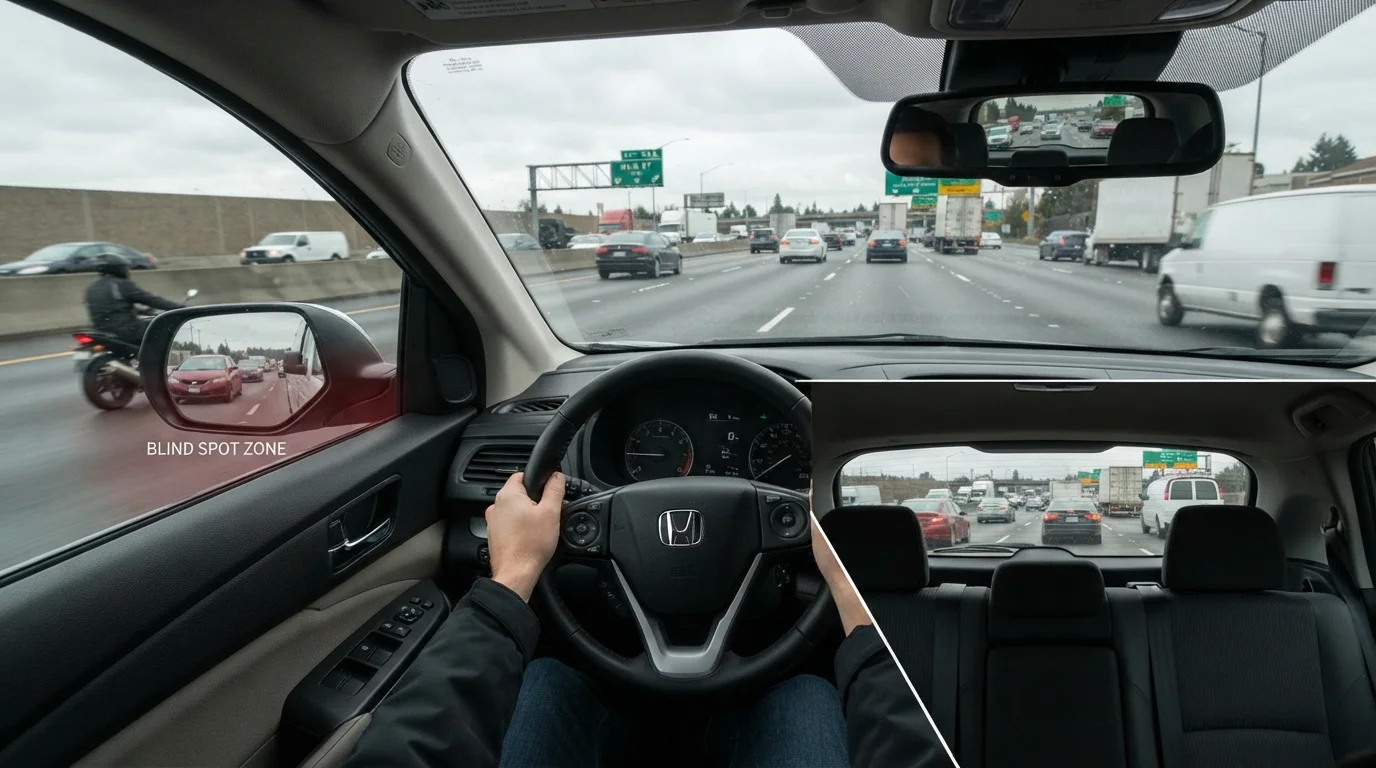
Safe Driving Across All Conditions: A Comprehensive Road Guide

Photo credit: InGlimpse.com | Where Curiosity Finds Answers
In this article
From urban intersections to rural highways and adverse weather, this end-to-end guide covers the core principles of driving safely in America.
Key Takeaways
- Vehicle maintenance is the first layer of road safety — don't skip it.
- Urban driving demands heightened attention to pedestrians, cyclists, and unpredictable stops.
- Highway fatigue and high-speed merging are leading contributors to rural crash risk.
- Adverse weather requires reduced speed, increased following distance, and adjusted expectations.
- Distraction — especially phone use — is a factor in a significant share of U.S. crashes.
- Vulnerable road users like pedestrians and cyclists need extra space and care from drivers.
The Foundation: Vehicle Readiness
Safe driving starts before you turn the ignition. A vehicle that isn't properly maintained puts you at a disadvantage regardless of how skilled a driver you are. Tires, brakes, lights, and fluid levels are the non-negotiables — and they're worth checking regularly, not just before long trips.
Tire pressure and tread depth matter most in wet or icy conditions when grip is already compromised. Brakes should be inspected at least annually; worn pads extend stopping distances in ways drivers rarely account for until it's too late. Headlights, taillights, and turn signals keep you visible to others — a factor the NHTSA consistently links to crash reduction at night and in poor visibility.
For a structured approach to keeping your vehicle road-ready, see the car maintenance hub. And if you're preparing specifically for winter, the winter road conditions preparation checklist walks through what to verify before cold weather arrives.
Check These Before Every Long Trip
Take five minutes to check tire pressure, oil level, and that all lights are functioning before hitting the road for a long drive. These quick checks can surface problems that are far easier to address at home than on the side of a highway. Your owner's manual lists the recommended intervals for each item.
Urban and Suburban Driving
City and suburban roads present the highest volume of interactions per mile — pedestrians, cyclists, delivery vehicles, traffic signals, and drivers making unpredictable decisions. Speed limits are lower, but reaction time demands are higher.
Key habits in urban environments include scanning intersections before entering even on a green light, giving cyclists a full lane's worth of space when passing, and watching for pedestrians stepping from between parked cars. Distracted driving at slow speeds still causes serious injuries — particularly to those on foot or on bikes.
~38,000
Annual U.S. traffic fatalities
The NHTSA reports roughly 38,000 people die in vehicle crashes each year in the United States.
3,500+
Deaths linked to distracted driving annually
The CDC estimates more than 3,500 people are killed each year in crashes involving distracted drivers in the U.S.
56%
Fatal crashes on rural roads
According to NHTSA data, over half of all U.S. traffic fatalities occur on rural roads despite lower overall traffic volume.
For a detailed side-by-side comparison of how city driving differs from highway driving in terms of hazard profile, see Highway Driving vs. City Driving.
Highway and Rural Road Driving
High-speed environments shift the risk profile dramatically. At 70 mph, a driver traveling one car length per second has far less time to react to sudden stops, debris, or merging vehicles. The most common highway errors are following too closely, improper lane changes, and driving fatigued over long distances.
Rural roads introduce their own hazards: poor lighting, unmarked intersections, animals crossing, and variable surface conditions. Two-lane rural roads account for a disproportionately high share of U.S. traffic fatalities despite lower total traffic volume.
When merging onto a highway, match traffic speed before entering the lane — not after. Entering too slowly forces other drivers to brake or swerve.
Speed differential at merge points is a common trigger for rear-end and sideswipe crashes, particularly in heavier traffic conditions.
On long highway drives, plan a 15-minute break every two hours regardless of how alert you feel. Fatigue builds gradually and is easy to underestimate.
Research consistently shows that driving performance degrades with duration even when drivers report feeling fine, particularly after the two-hour mark.
Understanding defensive driving principles is especially valuable at highway speeds, where the margin for error shrinks considerably. Keep a minimum three-second following distance — more in heavy traffic or poor conditions.
Adverse Weather Conditions
Rain, snow, ice, fog, and glare each alter road physics and visibility in ways that demand a recalibrated approach. The single most consistent expert recommendation across all adverse weather conditions is to slow down — not just to the posted limit, but to whatever speed allows you to stop safely within the distance you can see.
In rain, hydroplaning — where tires ride on a film of water and lose contact with the road — can occur even at moderate speeds on worn tires. In snow or ice, stopping distances can increase by five to ten times compared to dry pavement. Fog requires low-beam headlights (not high-beams, which reflect back), reduced speed, and increased following distance.
Don't Rely on All-Wheel Drive in Snow
AWD and 4WD systems improve traction when accelerating, but they do not improve braking performance on ice or snow. Many drivers overestimate their stopping ability in winter conditions because of their drivetrain. All-season tires on an AWD vehicle still perform significantly worse than dedicated winter tires in extreme cold.
Bridges and overpasses freeze before roadway surfaces because cold air circulates beneath them — a detail many drivers overlook. Black ice is nearly invisible and forms most commonly between 25°F and 32°F. If conditions suggest ice is possible, treat all road surfaces as suspect.
Distraction, Fatigue, and Impairment
These three factors are among the most preventable contributors to serious crashes in the U.S. The CDC estimates that distracted driving kills thousands of Americans annually, with phone use being the most commonly cited source. At 55 mph, reading a five-second text is the equivalent of driving the length of a football field with your eyes closed.
Fatigue mimics impairment in measurable ways — slowed reaction time, reduced situational awareness, and microsleep episodes that can last several seconds. If you're yawning frequently, struggling to maintain lane position, or can't recall the last few miles, pull over safely and rest.
Impairment Goes Beyond Alcohol
Driving under the influence of any impairing substance — including cannabis, prescription sedatives, antihistamines, and some pain medications — is illegal and dangerous. Impairment can be present even when a driver feels subjectively fine. If a medication label warns against operating heavy machinery, that warning applies to driving.
Alcohol and drug impairment remain leading causes of fatal crashes. Even legal substances — including some prescription medications and over-the-counter drugs — can impair driving. Always read medication warnings and consult a pharmacist if you're unsure about a drug's effect on your ability to drive.
Protecting Vulnerable Road Users
Pedestrians, cyclists, motorcyclists, and school-age children represent some of the most at-risk people on American roads. They absorb the full force of impact with no structural protection. Drivers bear a significant share of the responsibility for creating safe conditions around them.
Always yield at crosswalks — even unmarked ones — and make eye contact with pedestrians before proceeding. Treat cyclists as you would a slow-moving vehicle: don't crowd them, don't pass when you can't give adequate clearance, and look for them at intersections. Motorcycles are harder to see and stop faster than most drivers expect.
New and young drivers may benefit from reviewing the elevated risk factors for teen drivers, many of which apply to inexperienced drivers of any age. Knowing your road signs thoroughly also plays a practical role in responding correctly in shared-use environments.
This article is for general informational and educational purposes only. It does not constitute professional driving instruction or legal advice. Always follow applicable traffic laws in your state and consult qualified professionals for specific concerns.

Author
Autos Editorial Team
Autos Editorial Team is the collective byline for our editorial team and contributor network. Articles published under this byline or an editorial pen name are researched, written, and reviewed according to our editorial standards for clarity, consistency, and independence before publication.
View all articles →