Road Signs Every American Driver Should Know Cold
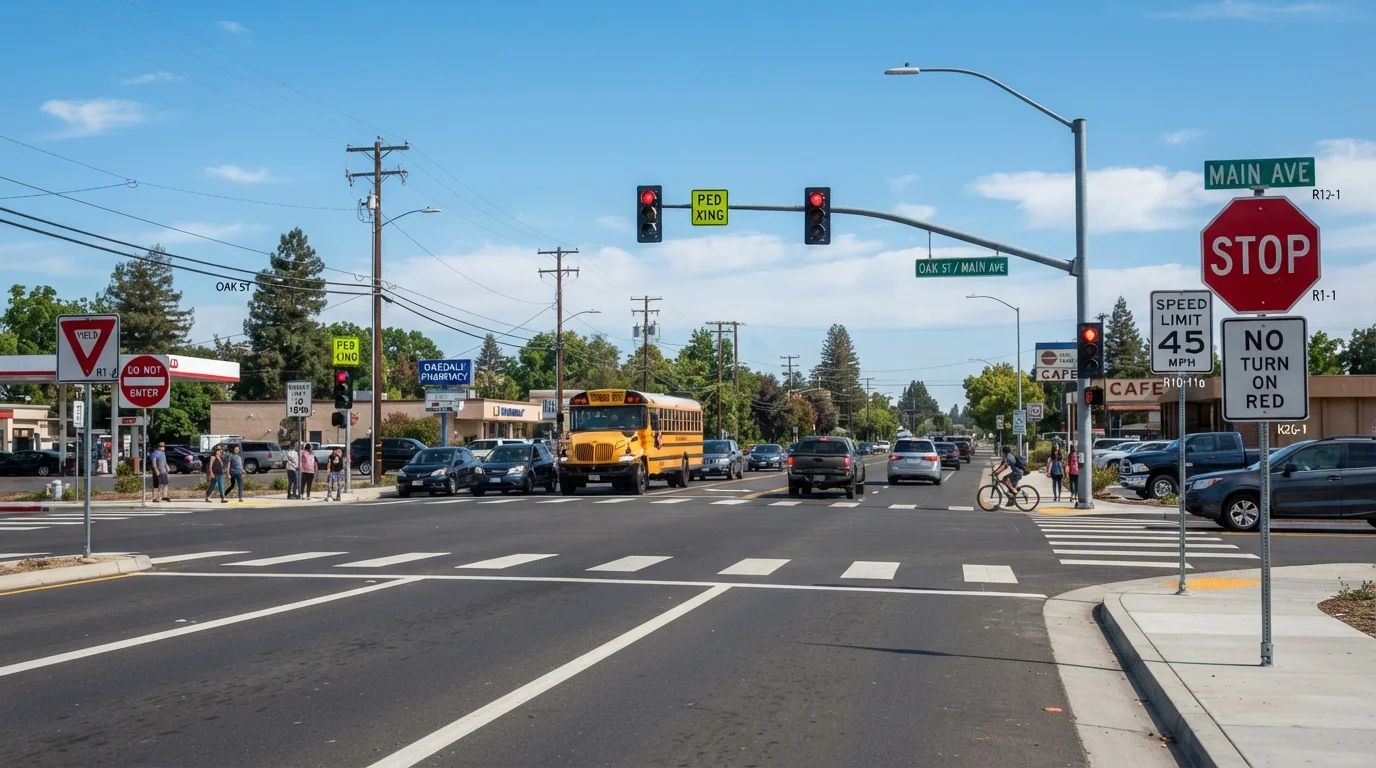
Photo credit: InGlimpse.com | Where Curiosity Finds Answers
In this article
A practical reference to U.S. road signs — regulatory, warning, and guide — including ones drivers frequently misread or ignore.
The Three Sign Categories U.S. Drivers Need to Recognize
The Federal Highway Administration organizes road signs into three broad families, each with a distinct visual language. Understanding the system makes unfamiliar signs easier to read on the fly.
- Regulatory signs
- White background, black or red text. These signs communicate laws. Ignoring them isn't a judgment call — it's a traffic violation. The Stop sign (red octagon) and Do Not Enter sign (white horizontal bar on red) fall here.
- Warning signs
- Yellow diamond shape with black symbols. These alert drivers to upcoming hazards or changing road conditions — curves, school zones, merging traffic, railroad crossings. They call for reduced speed and heightened attention, not a mandatory stop.
- Guide signs
- Green, blue, or brown backgrounds. These provide direction, distance, and service information. Interstate route shields, highway exit signs, and brown recreation signs all belong to this category.
For a broader look at how safe driving knowledge fits together, see the comprehensive road guide covering everything from urban intersections to adverse weather.
Regulatory Signs Drivers Most Often Misread
Most drivers recognize a Stop sign. Fewer consistently apply the rules behind these commonly misread regulatory signs.
Yield
A downward-pointing white triangle with a red border. Yield means slow down and give the right-of-way to traffic already in the intersection or roadway you're entering. It does not mean stop unless traffic requires it — but it also doesn't mean proceed without looking.
No U-Turn
Many drivers treat this as a suggestion. It is a restriction enforced as a moving violation in most states.
One Way
Black text on a white background with an arrow. Driving the wrong way past a One Way sign puts you directly in the path of oncoming traffic. At night, one indicator that you may have turned onto a one-way street incorrectly is seeing red reflectors on both sides of the lane markers ahead of you.
Speed Limit
Posted limits are legal maximums under normal conditions — not targets to reach regardless of weather or traffic. Learn the difference between posted, advisory, and prima facie speed limits to understand what each type legally requires of you.
Keep Right Except to Pass
Common on multi-lane highways, this sign is widely ignored. Staying in the left lane when not passing impedes traffic flow and is a moving violation in many states.
Warning Signs Worth a Second Look
Warning signs use standardized symbols so they can be read quickly — often at highway speeds. Here are several that drivers routinely underestimate.
Regulatory sign
A sign that communicates a traffic law or legal requirement. Failure to comply can result in a traffic citation. Examples include Stop, Yield, and speed limit signs.
Warning sign
A diamond-shaped yellow sign alerting drivers to a hazard or change in road conditions ahead. Warning signs call for caution and adjusted speed, not a mandatory stop.
Advisory speed
A recommended speed for a specific road feature such as a curve, posted below a warning sign. It is calculated by engineers and is not a legally enforceable speed limit, but reflects the safe travel speed under normal conditions.
MUTCD
The Manual on Uniform Traffic Control Devices — the federal standard published by the FHWA that defines the design, placement, and meaning of all road signs, signals, and pavement markings used on U.S. public roads.
Work zone
A designated area of roadway where construction, maintenance, or utility work is underway. Work zones are marked by orange signs, and traffic violations within them typically carry doubled fines.
Right-of-way
The legal priority to proceed through an intersection or road section. Yield signs, traffic signals, and specific rules (such as pedestrians in crosswalks) determine who holds the right-of-way in a given situation.
Divided Highway Ends
A yellow diamond showing traffic merging from a divided road into an undivided one. After this sign, oncoming traffic is no longer separated by a median. Left-of-center collisions become a real hazard.
Advisory Speed on Curves
A yellow placard below a curve warning sign listing a speed (e.g., "35 MPH"). This is an advisory speed — the recommended safe speed for that curve under normal dry conditions. It carries no direct legal weight but is calculated by engineers based on the curve's geometry; ignoring it substantially increases rollover and run-off-road risk.
Pedestrian and School Crossing
Both use pentagonal (five-sided) shapes — a feature unique to school-zone signs in the U.S. sign system. Reduced speed limits in school zones are active during posted hours and carry elevated fines in most states.
Low Clearance
A yellow rectangular sign listing a bridge or overpass height in feet and inches. This applies most to drivers of trucks, vans with roof racks, or vehicles towing tall trailers. Striking an overpass causes serious damage and can endanger other road users.
Sharpen your broader driving knowledge by reviewing common driving safety myths that many motorists still treat as fact.
Temporary and Construction Zone Signs
Orange signs with black text or symbols indicate active work zones. Fines for violations in construction zones are typically doubled under state law, and reduced speed limits apply whether or not workers are visibly present.
Construction Zone Fines Apply Even Without Workers Present
Many drivers assume doubled fines only apply when they can see road workers nearby. In most states, the elevated fines are active throughout the entire posted work zone during its designated hours, regardless of whether workers are visible. Always treat orange signage as legally binding and reduce your speed accordingly.
Key construction zone signs to know:
- Flagger Ahead: A human flagger is controlling traffic flow. Follow their directions even if they appear to conflict with posted signals — their instructions take precedence.
- Lane Ends — Merge Left/Right: One lane of travel is closing ahead. Early merging reduces stop-and-go congestion; zipper merging near the merge point is encouraged by many state DOTs when traffic is heavy.
- Road Work Next X Miles: Establishes the extent of a construction zone so you know how long to expect reduced speeds and altered lane configurations.
If you drive in winter conditions through construction zones, the winter road preparation checklist can help you account for added hazards like ice on unfinished pavement surfaces.

Author
Autos Editorial Team
Autos Editorial Team is the collective byline for our editorial team and contributor network. Articles published under this byline or an editorial pen name are researched, written, and reviewed according to our editorial standards for clarity, consistency, and independence before publication.
View all articles →