
Morning vs. Evening Skincare: Why Your Routine Shouldn't Be Identical
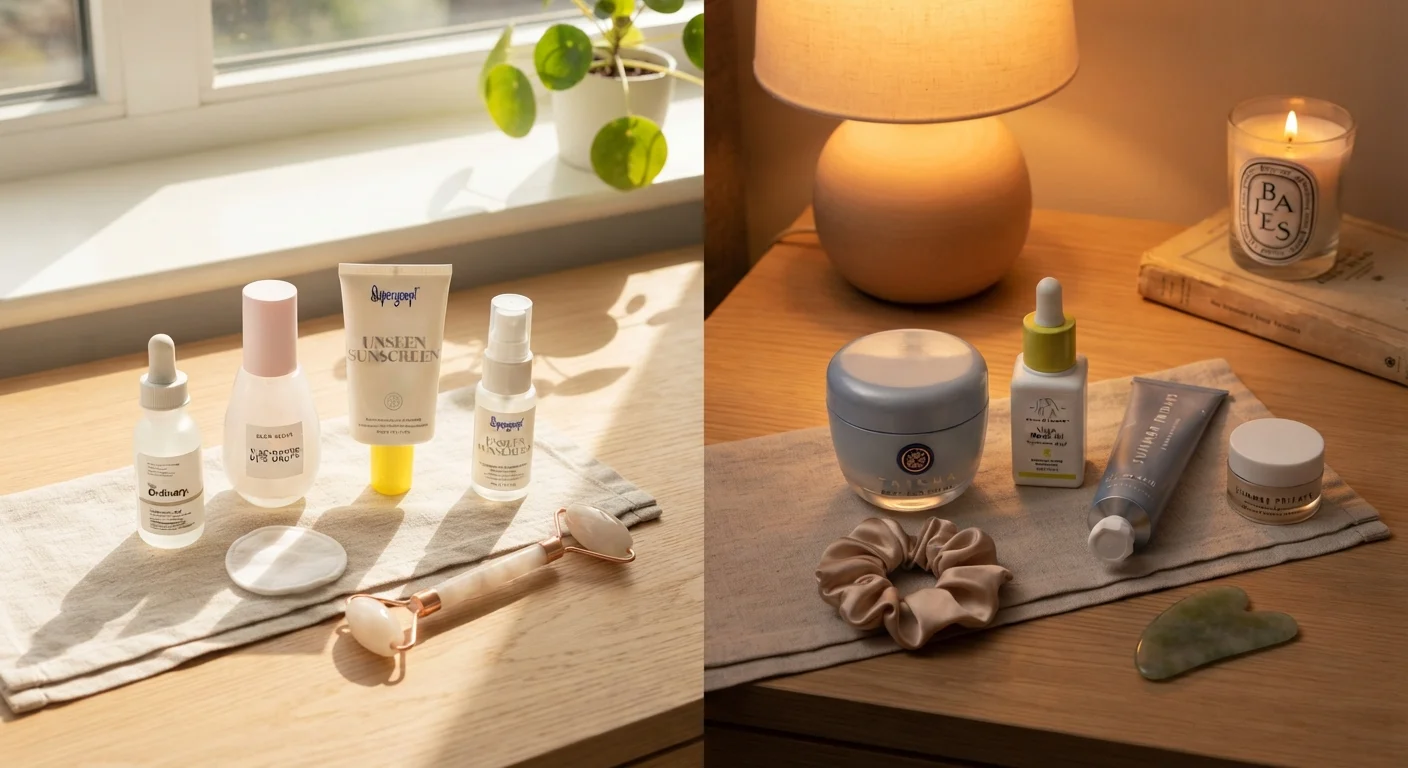
Photo credit: InGlimpse.com | Where Curiosity Finds Answers
In this article
Your skin has different needs at dawn and dusk. Here's why AM and PM routines call for different ingredients and steps.
Key Takeaways
- Morning routines should prioritize protection — antioxidants and SPF are non-negotiable.
- Evening routines support repair — active ingredients like retinoids work best overnight.
- Some ingredients, such as vitamin C, are more effective in the morning; others, like AHAs, belong at night.
- Double cleansing in the evening removes sunscreen and pollution that a single wash may miss.
- Nighttime is when skin's cell turnover peaks, making PM the optimal window for treatment actives.
- Using the same routine twice a day can lead to irritation, over-exfoliation, or reduced ingredient efficacy.
Why Skin Behaves Differently at Different Times of Day
Your skin isn't static — it operates on a circadian rhythm, the same internal biological clock that regulates sleep and hormone release. Research in chronobiology (the study of biological time cycles) suggests that skin tends to be in a defense mode during the day and a repair mode at night. Sebum production, transepidermal water loss (moisture escaping through skin), and cell turnover all shift across the 24-hour cycle.
During daylight hours, the skin faces its highest oxidative stress load — ultraviolet radiation, airborne pollution, and blue light all generate free radicals that can damage the skin barrier and accelerate signs of aging. Come evening, those external stressors drop away, and cell regeneration accelerates. Understanding this rhythm is the foundation of building routines that actually work with your skin rather than against it.
If you're just starting out, our breakdown of what each skincare step actually does is a helpful starting point before diving into AM vs. PM distinctions.
The Morning Routine: Defend and Protect
The primary job of your morning routine is to arm skin before it steps into the day. This means building layers that neutralize environmental damage rather than penetrating deeply to remodel skin structure — that work is better left for evening.
Key Morning Steps
- Gentle cleanse (or rinse): Skin doesn't accumulate heavy debris overnight if your PM routine was thorough. Many people do well with water only or a mild hydrating cleanser in the morning.
- Antioxidant serum: Vitamin C (L-ascorbic acid) is well-studied for neutralizing free radicals. Applied in the morning, it bolsters SPF efficacy and helps prevent UV-triggered pigmentation.
- Moisturizer: Lightweight hydration supports the skin barrier without creating a heavy base under makeup or sunscreen.
- Broad-spectrum SPF: Non-negotiable. SPF is the single most evidence-backed intervention for preventing photoaging and reducing skin cancer risk. It belongs at the very end of your AM routine.
Notice what's missing: strong exfoliating acids, retinoids, or heavy occlusives. These either increase photosensitivity or are simply not suited to daytime skin behavior.
| Criterion | Morning Routine | Evening Routine |
|---|---|---|
| Primary goal | Protection from environmental damage | Repair, renewal, and treatment |
| Cleansing approach | Gentle rinse or light cleanse | Double cleanse to remove SPF and debris |
| Key actives | Vitamin C, antioxidants | Retinoids, AHAs, BHAs |
| SPF required | Yes — always last step | No |
| Moisturizer weight | Lightweight, non-greasy | Richer; can include facial oils |
| Skin's biological state | Defense mode | Repair and cell turnover mode |
| Exfoliation | Generally avoid | Appropriate window for acid exfoliants |
The Evening Routine: Repair and Restore
The PM routine has two phases: remove the day, then treat the skin. Both matter equally.
Key Evening Steps
- Double cleanse: Start with an oil-based cleanser or micellar water to dissolve sunscreen and sebum, then follow with a water-based cleanser. A single wash often can't fully remove SPF formulations — a known contributor to clogged pores and dull skin. Incomplete cleansing is one of the most common habits that quietly undermine an otherwise solid routine.
- Treatment actives: Retinoids (vitamin A derivatives that support cell turnover) are the textbook example of a PM-only ingredient. They degrade in sunlight and increase photosensitivity. Similarly, AHAs (alpha-hydroxy acids like glycolic and lactic acid) and BHAs (beta-hydroxy acids like salicylic acid) are best reserved for nighttime to minimize sun exposure risk on freshly exfoliated skin.
- Richer moisturizer or facial oil: Overnight, skin loses more moisture than during the day. A slightly heavier moisturizer or a sealing facial oil helps support the barrier during sleep.
If you want to streamline without losing efficacy, building a minimal routine that still works offers a practical framework for cutting steps without cutting results.
~70%
Of skin cell turnover occurs at night
Circadian biology research indicates that epidermal cell division peaks during sleep hours, underscoring why PM treatment timing matters.
2x
Increased SPF efficacy with antioxidant pairing
Studies published in dermatology literature suggest antioxidant serums applied beneath sunscreen can enhance its photoprotective effect.
Up to 30%
More transepidermal water loss at night
Skin barrier permeability can increase overnight, which is one reason richer nighttime moisturizers may be beneficial for many skin types.
Ingredients That Belong to One Routine Only
One of the most common skincare mistakes is treating the product lineup as interchangeable — applying the same serum or acid morning and night simply because it's there. Some ingredients are genuinely dual-use (hyaluronic acid, niacinamide, gentle peptides), but others are time-specific for good reason.
Ingredients That Are Time-Specific
Retinoids and photosensitizing exfoliants (AHAs, BHAs) should be reserved for evening use only. Applied in the morning and followed by sun exposure, they can increase the risk of sunburn and irritation. Vitamin C, on the other hand, is best applied in the morning where it can actively neutralize free radicals generated by UV and pollution. Hyaluronic acid and niacinamide are flexible and generally safe to use in both routines.
Adapting your routine as conditions change — including seasonal shifts in UV intensity and humidity — is equally important. Seasonal skincare adjustments explains how to recalibrate when the weather does. And as skin naturally changes with age, so do the optimal ingredient choices — skincare priorities shift meaningfully across your 20s, 30s, and 40s.
This article is for general informational purposes only. It is not medical or dermatological advice. If you have a skin condition or concerns about a specific ingredient, consult a qualified dermatologist or healthcare professional.

Author
Style Editorial Team
Style Editorial Team is the collective byline for our editorial team and contributor network. Articles published under this byline or an editorial pen name are researched, written, and reviewed according to our editorial standards for clarity, consistency, and independence before publication.
View all articles →