
Skincare for Your 20s, 30s, and 40s: What Changes and Why
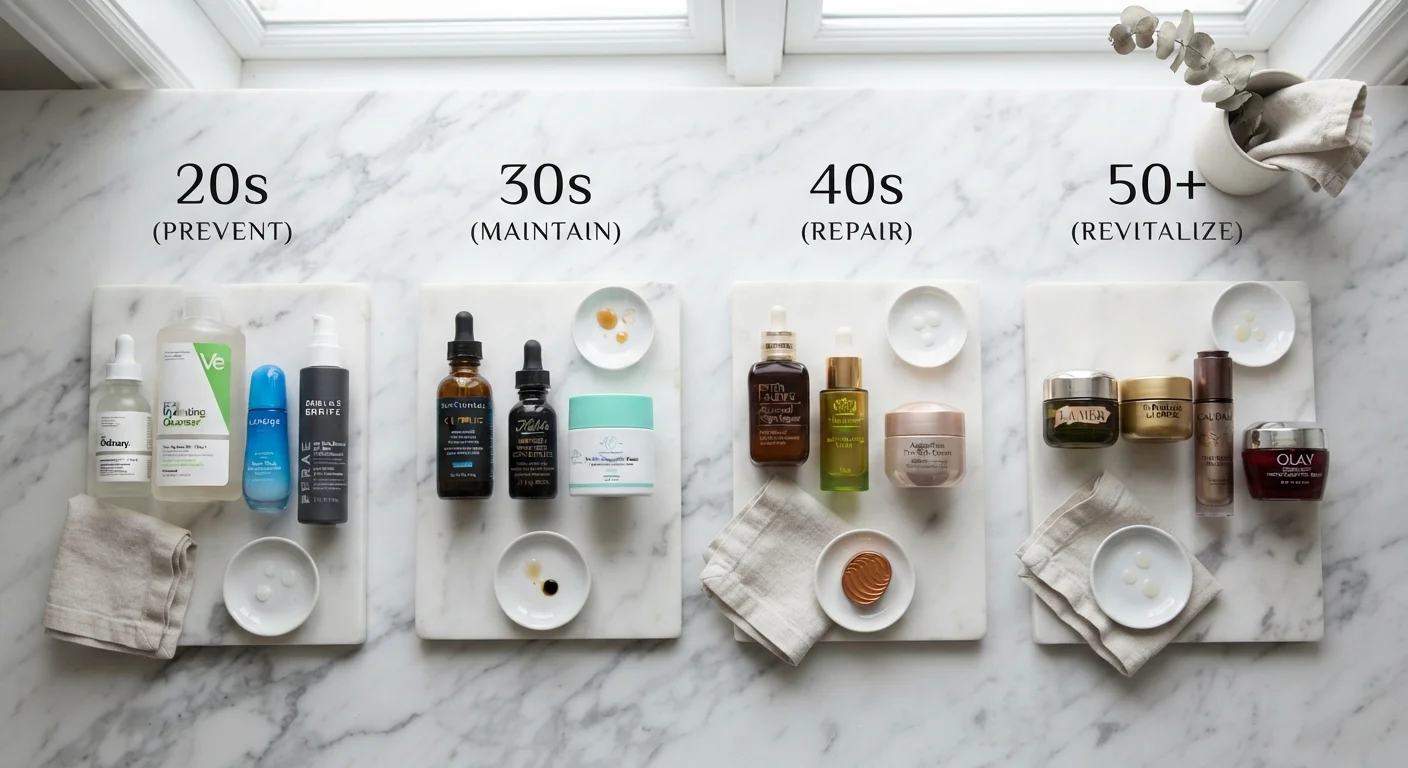
Photo credit: InGlimpse.com | Where Curiosity Finds Answers
Skin naturally changes as you age. Here's a decade-by-decade look at shifting priorities, ingredient considerations, and routine adjustments.
Key Takeaways
- Skin cell turnover slows significantly with each passing decade, affecting how products perform.
- SPF remains the single most impactful anti-aging step at every age.
- Your 30s often mark the first visible shift in skin texture, hydration, and elasticity.
- Retinoids are widely considered a foundational ingredient for skin from the late 20s onward.
- A routine that worked at 22 may not address what your skin needs at 38 or 45.
Why Skin Changes Decade by Decade
Skin isn't static. It's a living organ influenced by hormones, sun exposure, lifestyle, and the gradual biological changes that come with aging. If you've ever noticed that a product you loved for years suddenly seems less effective — or that your skin feels fundamentally different than it did a decade ago — you're not imagining it.
Cell turnover, the process by which old skin cells shed and new ones rise to the surface, slows steadily with age. In your 20s, that cycle takes roughly 28 days. By your 40s, it can stretch to 45–50 days, which affects everything from how bright your complexion looks to how well active ingredients absorb. Understanding this rhythm is key to building a routine that actually works for where you are now.
If you're newer to building a skincare routine altogether, our step-by-step guide to what each skincare step actually does is a useful starting point before diving into age-specific adjustments.
Your 20s: Build the Foundation
Skin in your 20s tends to be at or near peak resilience — oil production is active, collagen levels are relatively high, and cell turnover is brisk. But this decade is far from a free pass. It's actually the most important time to establish habits that will pay dividends for decades.
Daily SPF is non-negotiable. Sun damage accumulates invisibly long before it's visible, and up to 80% of visible skin aging is attributed to UV exposure, according to dermatology research. A broad-spectrum SPF 30 or higher, applied every morning, is the single highest-impact step you can take in your 20s.
Keep your routine relatively simple: a gentle cleanser, a lightweight moisturizer suited to your skin type, and that daily SPF. If acne is still a concern, a salicylic acid cleanser or a targeted spot treatment can help without stripping the barrier. Toward the late 20s, introducing a low-concentration retinoid — a vitamin A derivative that supports cell turnover — is worth discussing with a dermatologist.
Sun damage builds invisibly in your 20s — daily SPF now prevents visible aging later.
Your 30s: Adjust as Visible Changes Begin
For many people, the 30s are when skin begins signaling that something has shifted. Fine lines may appear around the eyes and mouth. Skin can feel less plump or take longer to recover from a rough night's sleep. Dullness becomes more noticeable because that slower cell turnover means older, less-reflective cells linger longer on the surface.
Hydration becomes more purposeful. Hyaluronic acid — a molecule that draws and holds moisture in the skin — becomes a genuinely useful addition to a routine at this stage, whether in a serum or moisturizer formula. Niacinamide (vitamin B3) is another well-studied ingredient that supports barrier function and can help with uneven skin tone.
If you haven't incorporated a retinoid yet, your 30s are an excellent time to start. Retinoids work by accelerating cell turnover and stimulating collagen production — both of which slow in this decade. Begin at a low concentration a few nights per week and increase frequency gradually to minimize irritation.
It's also worth auditing your broader habits. Common missteps like over-washing or skipping SPF indoors can quietly undo even a well-chosen product lineup.
Retinoids introduced in your 30s support collagen and cell turnover where both have begun to slow.
Your 40s: Prioritize Barrier Support and Targeted Actives
Hormonal changes in your 40s — particularly the shift toward perimenopause for many women — can alter oil production, skin thickness, and moisture retention noticeably. Skin may feel drier or more sensitive than it did in previous decades, and fine lines can deepen into more pronounced creases as collagen levels continue declining.
Barrier repair takes center stage. Look for moisturizers that include ceramides (lipids that help seal the skin barrier), fatty acids, and peptides — short chains of amino acids that signal the skin to produce more structural proteins. Rich, occlusive moisturizers that might have felt heavy in your 20s often become genuinely comfortable in your 40s.
Exfoliation remains important — it helps counteract that slower cell turnover — but the method matters. Chemical exfoliants like lactic acid or PHA tend to be gentler on mature or sensitive skin than physical scrubs. One to two times per week is a reasonable frequency for most skin types.
Continue with your retinoid and your morning SPF. These are not optional at any age — they are, if anything, more important now.
Ceramides and peptides help reinforce a skin barrier that becomes more vulnerable in your 40s.
Ingredients Worth Understanding Across All Decades
Certain ingredients have earned consistent support from dermatological research regardless of where you are in life. Understanding what they do — and what they don't — helps you navigate an often overwhelming skincare landscape.
- Sunscreen (SPF 30+): Broad-spectrum protection against both UVA and UVB rays. The cornerstone of any anti-aging strategy.
- Retinoids: Vitamin A derivatives that accelerate cell turnover and support collagen. Available in prescription-strength and over-the-counter formulations.
- Niacinamide: A form of vitamin B3 that supports the skin barrier, helps manage uneven tone, and is generally well-tolerated.
- Hyaluronic acid: A humectant that draws moisture into the skin. Most effective when applied to slightly damp skin and sealed with a moisturizer.
- Vitamin C (ascorbic acid): An antioxidant that helps neutralize free radical damage and supports a brighter-looking complexion.
No single ingredient is a standalone solution, and when you apply certain ingredients matters — some work best in the morning, others only at night.
Retinoids, SPF, and niacinamide offer well-researched benefits at every stage of adult skin health.
What Stays Constant, Regardless of Age
Despite the real changes that occur decade by decade, the fundamentals of skin health remain remarkably stable. Consistency, simplicity, and patience outperform complex product stacking at any age.
Cleanse gently. Over-cleansing strips the skin's natural barrier and can worsen dryness and sensitivity — especially relevant as skin becomes more reactive in the 40s. A gentle, sulfate-free cleanser used morning and evening is sufficient for most people.
Moisturize every day. Skin that is well-hydrated tends to look healthier and be more resilient against environmental stressors, regardless of decade.
Protect against the sun every day. This cannot be overstated. Even on cloudy days, even indoors near windows, UV exposure accumulates. SPF applied daily is the most evidence-backed step in any skincare routine.
Finally, remember that your skin reflects your overall health. Sleep, stress management, and nutrition all influence your complexion in ways that products alone cannot compensate for. A balanced approach — both topical and lifestyle-oriented — delivers the most durable results.
Consistency with the basics — cleansing, moisturizing, and SPF — remains the foundation at every age.
Building a Routine That Grows With You
No single routine works forever, but the good news is that thoughtful, consistent habits compound over time. Introducing the right ingredients at the right stage — rather than overloading your skin all at once — gives your barrier the best chance of staying resilient.
Introduce New Actives Gradually
When adding a new active ingredient — such as a retinoid or an exfoliating acid — start slowly. Use it two to three nights per week before building to more frequent application. This gives your skin time to acclimate and reduces the likelihood of irritation or barrier disruption. If you experience persistent redness, peeling, or sensitivity, dial back frequency or consult a dermatologist.
Keep in mind that factors beyond your product shelf also shape how your skin behaves. Sleep, diet, and stress all have measurable effects on skin that no serum alone can fully offset. And because your skin's needs shift with the seasons too, it's worth revisiting how to adapt your routine as weather changes alongside these decade-based adjustments.
This article is for general informational and educational purposes only and is not a substitute for professional dermatological or medical advice. For personal skin concerns or conditions, consult a board-certified dermatologist.

Author
Style Editorial Team
Style Editorial Team is the collective byline for our editorial team and contributor network. Articles published under this byline or an editorial pen name are researched, written, and reviewed according to our editorial standards for clarity, consistency, and independence before publication.
View all articles →