
Seasonal Skincare Adjustments: Adapting Your Routine as Weather Changes
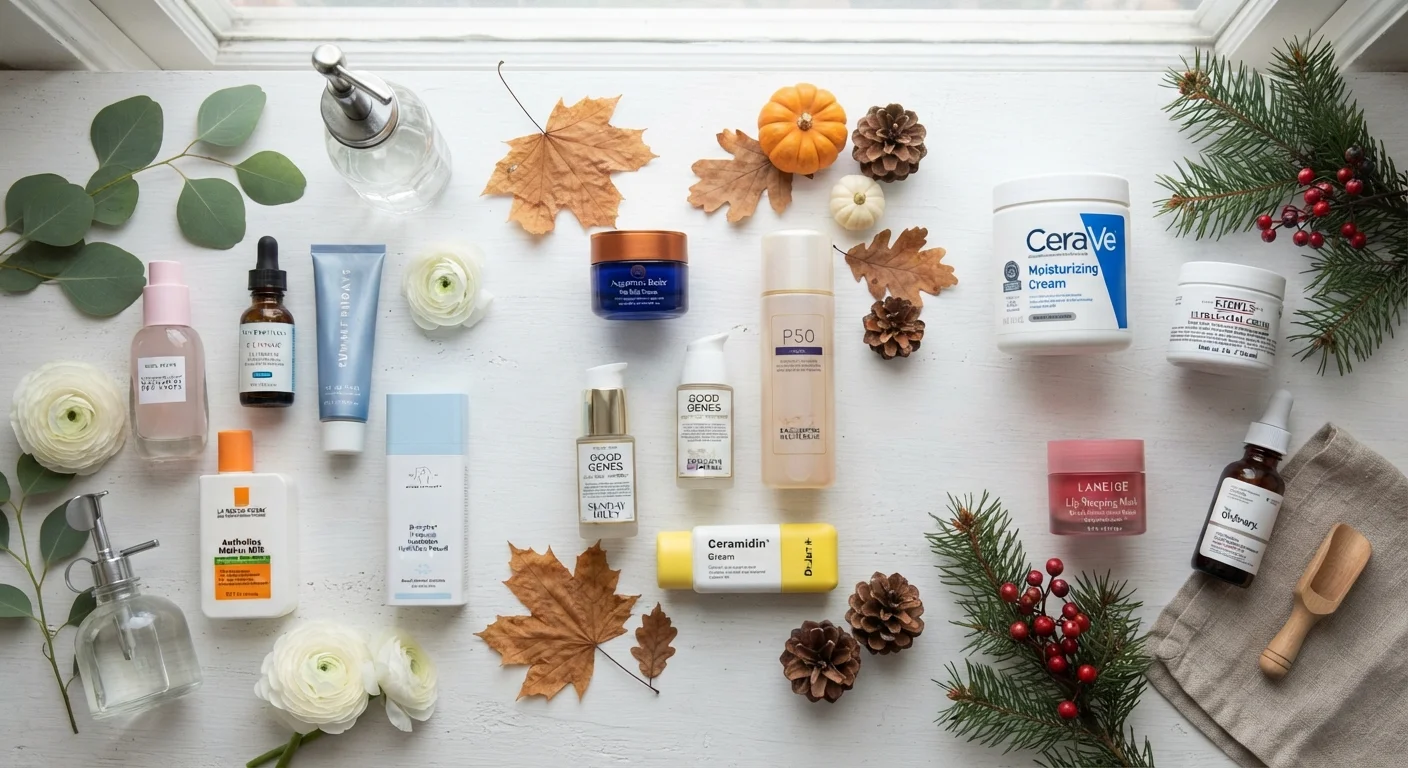
Photo credit: InGlimpse.com | Where Curiosity Finds Answers
In this article
Humidity, cold air, and UV intensity all shift across seasons. Here's a practical framework for adjusting your skincare routine year-round.
Key Takeaways
- Cold, dry air strips moisture from skin and calls for richer, more protective formulas.
- High humidity in summer can trigger breakouts and make heavy moisturizers feel counterproductive.
- SPF should be worn year-round, but reapplication habits may need to intensify in summer months.
- Transitional seasons — spring and fall — are ideal times to introduce or phase out active ingredients.
- Listening to how your skin actually feels, not just the calendar, is the most reliable guide.
Why Seasonal Adjustments Matter
Your skin doesn't exist in a vacuum — it responds directly to its environment. Temperature, humidity levels, wind exposure, and UV intensity all shift meaningfully across the year, and each shift places different demands on the skin barrier (the outermost layer responsible for keeping moisture in and irritants out).
A routine perfectly calibrated for humid August heat may leave skin tight and congested by November. Conversely, the thick, occlusive moisturizer that carries you through January can feel suffocating come April. Adapting your routine isn't about chasing trends — it's about responding to real physiological changes in how your skin behaves. As a complement to seasonal adjustments in your wardrobe, your skincare strategy benefits from a similar intentional review. See our guide to seasonal wardrobe transitions for a parallel approach to rotating essentials.
Skin Type vs. Skin Condition
Your skin type (oily, dry, combination, sensitive) is largely genetic and fairly stable. Your skin condition — how it actually behaves on a given day or in a given season — is dynamic and influenced by environment, lifestyle, and routine. Seasonal adjustments are primarily about responding to changing conditions, not changing your skin type. For a broader look at how your skin evolves, see how skin changes across decades.
Core Practices for Adapting Your Routine
The following practices apply across all skin types and provide a reliable framework for making seasonal adjustments thoughtfully rather than reactively.
Swap moisturizer weight as humidity changes, not just temperature.
Humidity determines how much water is in the air around you — and therefore how hard your skin has to work to retain its own moisture. In low-humidity conditions (typically winter), a thicker, occlusive formula helps seal hydration in. In high-humidity summer air, a lighter gel or fluid moisturizer prevents congestion without sacrificing hydration.
Keep SPF consistent year-round, but adjust your reapplication habits seasonally.
UV radiation is present even on overcast winter days, and is a primary driver of premature skin aging and damage. However, summer brings longer daylight hours, stronger UV index readings, and more time spent outdoors — all of which increase exposure meaningfully. Skipping SPF in winter is a common and costly mistake. Skipping SPF indoors is one of the habits that quietly undermines a good routine.
Use transitional seasons to introduce or rest active ingredients.
Retinoids, exfoliating acids (like AHAs and BHAs), and vitamin C serums can be more sensitizing during peak summer sun exposure or when the skin barrier is already compromised by winter dryness. Spring and fall — when temperatures and UV levels are moderate — offer a lower-risk window for starting or re-calibrating actives. Your morning and evening routines serve different functions, which matters especially when layering actives.
Adjust your cleansing method based on how your skin actually feels — not habit.
Over-cleansing in winter strips the skin of protective oils and accelerates moisture loss. Under-cleansing in summer allows sweat, sunscreen, and excess sebum to accumulate and clog pores. The right cleanse frequency and formula type should shift with the season and your skin's current behavior, not remain fixed year-round.
Factor in indoor environment, not just outdoor weather.
Central heating in winter and air conditioning in summer both lower indoor humidity significantly, which can dehydrate skin just as effectively as cold outdoor air. Many people notice skin dryness in winter that is partly driven by heated indoor spaces rather than outdoor temperatures alone. Internal and behavioral factors — including environment — shape how your skin looks and feels.
Quick Adjustments You Can Make Right Now
You don't need to overhaul your entire routine to make meaningful progress. A few targeted changes — applied consistently — can significantly improve how your skin responds to seasonal shifts. For a streamlined starting point, building a minimal skincare routine that still works is a helpful reference before layering in seasonal considerations.
This article is for general informational purposes only and does not constitute medical or dermatological advice. Consult a qualified healthcare or skincare professional for concerns about your specific skin condition.

Author
Style Editorial Team
Style Editorial Team is the collective byline for our editorial team and contributor network. Articles published under this byline or an editorial pen name are researched, written, and reviewed according to our editorial standards for clarity, consistency, and independence before publication.
View all articles →