
Your First Skincare Routine: What Every Step Actually Does
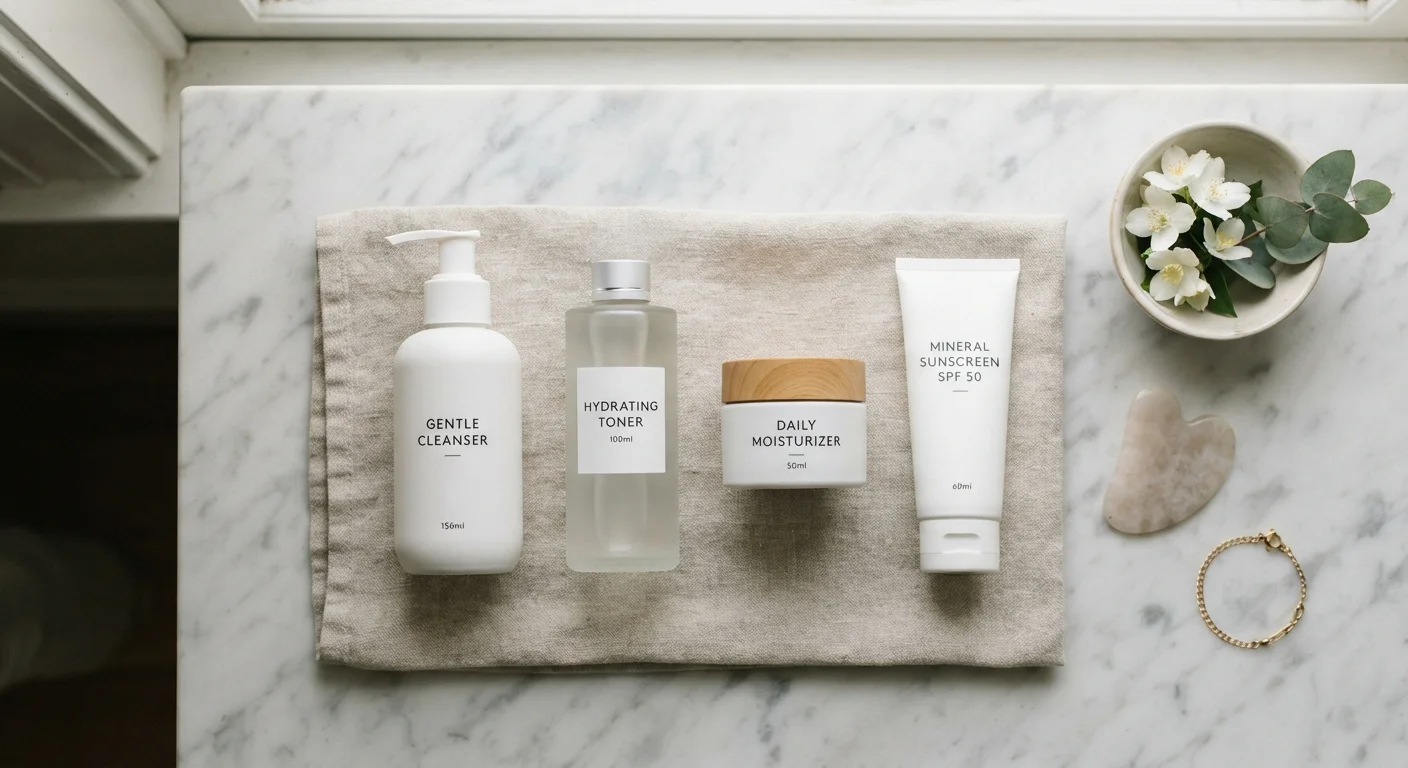
Photo credit: InGlimpse.com | Where Curiosity Finds Answers
In this article
New to skincare? Learn what cleansers, toners, moisturizers, and SPF actually do—and in what order to use them.
Key Takeaways
- A basic routine — cleanser, toner, moisturizer, and SPF — covers the foundations for most skin types.
- Each step has a distinct job; skipping steps or applying them out of order reduces their effectiveness.
- Sunscreen is the single most evidence-backed step for protecting skin from long-term damage.
- Consistency matters more than complexity — a simple routine done daily outperforms an elaborate one done sporadically.
- Introduce new products one at a time so you can identify what works and what causes irritation.
Why a Skincare Routine Matters
Skin is your body's largest organ, and it's exposed to environmental stressors — sun, pollution, temperature changes — every single day. A consistent routine doesn't need to be elaborate; it needs to be purposeful. Each step addresses a specific skin function: removing debris, restoring balance, sealing in hydration, and shielding against UV damage.
Starting simple is almost always the right move. A four-step routine done consistently will deliver better results than a ten-step routine applied haphazardly. Once you understand what each product actually does, you can make smarter decisions about whether to add anything else — or keep things minimal.
Humectant
An ingredient that draws water toward the skin. Common humectants include glycerin and hyaluronic acid, and they're found in many toners and moisturizers.
Occlusive
An ingredient that forms a physical barrier on skin to slow moisture from evaporating. Shea butter and petrolatum are common examples.
Broad-spectrum SPF
Sunscreen that protects against both UVA rays (linked to aging) and UVB rays (linked to burning). Look for 'broad-spectrum' on the label to confirm dual coverage.
Skin barrier
The outermost layer of skin that keeps moisture in and environmental irritants out. A healthy barrier is the foundation of comfortable, resilient skin.
pH balance
A measure of how acidic or alkaline your skin is. Healthy skin is slightly acidic; some cleansers can temporarily disrupt this, which is one reason toners were originally used.
Step One: Cleansing
Cleansing removes excess oil, dirt, sweat, and environmental residue that accumulate on skin throughout the day — or overnight. It's the foundation of any routine because applying products to an uncleaned face reduces their ability to absorb effectively.
Most people benefit from cleansing once in the morning and once at night. Choose a formula suited to your skin type: gentle foaming or gel cleansers work well for oily or combination skin, while cream or milk cleansers tend to suit dry or sensitive skin better. A key rule: cleansing should leave your skin feeling clean but never tight or stripped — that sensation signals over-cleansing or a formula that's too harsh.
Match Your Cleanser to the Time of Day
In the morning, a gentle, low-lather cleanser or even plain water is often sufficient — your skin hasn't been exposed to much overnight. Save a more thorough cleanse for the evening, when you're removing sunscreen, makeup, and the day's accumulated grime. Over-cleansing in the morning can strip the skin unnecessarily.
Step Two: Toner
Toner is often misunderstood. Old-school toners were high in alcohol and designed to aggressively remove oil — many were unnecessarily harsh. Modern toners are a different category entirely. Today, they typically serve to prep skin for the next steps, restore its pH balance after cleansing, and deliver a first layer of lightweight hydration.
Toner is applied after cleansing, either patted on with clean hands or swept on with a cotton pad. It's genuinely optional in a basic routine — if you're keeping things minimal, you won't lose significant ground by skipping it. But if you enjoy the step or notice your skin absorbs the rest of your routine better afterward, it's a low-effort addition.
Step Three: Moisturizer
Moisturizer does two jobs: it delivers water to the skin (humectants like glycerin and hyaluronic acid attract moisture), and it seals that moisture in (occlusives like shea butter or petrolatum form a barrier that slows water loss). Supporting your skin's natural moisture barrier is one of the most effective things you can do for overall skin health. For more on why that barrier matters, see why your skin barrier deserves more attention than your pores.
Apply moisturizer while your skin is still slightly damp from the previous step — this helps lock in that surface moisture. Virtually every skin type benefits from moisturizer, including oily skin, though the ideal texture varies. Lightweight gels suit oily or acne-prone skin; thicker creams work better for dry or mature skin.
Step Four: Sunscreen
If you only add one product to your routine, dermatologists broadly agree it should be sunscreen. Daily use of broad-spectrum SPF is one of the most well-supported ways to protect skin from premature aging and UV-related damage. SPF 30 is a commonly recommended minimum; SPF 50 offers marginally stronger protection and is worth considering for prolonged outdoor exposure.
Sunscreen goes on last in your morning routine, after moisturizer. It should not be skipped on overcast days — clouds filter light but not UV radiation entirely. This step is for mornings only; at night, your skin can skip it in favor of a richer moisturizer or treatment product if you choose to use one.
Don't Rely on SPF in Makeup Alone
Many foundations and powders include SPF, but the amount typically applied is far thinner than what's needed to reach the labeled protection level. Treat SPF in makeup as a supplement to — not a replacement for — a dedicated sunscreen step. Apply sunscreen first, then any makeup on top.
Putting It All Together
Your morning routine runs: cleanser → toner (optional) → moisturizer → sunscreen. At night, swap sunscreen for a second application of moisturizer, or a dedicated night cream. That's genuinely enough for most people starting out.
When you're ready to layer in additional products — serums, exfoliants, or actives like retinoids or vitamin C — order starts to matter more. Our guide to layering skincare products explains how to sequence products so they actually work. And if you'd prefer to keep things intentionally lean, building a minimal skincare routine that still works shows how to identify exactly which steps to prioritize.
Introduce any new product one at a time, waiting at least a week before adding another. This makes it straightforward to identify what's working — and what isn't — without guesswork. Consistency is what turns a routine into results.
This article is for general informational purposes only and does not constitute medical or dermatological advice. If you have a skin condition or concerns about your skin's health, consult a qualified dermatologist or healthcare professional.
Frequently Asked Questions

Author
Style Editorial Team
Style Editorial Team is the collective byline for our editorial team and contributor network. Articles published under this byline or an editorial pen name are researched, written, and reviewed according to our editorial standards for clarity, consistency, and independence before publication.
View all articles →