
Protein Treatments vs. Moisture Treatments: Finding the Right Balance
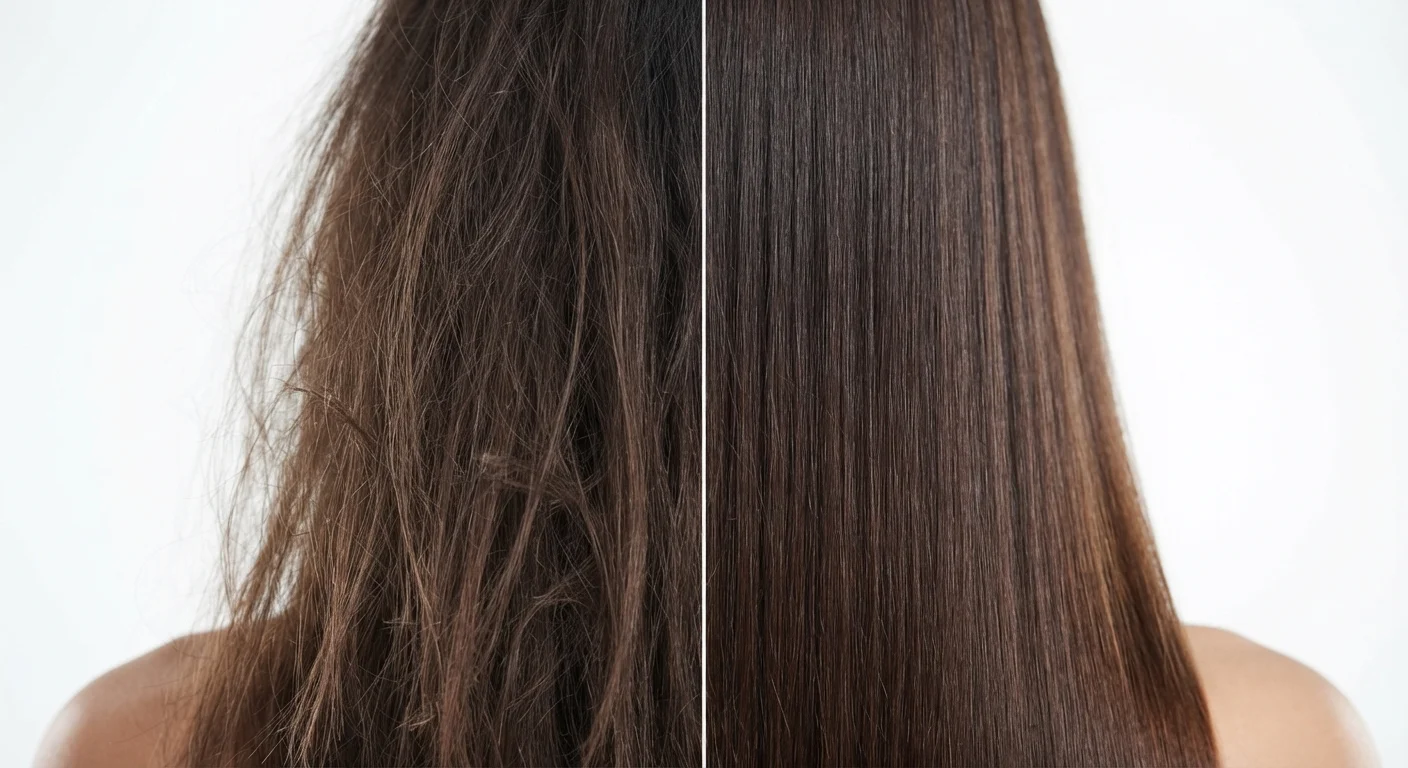
Photo credit: InGlimpse.com | Where Curiosity Finds Answers
In this article
Too much protein or too much moisture can both damage hair. Understand the protein-moisture balance and how to recognize which your hair needs.
Key Takeaways
- Hair needs both protein and moisture to stay strong and elastic — neither alone is sufficient.
- Over-protein'd hair feels stiff and snaps easily; over-moisturized hair feels limp and stretches without bouncing back.
- Your hair's porosity level is the most reliable guide to how often you need each treatment type.
- Chemical processes, heat styling, and environmental exposure all shift your hair's protein-moisture needs over time.
- Listening to how your hair behaves — not a rigid schedule — is the most effective way to maintain balance.
Why the Protein-Moisture Balance Matters
Every strand of hair is built primarily from a protein called keratin, but that structure needs water to remain flexible and resilient. Think of protein as the scaffold and moisture as what keeps that scaffold from becoming brittle. When the two are in balance, hair resists breakage, stretches slightly under tension, and springs back to shape. When either tips out of balance, the results are noticeable — and often mistaken for the opposite problem.
This distinction matters because applying the wrong treatment can make things worse. Pouring more moisture onto already over-moisturized hair amplifies limpness; layering protein onto already-stiff hair accelerates breakage. Understanding the protein-moisture balance is foundational to any effective hair care routine. For a broader overview of how strand health fits into overall hair care, see this full-spectrum hair care guide.
How to Read What Your Hair Is Telling You
The stretch test is the most practical self-assessment tool available. Take a single wet strand and gently pull it. Healthy hair stretches roughly 30–50% before returning to its original length. Hair that snaps with almost no stretch is lacking protein. Hair that stretches significantly and does not bounce back — or feels mushy — is over-moisturized and may need protein support.
Dry hair that still feels rough and straw-like after conditioning typically needs more moisture, not protein. If you find yourself constantly applying products and still experiencing dryness, this breakdown on persistent dryness explores why porosity and product layering are often the overlooked culprits.
Use the Stretch Test Before Every Treatment
Before reaching for any treatment, perform a quick stretch test on a wet strand. This takes under a minute and gives you real-time feedback about what your hair actually needs right now — not what it needed last month. Hair conditions shift with the seasons, styling habits, and product changes, so the stretch test keeps your routine responsive rather than rigid.
Hair porosity — how readily your strands absorb and retain moisture — is especially relevant here. High-porosity hair (common after bleaching or heat damage) tends to lose moisture fast and may need more frequent moisture treatments. Low-porosity hair resists absorption and can become protein-sensitive more easily.
Protein Treatments vs. Moisture Treatments: A Direct Comparison
Both treatment types serve distinct, complementary functions. Here is how they compare across the key factors that matter most to everyday hair care decisions.
| Protein Treatments | Moisture Treatments | |
|---|---|---|
| Primary function | Rebuild and reinforce hair structure | Restore hydration and flexibility |
| Best used when | Hair snaps easily, lacks elasticity, or feels weak | Hair feels rough, dry, or brittle despite conditioning |
| Common ingredients | Hydrolyzed keratin, wheat protein, silk amino acids | Shea butter, aloe vera, glycerin, humectants |
| Typical frequency | Monthly or after chemical/heat damage | Weekly or as needed |
| Risk of overuse | Stiffness, brittleness, increased breakage | Limpness, lack of definition, mushy texture |
| Works best for | Chemically treated, heat-damaged, or low-elasticity hair | High-porosity, dry, or coarse hair types |
Most people will benefit from moisture treatments more frequently than protein treatments. Protein treatments are best used reactively — after a chemical service, a period of heavy heat use, or when the stretch test clearly indicates weakness. For more on how heat affects strand integrity, see how temperature and technique affect hair damage.
Building a Balanced Routine
There is no universal schedule that works for every hair type, but a few practical principles hold broadly. Moisture-focused deep conditioning — whether through a rinse-out conditioner, a deep conditioner, or a hair mask — can be done weekly for most hair types. Understanding the difference between those products matters; this guide on conditioners, deep conditioners, and hair masks clarifies what each one actually does and when to reach for it.
Protein treatments, by contrast, are typically used monthly at most for healthy hair, and only slightly more often when hair is actively recovering from damage. After a protein treatment, always follow with moisture to prevent the stiffness and brittleness that can result from protein alone. If you use protective styles as part of your regimen, maintaining the protein-moisture balance inside those styles is equally important — learn what makes a style truly protective to avoid hidden breakage.
Don't Layer Protein on Already-Stiff Hair
If your hair already feels hard, crunchy, or snaps without any stretch, adding another protein treatment will typically worsen the situation rather than repair it. In this case, a moisturizing deep conditioner is the appropriate next step. Wait until elasticity improves before reintroducing protein into your routine.

Author
Style Editorial Team
Style Editorial Team is the collective byline for our editorial team and contributor network. Articles published under this byline or an editorial pen name are researched, written, and reviewed according to our editorial standards for clarity, consistency, and independence before publication.
View all articles →