
Why Your Hair Feels Dry No Matter What You Put On It
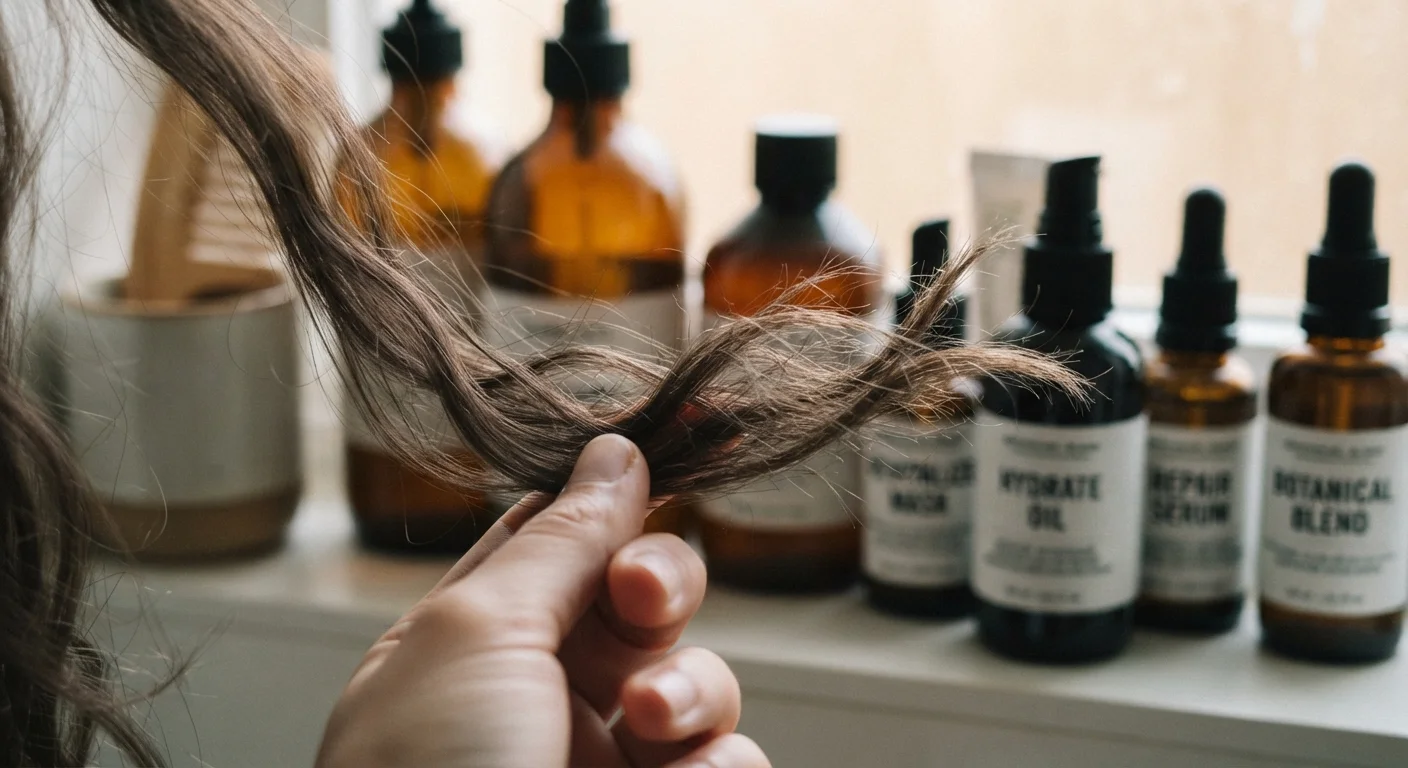
Photo credit: InGlimpse.com | Where Curiosity Finds Answers
In this article
Constantly moisturizing but still dealing with dryness? Common missteps in porosity assessment and product layering may be the cause.
Key Takeaways
- Hair porosity determines how well your strands absorb and retain moisture — ignoring it leads to product failure.
- Applying products to completely dry hair significantly reduces their ability to penetrate the shaft.
- Protein overload and moisture overload are both real conditions that mimic chronic dryness.
- Layering products in the wrong order can seal moisture out rather than in.
- Heat, hard water, and chemical services can alter your hair's porosity over time.
When More Product Isn't the Answer
There's a frustrating irony at the heart of chronic hair dryness: the more products some people apply, the drier their hair seems to get. Conditioners, masks, oils, serums — none of it appears to stick. Before assuming your hair is simply "resistant" to moisture, consider that the problem is almost always technique, product selection, or an unassessed structural issue — not a lack of effort.
Understanding why your hair behaves this way requires looking at the strand itself. Each hair has an outer layer called the cuticle — a series of overlapping, scale-like cells. When those scales lie flat, moisture stays in. When they're raised or damaged, moisture escapes almost as fast as it enters. This structure is the foundation of what's known as porosity, and it governs how every product on your shelf actually performs on your hair.
~80%
Of hair shaft is composed of keratin protein
Because hair is predominantly protein, small structural disruptions to the cuticle layer have an outsized effect on moisture retention and overall texture.
3 Types
Recognized hair porosity classifications
Trichologists and hair scientists broadly classify porosity as low, medium (normal), or high — each responding differently to water, heat, and conditioning agents.
The Most Common Mistakes Behind Persistent Dryness
Most cases of stubborn hair dryness trace back to a handful of repeatable errors. The good news: once identified, these mistakes are correctable — often without overhauling your entire routine.
Ignoring hair porosity when choosing products.
Why it happens: Porosity — the hair's ability to absorb and hold moisture — is rarely discussed on product labels, so most people skip the assessment entirely and buy products based on hair type alone.
Applying moisturizing products to bone-dry hair.
Why it happens: It feels intuitive to reach for a product when hair feels dry, but dry strands have a tightly contracted cuticle that resists absorption.
Layering products in the wrong order, sealing nothing in.
Why it happens: The LOC (Liquid, Oil, Cream) or LCO method isn't universally taught, so many people apply a heavy oil first, which prevents water-based products from reaching the hair shaft afterward.
Skipping clarifying washes and letting buildup accumulate.
Why it happens: Regular conditioners and styling products build up on the hair shaft over time, forming a film that blocks subsequent moisture from penetrating — ironically making moisturizing efforts counterproductive.
Conflating protein overload with moisture deficiency.
Why it happens: Both conditions produce similar symptoms — dryness, brittleness, and lack of elasticity — so people often reach for more moisture when their hair actually has too much protein.
Porosity Changes — And Your Routine Should Too
Hair porosity isn't fixed for life. Chemical treatments, heat damage, hard water, and even aging can shift your hair from low to high porosity. If products that once worked beautifully are suddenly failing, reassess your porosity before adding more products. Continuing the same routine on changed hair almost always deepens the problem.
It's also worth noting that environmental factors compound these mistakes significantly. Hard water deposits minerals on the hair shaft that impair moisture absorption, while seasonal climate shifts alter how much moisture the air pulls from your strands. Just as subtle skincare missteps quietly erode a good routine, so do these background variables in hair care.
Protein Overload Mimics Dryness
When hair receives too much protein too frequently, it can become stiff, brittle, and feel perpetually parched — symptoms nearly identical to moisture deficiency. Adding more deep conditioner won't fix a protein imbalance; it may worsen it. If your hair feels hard, snaps easily, and doesn't respond to moisturizing products, reduce protein treatments and consult the protein-moisture balance guide to recalibrate.
Building a Routine That Actually Works
Effective moisture retention isn't about using more product — it's about using the right products in the right sequence on the right hair. Once you've identified your porosity and ruled out protein imbalance, the framework becomes straightforward: hydrate with water-based products, condition to smooth the cuticle, and seal with an appropriate oil or butter to hold that moisture in.
It also helps to think about the distinction between hydration (drawing water into the hair) and moisturization (preventing that water from escaping). These are complementary steps, not interchangeable ones — a concept explored in depth in the hydration vs. moisturization explainer, which applies equally to hair as it does to skin. Getting clear on this difference can prevent one of the most common and costly product selection errors in any hair care routine.
Consistency and simplicity almost always outperform complexity. A streamlined routine that correctly addresses your hair's actual structure will outperform a 10-step process that skips porosity assessment.

Author
Style Editorial Team
Style Editorial Team is the collective byline for our editorial team and contributor network. Articles published under this byline or an editorial pen name are researched, written, and reviewed according to our editorial standards for clarity, consistency, and independence before publication.
View all articles →