
Seasonal Hair Care: Adjusting Your Routine for Climate and Weather Changes
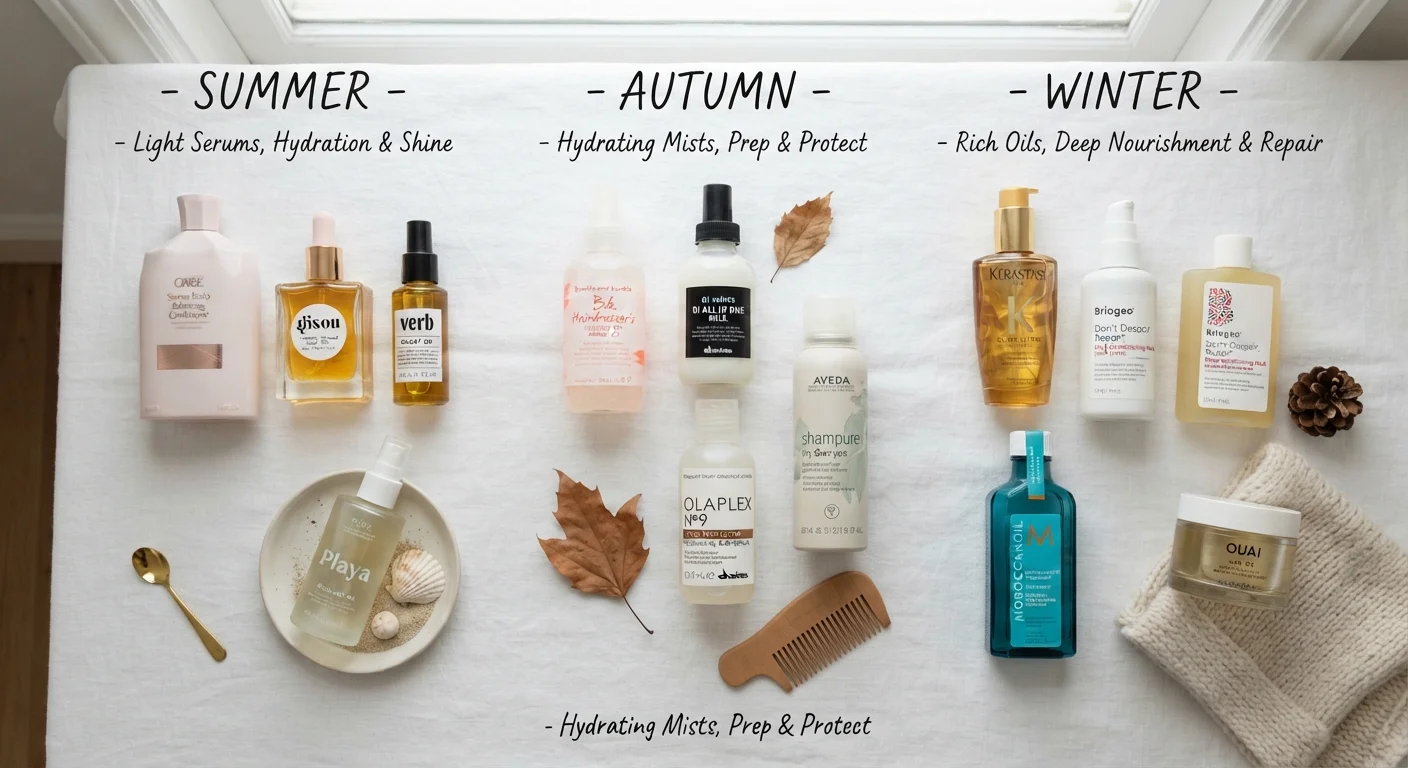
Photo credit: InGlimpse.com | Where Curiosity Finds Answers
In this article
Humidity, cold, and dry air all affect hair differently. Here's how to adapt your routine across seasons without starting over from scratch.
Key Takeaways
- Humidity, cold air, UV exposure, and indoor heating each affect hair structure differently.
- Small, targeted adjustments to cleansing and moisture are more effective than overhauling your entire routine.
- Scalp health is a year-round priority — environmental shifts can trigger oiliness or dryness.
- Protective styles and reduced heat use in winter can limit cold-weather damage.
- Understanding your hair's porosity helps you choose the right products for any season.
Why Weather Affects Your Hair More Than You Might Expect
Hair responds directly to the environment around it. Humidity causes the hair shaft to swell and absorb moisture from the air — often leading to frizz and loss of definition. Cold, dry air does the opposite: it strips moisture from both the strand and the scalp, leaving hair brittle and prone to breakage. Add indoor heating in winter and UV exposure in summer, and the cumulative effect on your hair can be significant.
These aren't cosmetic inconveniences — they reflect real changes in how your hair behaves at a structural level. The outer layer of each strand, called the cuticle, opens and contracts in response to moisture and temperature. When the cuticle is frequently disrupted, hair becomes rougher in texture and more vulnerable to damage over time.
If you already have a foundational routine, you're ahead of the curve. See our guide to building a hair care routine from scratch for the essentials before adjusting for climate.
Best Practices for Adapting Your Routine Across Seasons
The goal isn't to start over each season — it's to make smart, layered adjustments to what you already do.
Increase moisture and sealing in cold, dry months
Winter air — both outdoor cold and indoor heat — dramatically reduces ambient humidity, pulling moisture from the hair shaft. Lightweight summer conditioners often aren't enough to compensate. Richer leave-ins and sealing oils help maintain the cuticle barrier and prevent brittleness.
Reduce wash frequency in winter and increase it slightly in summer
Scalp oil production is partly regulated by environmental humidity and temperature. Summer heat accelerates sebum production, making more frequent cleansing appropriate for some people. Winter dryness warrants scaling back to avoid stripping the scalp's natural oils.
Limit heat styling during cold-weather months
Hair is already more fragile in winter due to moisture loss and temperature stress. Layering regular heat styling on top of that raises the risk of breakage significantly. Protective styles — braids, twists, buns — reduce manipulation and exposure while still looking polished.
Add UV protection to your summer hair routine
UV rays degrade the protein structure of hair — particularly keratin — and can fade color-treated hair faster. Just as sunscreen protects skin, a UV-filtering hair product or hat provides meaningful protection during prolonged outdoor exposure.
Adjust for humidity by using anti-humectant products in high-moisture conditions
Humectants — ingredients that attract moisture — are helpful in moderate climates but can backfire in very high humidity by drawing too much water into the hair shaft, causing excessive swelling and frizz. Recognizing when to use anti-humectant products prevents this.
Quick Wins You Can Implement This Week
Not ready for a full seasonal overhaul? Start with these targeted actions that make a real difference fast.
For a deeper look at how drying choices interact with seasonal conditions, the air drying vs. blow drying trade-offs article breaks down what each method does to the hair shaft across different weather contexts.
Seasonal Hair Care and Your Scalp
Most seasonal hair conversations focus on the strands — but the scalp is equally affected. In summer, increased sweat and sebum production can make the scalp feel oily faster, prompting over-washing that strips natural oils. In winter, low humidity and indoor heat dry the scalp out, sometimes causing flakiness that gets mistaken for dandruff.
Flakiness Isn't Always Dandruff
Seasonal scalp flaking caused by dry air is a different condition from dandruff, which involves an overgrowth of a naturally occurring scalp fungus. Dry-air flaking typically responds to added scalp moisture and reduced washing frequency. True dandruff often requires targeted antifungal treatments. If flaking is persistent, itchy, or inflamed, consult a dermatologist for an accurate assessment.
Adjusting wash frequency — not just products — is often the most effective seasonal lever. The science behind wash frequency can help you calibrate how often is actually right for each season.
If persistent dryness is an issue year-round regardless of season, product layering and porosity may be the root cause — explored further in why your hair feels dry no matter what you put on it.
This article provides general hair care information for educational purposes and is not a substitute for advice from a qualified dermatologist or trichologist for scalp or hair health concerns.

Author
Style Editorial Team
Style Editorial Team is the collective byline for our editorial team and contributor network. Articles published under this byline or an editorial pen name are researched, written, and reviewed according to our editorial standards for clarity, consistency, and independence before publication.
View all articles →