
Conditioner, Deep Conditioner, and Hair Mask: What Each One Actually Does
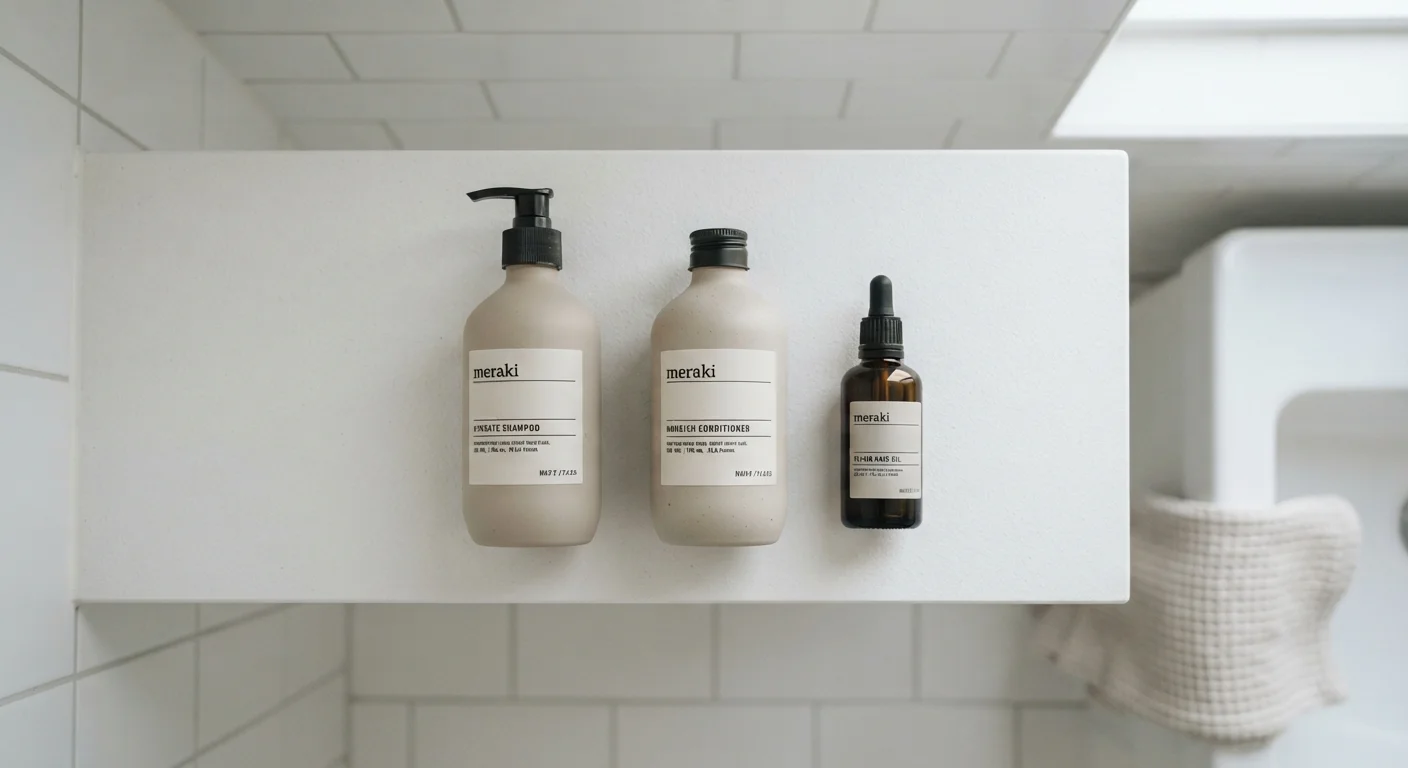
Photo credit: InGlimpse.com | Where Curiosity Finds Answers
In this article
These three products look similar but serve different purposes. Here's how to tell them apart and use each one at the right time.
Key Takeaways
- Regular conditioner works on the hair's surface to smooth the cuticle and reduce tangles after every wash.
- Deep conditioners penetrate the cortex more deeply, delivering longer-lasting moisture and repair with a few minutes of contact time.
- Hair masks typically have a richer, denser formula than deep conditioners and may target specific concerns like breakage or frizz.
- Leave-in time is the clearest practical difference: regular conditioner rinses in 1–3 minutes; deep treatments need 10–30 minutes.
- Most people benefit from a regular conditioner every wash and a deep treatment once a week or every two weeks.
Why These Products Aren't Interchangeable
Walk down any hair care aisle and you'll see conditioner, deep conditioner, and hair mask stacked side by side — often by the same brand, sometimes even in matching packaging. It's easy to assume they're doing the same job at different price points. They're not.
Each product is formulated with a distinct molecular weight, ingredient concentration, and intended contact time that determines how far it penetrates the hair shaft and what it actually fixes. Using them interchangeably means you're either under-treating a problem or overloading healthy hair with ingredients it doesn't need.
If you're building a hair care routine from scratch, understanding what each product does is the most important foundation you can lay. Think of it less as a product hierarchy and more as a toolkit — every tool has a specific use.
| Criterion | Regular Conditioner | Deep Conditioner / Hair Mask |
|---|---|---|
| Primary function | Smooth cuticle, detangle, add surface moisture | Repair, replenish, and deeply nourish the hair shaft |
| Penetration depth | Surface cuticle layer | Cortex (inner hair structure) |
| Contact time | 1–3 minutes | 10–30 minutes, sometimes with heat |
| Frequency of use | Every wash | Weekly or every two weeks |
| Formula weight | Lighter, rinses clean easily | Richer, denser, more emollient |
| Best for | All hair types, routine maintenance | Dry, damaged, color-treated, or porous hair |
| Contains protein? | Rarely | Often (especially deep conditioners) |
Regular Conditioner: Surface-Level, Every-Wash Care
A standard rinse-out conditioner is designed to work on the outermost layer of the hair shaft — the cuticle. After shampooing lifts the cuticle to remove dirt and oil, conditioner smooths it back down, sealing in some moisture and making hair easier to detangle.
The key ingredients are typically cationic surfactants (positively charged molecules that bind to negatively charged, freshly washed hair), lightweight oils, and humectants like glycerin. These ingredients aren't meant to travel deep into the hair cortex — and they don't need to. Their job is fast and functional: reduce friction, add slip, and improve how hair feels and looks after every wash.
Contact time for a regular conditioner is usually one to three minutes. Leaving it on longer won't dramatically increase its effect because the formula isn't built to penetrate further with time. Apply from mid-shaft to ends, avoiding the scalp to prevent buildup, and rinse thoroughly.
80%
Of hair damage linked to mechanical stress
Research published in the Journal of Cosmetic Science suggests a significant portion of everyday hair damage comes from combing and styling — areas where conditioner's detangling effect is directly protective.
10–30 min
Recommended contact time for deep treatments
Most deep conditioner and mask formulas specify this window on-pack; heat application (via a shower cap or warm towel) is often recommended to enhance ingredient absorption.
Deep Conditioner vs. Hair Mask: A Finer Distinction
Here's where the terminology gets genuinely murky, because brands use "deep conditioner" and "hair mask" almost interchangeably — and sometimes they really are the same product. That said, there's a useful general distinction worth knowing.
Deep conditioners are formulated with smaller, more penetrating molecules — often hydrolyzed proteins and moisturizing agents — designed to enter the cortex (the hair's inner structure) and repair from within. They typically recommend 10 to 20 minutes of contact time, sometimes with heat to help ingredients absorb.
Hair masks tend to be denser and more emollient, often with larger conditioning agents that coat and smooth more aggressively. They're especially effective for frizz control, surface repair, and adding visible shine. Some masks also contain proteins for structural support, but many focus primarily on moisture and softness.
The practical upshot: if your hair is dry and needs moisture replenishment, either works. If it's damaged or high-porosity (meaning the cuticle is raised and porous, causing rapid moisture loss), look for a deep conditioner with protein and use it with heat. For color-treated hair, deep treatments are particularly important since chemical processing alters the hair's internal structure.
Hair Porosity Affects How Well Products Work
Porosity describes how easily your hair absorbs and retains moisture. High-porosity hair (often a result of damage or processing) absorbs quickly but loses moisture just as fast, making it a strong candidate for regular deep treatments. Low-porosity hair resists absorption, so lighter products and heat assistance tend to work better. Understanding your hair's porosity can guide which conditioning products and how much contact time will give you the best results.
How to Work Each Into Your Routine
The simplest approach: use a regular conditioner after every shampoo, and rotate a deep conditioner or mask into your routine once a week or every two weeks depending on your hair's condition and porosity.
A few practical guidelines:
- Fine hair: Use a lightweight regular conditioner sparingly. Limit masks to monthly use or skip them if your hair feels weighed down.
- Coarse or dry hair: Your hair can handle — and likely needs — weekly deep treatments. Look for formulas rich in humectants and emollients.
- Damaged or processed hair: Alternate between moisture-focused and protein-focused treatments to maintain balance. Too much of either can worsen brittleness or limpness.
For deeper context on how ingredients in these products actually function, reading hair product ingredient labels can help you evaluate what you're actually applying. And if you're familiar with layering logic from skincare, the same concept applies: product weight and contact time determine what actually reaches its target — a principle explored further in our guide on layering skincare products correctly.
Ultimately, the right combination is the one your hair responds to. Pay attention to how your hair feels a day or two after washing — that's usually a more accurate signal than how it feels immediately post-rinse.

Author
Style Editorial Team
Style Editorial Team is the collective byline for our editorial team and contributor network. Articles published under this byline or an editorial pen name are researched, written, and reviewed according to our editorial standards for clarity, consistency, and independence before publication.
View all articles →