
Nighttime Zoomies, Pouncing, and Yowling: Decoding After-Dark Cat Behavior
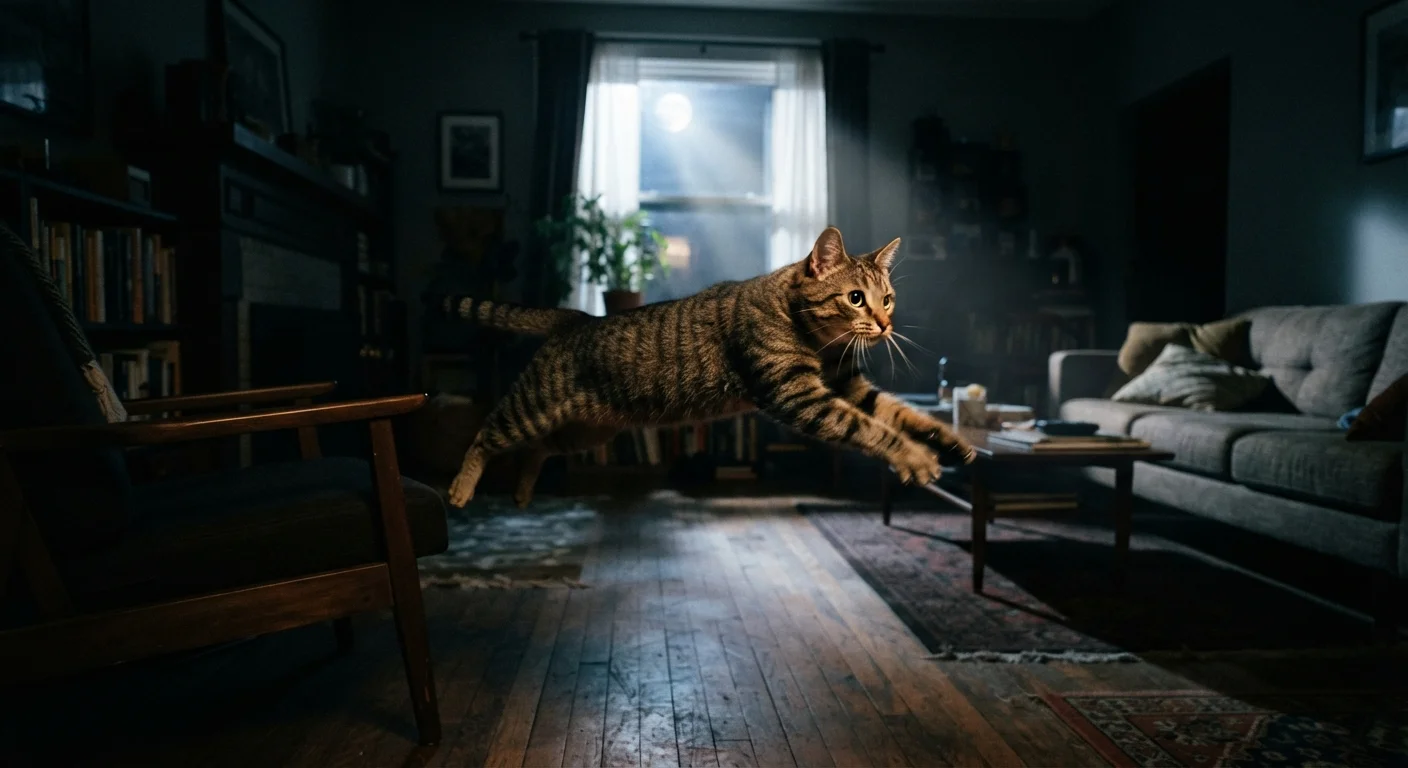
Photo credit: InGlimpse.com | Where Curiosity Finds Answers
In this article
Cats are crepuscular by nature, which explains a lot of chaotic evening activity. Understand why it happens and practical ways to adjust the pattern.
Key Takeaways
- Cats are crepuscular by nature, meaning peak activity at dawn and dusk is normal feline behavior.
- Nighttime zoomies, pouncing, and yowling are instinct-driven, not random or mischievous acts.
- Interactive play before bedtime can significantly reduce disruptive nighttime activity.
- Persistent or sudden yowling, especially in older cats, may signal a medical issue worth a vet visit.
- Indoor cats with limited stimulation are more likely to redirect energy into night disturbances.
- Adjusting feeding schedules can help synchronize a cat's active period with the owner's waking hours.
The Biology Behind After-Dark Energy
When your cat starts sprinting down the hallway at midnight or batting at your feet under the blanket, it is not acting out. It is acting in — in complete alignment with millions of years of evolutionary programming. Domestic cats descended from solitary hunters whose prey, primarily small rodents and birds, was most accessible during the low-light periods of dawn and dusk. That hunting advantage shaped a nervous system calibrated for explosive bursts of activity at precisely the hours most humans want to sleep.
This crepuscular rhythm is not simply a preference — it is physiological. A cat's retina contains roughly six to eight times more rod photoreceptors than a human's, allowing it to navigate and hunt in near-darkness with ease. When the light dims, your cat's visual system and internal clock align to signal: it is time to move.
Indoor cats retain this wiring completely. Without the natural outlet of outdoor hunting, that predatory energy has to go somewhere — and it often lands on your ankles, a throw pillow, or the wall at 3 a.m.
~6–8×
More rod photoreceptors than humans
Cats have a significantly higher density of rod cells in the retina, giving them superior vision in dim light — a key driver of their crepuscular activity preference.
~50%
Of cat owners report sleep disruption
Multiple pet ownership surveys, including data referenced by veterinary sleep researchers, suggest roughly half of cat owners experience some form of sleep disruption attributed to their cat's nighttime behavior.
10+ years
Age when cognitive changes become more common
Veterinary literature consistently identifies cats over ten years old as higher risk for feline cognitive dysfunction syndrome, which frequently disrupts normal sleep-wake cycles.
What Each Behavior Is Actually Telling You
Zoomies (Frenetic Random Activity Periods)
Veterinary behaviorists sometimes refer to these bursts as FRAPs — Frenetic Random Activity Periods. They are sudden, high-speed sprints, leaps, and spins that appear random but serve a clear function: discharging accumulated predatory energy. Think of it as a pressure valve. A cat that has been sedentary for hours needs to move, and when it finally does, the release can look alarming. In healthy cats, zoomies are brief and followed by calm.
Pouncing and Ambush Play
Stalking and pouncing on moving objects — or your feet — is rehearsal for hunting. Cats cycle through a predatory sequence: orient, stalk, rush, bite, and carry. When there is no prey to complete the sequence on, they redirect it toward whatever is available. Understanding this helps explain why cats interact with objects in ways that seem purposeless to us but make complete behavioral sense to them.
Yowling and Vocalization
Yowling is context-dependent. In intact cats, it is often related to mating behavior. In spayed or neutered cats, nighttime yowling may reflect disorientation, anxiety, or an unmet need. It can also be a communication attempt — cats that have learned yowling produces a response from their owner will repeat the behavior. For a broader look at how cats signal their emotional states, our field guide to feline body language covers the full vocabulary.
When Nighttime Behavior Signals a Problem
The majority of after-dark cat behavior is normal. But there are circumstances where it warrants veterinary attention rather than behavioral management.
- Sudden onset in a previously calm cat: A cat that was always quiet at night and abruptly begins yowling or pacing may be experiencing pain, cognitive dysfunction, or a systemic illness.
- Age-related changes: Cats over ten years old who develop nighttime vocalization should be evaluated for hyperthyroidism, hypertension, or feline cognitive dysfunction syndrome — a condition that resembles dementia and commonly disrupts sleep-wake cycles.
- Signs of distress rather than play: True distress looks different from high-energy play. Watch for flattened ears, a tucked tail, hiding, or excessive grooming alongside the vocalizing. Our article on subtle stress cues in pets can help you tell the difference.
Not All Nighttime Noise Is Behavioral
Before committing to a behavioral management plan, rule out medical causes — especially in cats over seven years old or those showing any sudden change in pattern. Hyperthyroidism, pain, high blood pressure, and sensory decline (hearing or vision loss) can all manifest as nighttime restlessness or vocalization. A routine veterinary checkup is the right first step when in doubt.
This article is for general informational purposes and does not constitute veterinary advice. Consult a licensed veterinarian if you have concerns about your cat's behavior or health.
Practical Strategies to Shift the Pattern
You cannot override a cat's crepuscular biology, but you can redirect it in ways that are less disruptive to your household routine.
Structured Pre-Bedtime Play
A focused 15–20 minute interactive play session in the evening — using a wand toy, laser pointer, or feather lure — mirrors the hunt sequence and depletes the energy reserves that would otherwise fuel midnight zoomies. End the session gradually rather than abruptly to allow your cat to wind down.
Adjust the Feeding Schedule
Cats naturally rest after eating. A small meal immediately following the evening play session can trigger the groom-then-sleep sequence. Some owners find an automatic feeder set for the early morning hours reduces dawn-time yowling by giving the cat a reason to redirect attention away from waking their owner. For cats that continue food-seeking behavior despite adequate feeding, this explanation of food-seeking behavior may be useful.
Enrich the Daytime Environment
A cat that has opportunities to stalk, jump, and explore during the day arrives at evening with less pent-up energy. Puzzle feeders, window perches, and rotating toy selections provide cognitive and physical stimulation that makes nighttime bursts less intense. Indoor enrichment strategies are especially important for cats kept exclusively inside.
End Play Sessions the Right Way
Always conclude an interactive play session by letting your cat 'catch' the toy several times. Ending abruptly without a successful capture can leave your cat in a frustrated, aroused state — the opposite of what you want before bed. A small meal immediately after reinforces the natural hunt-eat-sleep sequence.
Frequently Asked Questions

Author
Pets Editorial Team
Pets Editorial Team is the collective byline for our editorial team and contributor network. Articles published under this byline or an editorial pen name are researched, written, and reviewed according to our editorial standards for clarity, consistency, and independence before publication.
View all articles →