
Cat Slow Blinks, Tail Flags, and Chirps: A Field Guide to Feline Body Language
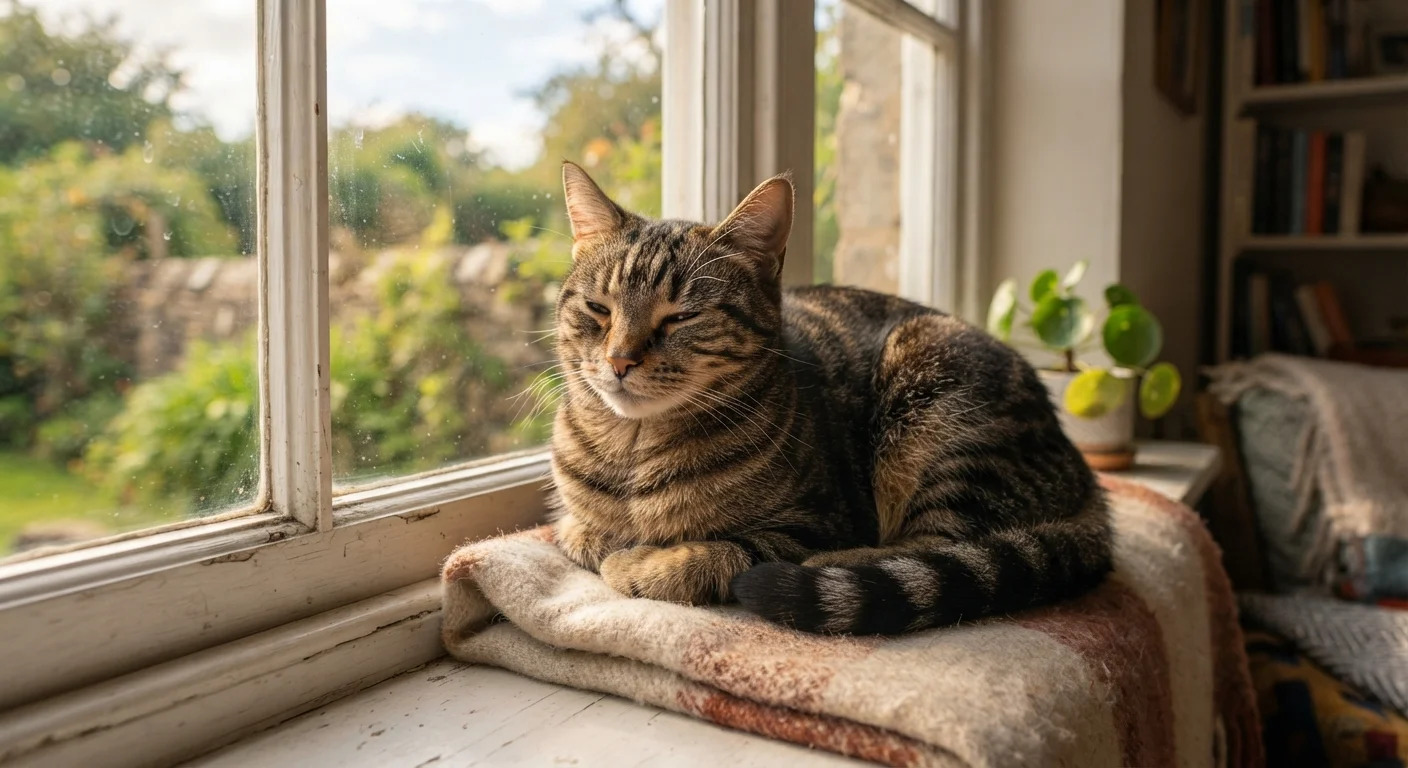
Photo credit: InGlimpse.com | Where Curiosity Finds Answers
In this article
Decode what your cat is actually communicating through posture, tail position, vocalizations, and eye contact in everyday situations.
Why Cats Communicate the Way They Do
Cats evolved as both predators and prey, which shaped a communication system that is subtle, layered, and easy to misread. Unlike dogs, who developed alongside humans over millennia of cooperative living, cats domesticated themselves largely on their own terms — which means their signals often require more careful observation to interpret correctly.
Feline communication happens across four channels simultaneously: body posture, tail position, vocalizations, and facial expressions. Reading any single cue in isolation can lead to misunderstanding. A twitching tail on a relaxed, stretched-out cat means something very different than the same twitch on a cat with flattened ears and dilated pupils.
Understanding this language doesn't require any special training — it just requires knowing what to look for. This guide breaks down the most common signals and what behavioral science tells us they typically mean. For a parallel look at canine communication, see our guide to dog body language.
| Primary communication channels | Tail position, body posture, facial expression, vocalization |
| Meowing directed at | Primarily at humans, rarely at other cats (Animal behavior research consensus) |
| Slow blink studied | Yes — shown to elicit positive responses in cats (Scientific Reports, 2020) |
| Tail-up greeting means | Confidence and friendly intent |
| Purring always signals contentment | No — cats also purr when stressed or in pain (Veterinary behavioral literature) |
| Flat ears signal | Fear or defensive aggression — do not handle |
Tail Signals: The Cat's Emotional Barometer
A cat's tail is one of its most expressive features. Here's what the major tail positions generally communicate:
- Tail held high, tip slightly curled: Confidence and a friendly greeting. Cats approach people and other cats they trust with this posture. It's the feline equivalent of a wave.
- Tail puffed (piloerection): Fear or intense agitation. The cat is making itself look larger in response to a perceived threat — this is an involuntary stress response, not a deliberate choice.
- Tail tucked low or under body: Anxiety, submission, or pain. Combined with a crouched posture, this often signals a cat that feels unsafe.
- Slow tail swish or thump: Building irritation or intense focus. During play, this can signal prey-drive arousal. During handling, it's a warning to stop before the cat escalates.
- Tail wrapped around another cat or person: Affection and social bonding — the tail-hug is a deliberate gesture of closeness.
Sudden behavioral shifts involving the tail — especially persistent tucking or reluctance to raise the tail — can sometimes signal physical discomfort. Our article on signs your pet may be in pain covers what to watch for.
Eyes, Ears, and the Slow Blink Explained
Feline facial expressions are concentrated around the eyes and ears. Both are capable of rapid, nuanced movement.
Eyes
- Slow blink: Often called the "cat kiss," a slow blink directed at you is widely understood by animal behaviorists as a signal of relaxed trust. Research published in Scientific Reports (2020) found that cats responded positively to humans mimicking the slow blink, suggesting it functions as a genuine social signal rather than a coincidence.
- Dilated pupils: Arousal — which can mean excitement, fear, or playful stimulation. Context matters enormously here.
- Constricted pupils in bright light: Normal. Constricted pupils in low light paired with a tense body can signal aggression readiness.
- Half-closed eyes: Contentment and ease. A cat dozing with eyes at half-mast is about as relaxed as they get.
Ears
- Ears forward and slightly outward: Alert, curious, engaged.
- Ears rotated sideways ("airplane ears"): Anxiety or mild irritation — a transitional state before the ears flatten.
- Ears flat against skull: Fear or defensive aggression. Do not attempt to handle a cat showing this signal.
Context Always Changes the Meaning
No single signal should be read in isolation. Dilated pupils mean excitement during play but can signal fear during a vet visit. Always read the full picture — ears, tail, posture, and vocalization together — before drawing conclusions about your cat's emotional state. When in doubt about persistent or sudden behavioral changes, consult your veterinarian.
Vocalizations: Chirps, Chatters, and What Meows Actually Mean
Adult cats rarely meow at other cats in the wild — meowing is a behavior that researchers believe cats developed specifically to communicate with humans. The variety is remarkable.
Piloerection
The involuntary puffing up of fur caused by muscle contractions beneath the skin. In cats, it typically signals fear or high agitation and is not a conscious choice.
Slow blink
A deliberate, relaxed closing and reopening of the eyes directed at another individual. In cats, it functions as a signal of trust and social ease, sometimes called a "cat kiss."
Crepuscular
Active primarily at dawn and dusk. Cats are naturally crepuscular, which influences their activity bursts and vocalization patterns.
Trill
A short, rising vocalization cats use as a friendly greeting, often toward humans or kittens. It is distinct from meowing and generally signals positive social intent.
Chattering
A rapid jaw movement accompanied by clicking sounds, usually observed when a cat watches birds or small prey it cannot reach. The exact function is still debated among researchers.
- Chirp or trill: A rising, bird-like sound typically used as a friendly greeting or to get attention. Mother cats use this sound with kittens.
- Chatter: The rapid jaw-clicking sound cats make when watching birds or squirrels through a window. Theories include prey-drive frustration, a suppressed hunting vocalization, or anticipatory excitement — research hasn't fully settled the question.
- Slow, drawn-out yowl: Distress, territorial warning, or a signal associated with mating in unspayed/unneutered cats. Persistent yowling in an older cat should prompt a veterinary check, as it can be associated with cognitive or medical changes.
- Purring: Most commonly signals contentment, but cats also purr when stressed, injured, or in pain — the vibration is thought to be self-soothing. Never assume purring alone means a cat is fine.
- Hiss or spit: A clear, unambiguous warning. Back off and give the cat space.
For cats that communicate distress through vocalizations alongside behavior changes like over-grooming, our article on what excessive grooming in cats is telling you provides useful context. Evening vocalizations specifically are addressed in our piece on nighttime cat behavior.
If you notice patterns in your cat's signals that seem linked to anxiety, this guide to subtle stress signals can help you identify what's easy to overlook.
This article is for general educational purposes and does not constitute veterinary advice. If your cat shows sudden changes in behavior, vocalizations, or posture, consult a licensed veterinarian.

Author
Pets Editorial Team
Pets Editorial Team is the collective byline for our editorial team and contributor network. Articles published under this byline or an editorial pen name are researched, written, and reviewed according to our editorial standards for clarity, consistency, and independence before publication.
View all articles →