
What Excessive Grooming in Cats Is Actually Telling You
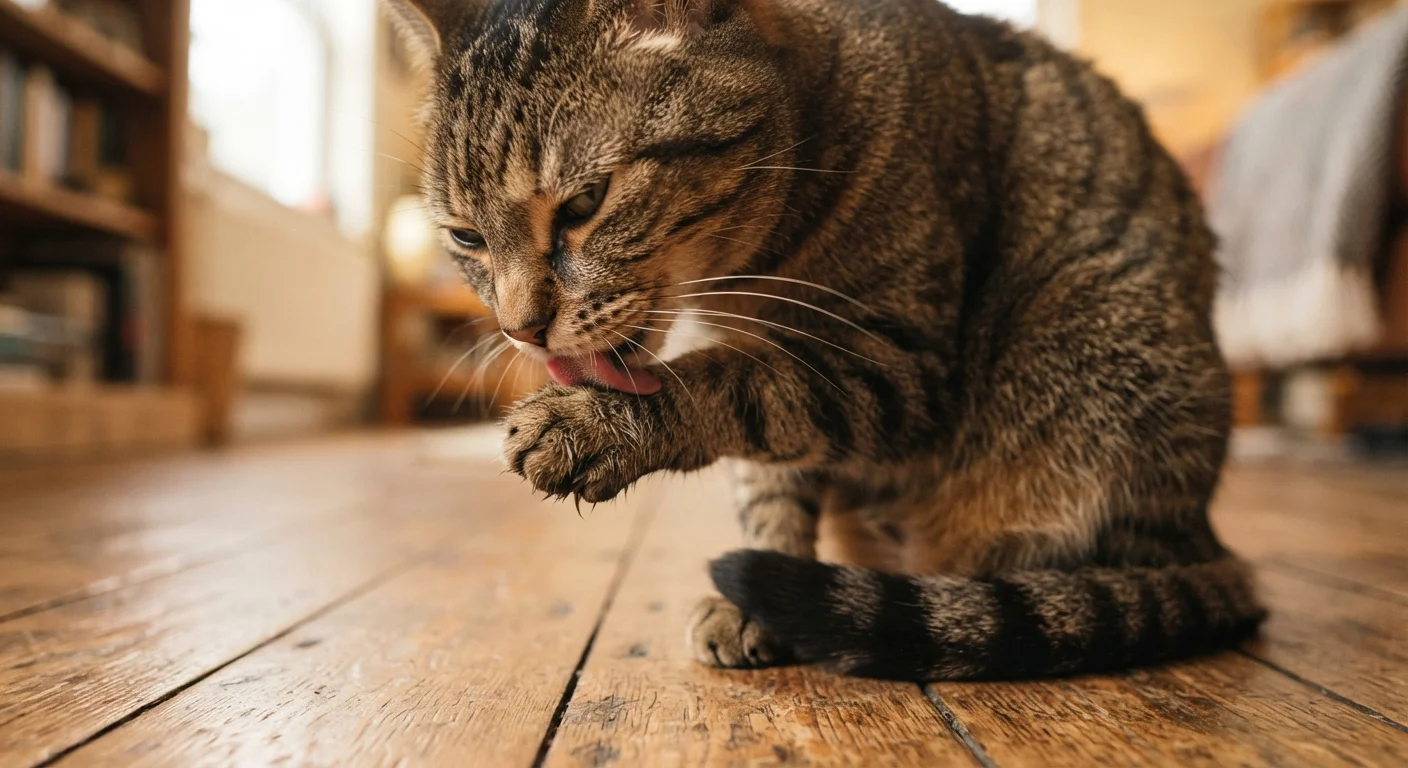
Photo credit: InGlimpse.com | Where Curiosity Finds Answers
In this article
Over-grooming can signal stress, allergies, or pain—not just fastidiousness. Learn how to identify when your cat's grooming habit crosses a line.
Key Takeaways
- Cats typically spend up to 50% of waking hours grooming, but over-grooming causes visible hair loss or skin damage.
- Common triggers include allergies, parasites, pain, anxiety, and environmental change.
- Hair loss in a symmetrical pattern often points to stress, while patchy or asymmetrical loss may indicate a physical cause.
- A veterinarian should evaluate any cat showing compulsive grooming before assuming it is purely behavioral.
- Early intervention prevents skin infections and reduces the risk of compulsive behavior becoming entrenched.
What Normal Grooming Looks Like—And Where the Line Is
Cats are meticulous self-cleaners. Grooming regulates body temperature, removes loose fur and debris, and even functions as a calming ritual. According to veterinary behavioral research, cats may dedicate up to 50% of their waking hours to grooming. That's a lot of licking—but it's healthy.
The line into problematic territory is crossed when grooming causes physical consequences: thinning fur, bald patches, inflamed skin, or open sores. Owners sometimes miss early signs because cats often groom most intensely when alone. By the time hair loss is visible, the behavior may already be well established.
Key warning signs include:
- Symmetrical bald patches on the belly, inner thighs, or flanks
- Redness, scabbing, or raw skin under the coat
- Frequent hairballs beyond what is typical for the individual cat
- Visibly repetitive licking at a single location
Understanding your cat's body language broadly can help. Our field guide to feline body language covers how posture and behavior reveal your cat's inner state.
The Most Common Causes of Over-Grooming
Excessive grooming rarely has a single cause, and pinning it down requires ruling out possibilities systematically. The three main categories are physical, environmental, and psychological.
Physical Causes
Parasites: Flea allergy dermatitis is one of the most frequent drivers of compulsive licking. Even one flea bite can trigger an intense allergic response in sensitive cats. Mites, lice, and ringworm are also possible culprits.
Allergies: Both environmental allergens (dust mites, mold, pollen) and food sensitivities can cause skin irritation that mimics compulsive behavior. Cats with food allergies often groom around the head and neck.
Pain: A cat licking persistently at one spot—particularly a joint, the abdomen, or the lower back—may be responding to localized pain. This is easy to misread as a skin problem. Our article on signs your pet may be in pain explores how animals mask discomfort.
Psychological and Environmental Causes
Stress and anxiety are significant drivers. Changes like a new pet, a move, altered schedules, or even rearranged furniture can destabilize a cat's sense of security. Grooming releases endorphins, so a stressed cat may self-soothe through licking in the same way a person might bite their nails.
Up to 50%
Of waking hours cats spend grooming
Veterinary behavioral literature consistently notes that grooming is one of the most frequent behaviors in domestic cats, making abnormal increases easy to overlook.
~10–15%
Of feline dermatology cases linked to psychogenic alopecia
Estimates vary, but veterinary dermatology literature suggests psychogenic alopecia is responsible for a meaningful proportion of hair-loss presentations after medical causes are excluded.
1 in 3
Cats affected by environmental allergies at some point
Atopic dermatitis and environmental allergies are among the most common non-parasite drivers of skin-related over-grooming in cats, according to veterinary dermatology practitioners.
For a broader look at how stress manifests across species, see how pets show stress and what's usually behind it.
How Veterinarians Approach the Diagnosis
Because the causes of over-grooming overlap significantly, a veterinarian typically works through a stepwise elimination process. This usually starts with a skin and coat examination, flea comb assessment, and sometimes skin scraping to rule out mites or fungal infection.
If parasites and infection are cleared, allergy testing or a dietary elimination trial may follow. Only after physical causes are excluded does a diagnosis of psychogenic (stress-related) alopecia become likely.
Physical Causes Must Be Ruled Out First
Psychogenic (stress-related) alopecia is a diagnosis of exclusion—meaning it should only be considered after parasites, infections, allergies, and pain have been evaluated. Skipping this step risks treating the wrong problem. A full veterinary assessment is the appropriate starting point for any cat showing compulsive grooming.
This diagnostic sequence matters because treating anxiety with behavioral interventions alone will not help a cat whose real problem is fleas or a food allergy. Jumping to conclusions—in either direction—delays relief.
A behavior change that points to a medical issue is an important concept for owners to understand: what looks like a habit or personality quirk often has a physical root.
What Owners Can Do at Home and When to Seek Help
Owners can take several practical steps while waiting for a veterinary appointment or as part of an ongoing management plan.
- Consistent parasite prevention: Year-round flea and tick control is foundational, even for indoor-only cats.
- Environmental enrichment: Puzzle feeders, vertical climbing space, and predictable daily routines reduce anxiety-driven grooming.
- Reduce environmental stressors: If a specific trigger is identifiable—like a new animal visible through a window—blocking that stimulus can help.
- Monitor and document: Note which body areas are affected, how frequently grooming occurs, and any recent changes in the household. This information is genuinely useful to a vet.
Document Before Your Vet Visit
Before your appointment, photograph affected skin areas and note when the over-grooming occurs, how long sessions last, and any recent household changes. Veterinarians can reach conclusions faster when owners arrive with a clear behavioral history. Even a simple written timeline helps.
It is worth noting that grooming serves many legitimate functions. Our related piece on grooming as preventive health care explains the role of routine care in overall pet health.
Over-grooming can also be an early signal among broader behavioral changes. Familiarizing yourself with subtle stress signals owners often miss can help you catch problems earlier.
This article is for general informational purposes only and does not constitute veterinary medical advice. Always consult a licensed veterinarian for concerns about your cat's health or behavior.
Frequently Asked Questions

Author
Pets Editorial Team
Pets Editorial Team is the collective byline for our editorial team and contributor network. Articles published under this byline or an editorial pen name are researched, written, and reviewed according to our editorial standards for clarity, consistency, and independence before publication.
View all articles →