
Store Brands vs. Name Brands: Where the Difference Is Real
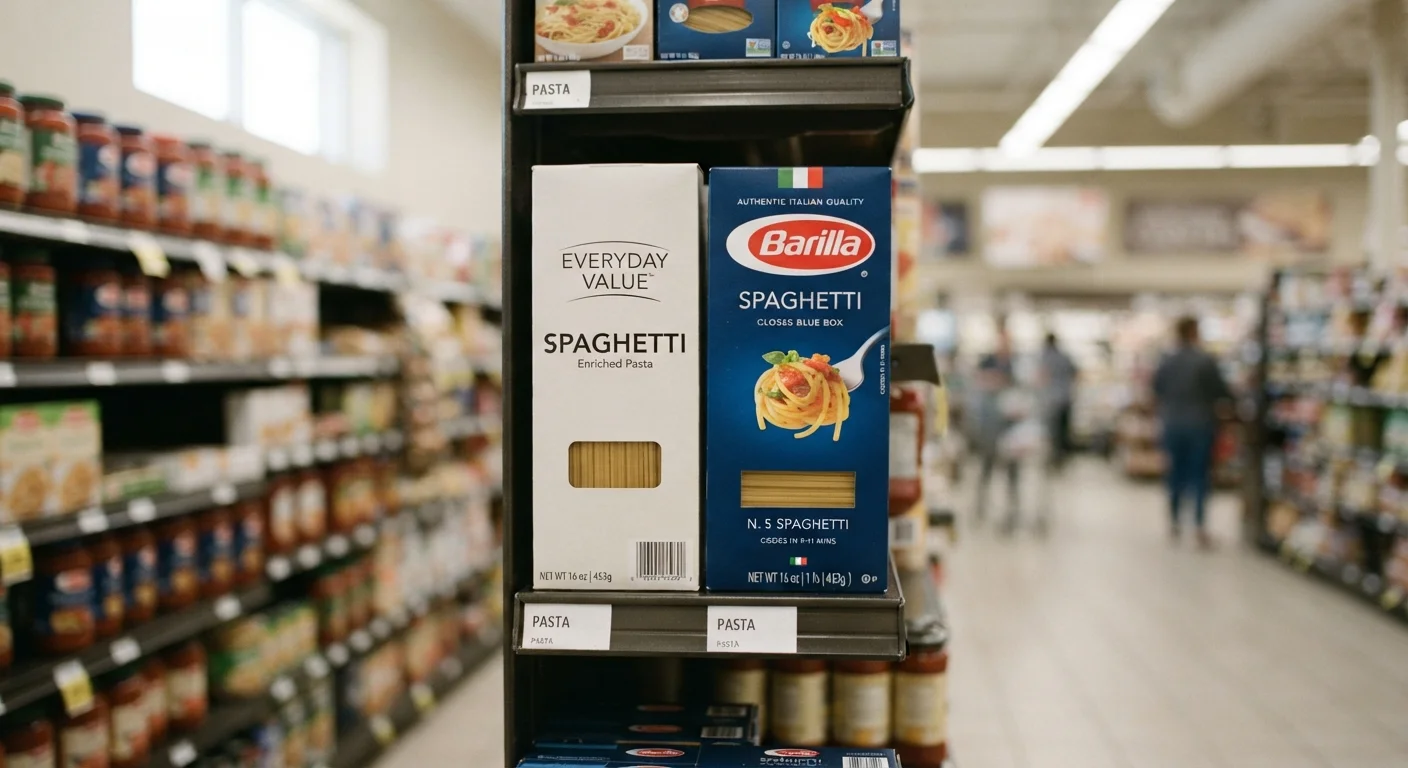
Photo credit: InGlimpse.com | Where Curiosity Finds Answers
In this article
Generic and private-label products aren't always equal to name brands — and sometimes they're identical. Here's how to tell the difference.
Key Takeaways
- Store brands and name brands are sometimes made in the same facility using the same ingredients.
- The gap is real in some categories — especially OTC medications, where FDA standards enforce equivalence.
- Marketing spend, not ingredient quality, accounts for much of the name-brand price premium.
- Categories like condiments, canned goods, and cleaning supplies are often strong candidates for store brands.
- Categories like baby formula, specialty health items, and performance tools may warrant closer comparison.
- Reading ingredient lists and unit prices is the most reliable way to compare products accurately.
Why the Price Gap Exists
Walk down any grocery aisle and you'll see the same dynamic: a store-brand item sitting beside its name-brand counterpart, priced noticeably lower. The instinctive question is whether the cheaper option is actually worse — or just cheaper-looking.
The honest answer is: it depends on the category. But a large share of the price difference between store brands and national brands has nothing to do with what's inside the package. National brands spend heavily on advertising, retail placement fees (called slotting allowances), and brand-equity building that must be recovered through retail pricing. Store brands, owned and distributed by the retailer itself, carry none of those costs.
Many store-brand products are manufactured by the same companies that produce name-brand goods — sometimes on the same production line, with only the label changed. This practice, known as co-manufacturing or contract manufacturing, is widespread in food, personal care, and household categories. Retailers typically don't disclose which manufacturers supply their private-label lines, so the relationship isn't always visible to shoppers.
| Criterion | Store Brand | Name Brand |
|---|---|---|
| Average price | Typically 20–30% lower | Higher due to marketing costs |
| Ingredient equivalence (food) | Often identical | Same or proprietary formula |
| OTC medication equivalence | FDA-required to match active ingredient | Sets the reference standard |
| Packaging and branding | Minimal, retailer-labeled | Heavy investment, recognized design |
| Manufacturer transparency | Co-manufacturer often undisclosed | Brand identity is public |
| Proprietary formulas | Cannot replicate patented formulas | May hold unique formulations |
| Availability | Retailer-specific | Available across multiple stores |
Where Store Brands Genuinely Match Up
Some categories are near-certain wins for the store brand:
- Over-the-counter medications: Generic OTC drugs (pain relievers, antihistamines, antacids) must contain the same active ingredient at the same dosage as the name-brand version to be approved by the FDA. The inactive ingredients — fillers, coatings — may differ slightly, but the therapeutic component is equivalent by law.
- Canned and dry goods: Canned beans, tomatoes, pasta, flour, and rice are commodity products. Ingredient lists are almost always identical, and taste differences are minimal to nonexistent.
- Cleaning supplies: Bleach is bleach. Many store-brand cleaning products use the same active chemicals at the same concentrations. Reading the ingredient label confirms this quickly.
- Dairy basics: Milk, butter, and eggs sourced from the same regional suppliers often carry multiple labels. The product in the carton may be identical.
For a broader look at how product labeling can obscure what's actually inside packaging, see our guide on reading product descriptions without getting misled.
~20–30%
Typical store-brand price discount vs. name brands
The Private Label Manufacturers Association has consistently reported that store brands save consumers roughly 20–30% compared to national brand equivalents across most grocery categories.
1 in 5
Grocery items sold are private label in the US
Private label products account for a substantial and growing share of US grocery unit sales, reflecting increased consumer comfort with store-brand quality.
Same active ingredient
Generic OTC drugs vs. name-brand equivalents
The FDA requires generic over-the-counter drugs to contain identical active ingredients at identical dosages to their name-brand counterparts.
Where the Name Brand Has a Legitimate Edge
The case for name brands isn't just marketing. There are genuine situations where the premium is justified:
- Patented or proprietary formulas: Some products — certain adhesives, specialty skincare, or performance cleaning agents — contain formulations that competitors cannot legally replicate during the patent term. The store brand may work, but it isn't the same product.
- Specialty health and nutrition products: Infant formula is one area where formulation differences can matter. The FDA requires nutritional equivalence, but specific ingredient sources and processing methods vary. Parents with concerns should consult a pediatrician rather than assume all formulas are interchangeable.
- Taste and texture preferences: Blind taste tests show mixed results — sometimes shoppers prefer store brands, sometimes name brands, often split by category. If you consistently prefer a specific product's flavor profile, that preference is real and worth factoring in.
It's also worth separating grocery decisions from broader consumption habits. The same logic that applies here — scrutinizing what you're actually getting versus what you're paying for — runs through decisions about fast fashion vs. slow fashion or bulk buying. See our piece on when buying in bulk is actually worth it for a related framework.
A Note on Food and Health Claims
The nutritional content of store-brand versus name-brand food products is often equivalent — but marketing language on packaging can make products from either category appear healthier than they are. Terms like "natural," "light," and "multigrain" have limited legal definitions and can be applied broadly. When nutrition matters to your decision, focus on the Nutrition Facts panel and ingredient list rather than front-of-package claims. For a deeper look at this issue, see our article on whole foods vs. processed foods.
How to Make the Call at the Shelf
The most reliable comparison tool is the product label, not the packaging design. Here's a practical checklist:
- Compare ingredient lists side by side. For food products, identical or near-identical ingredient orders (listed by weight, descending) indicate very similar formulations.
- Check the unit price, not the package price. Retailers display unit pricing on shelf tags. This normalizes cost per ounce, per count, or per serving — making comparisons honest.
- Look at the nutrition facts panel for food items. If macronutrients, sodium, and ingredient sources are equivalent, the products are functionally the same.
- Factor in your actual usage. If you use a product rarely, the savings on a store brand matter less. If it's a weekly staple, the cumulative savings add up meaningfully.
- Test before committing in quantity. Buy a single store-brand item before switching your household. If the product works as expected, continue; if not, you've only lost a small amount.
Packaged food labeling, including how terms like "natural" or "light" are used, deserves its own scrutiny. Our related piece on why "healthy" packaged foods are often less healthy than they look covers the marketing gap in nutritional claims specifically.
This article is for general informational and educational purposes only. It does not constitute medical, nutritional, financial, or legal advice. Always consult a qualified professional for decisions specific to your circumstances.

Author
Home Editorial Team
Home Editorial Team is the collective byline for our editorial team and contributor network. Articles published under this byline or an editorial pen name are researched, written, and reviewed according to our editorial standards for clarity, consistency, and independence before publication.
View all articles →