
Why "Healthy" Packaged Foods Are Often Less Healthy Than They Look
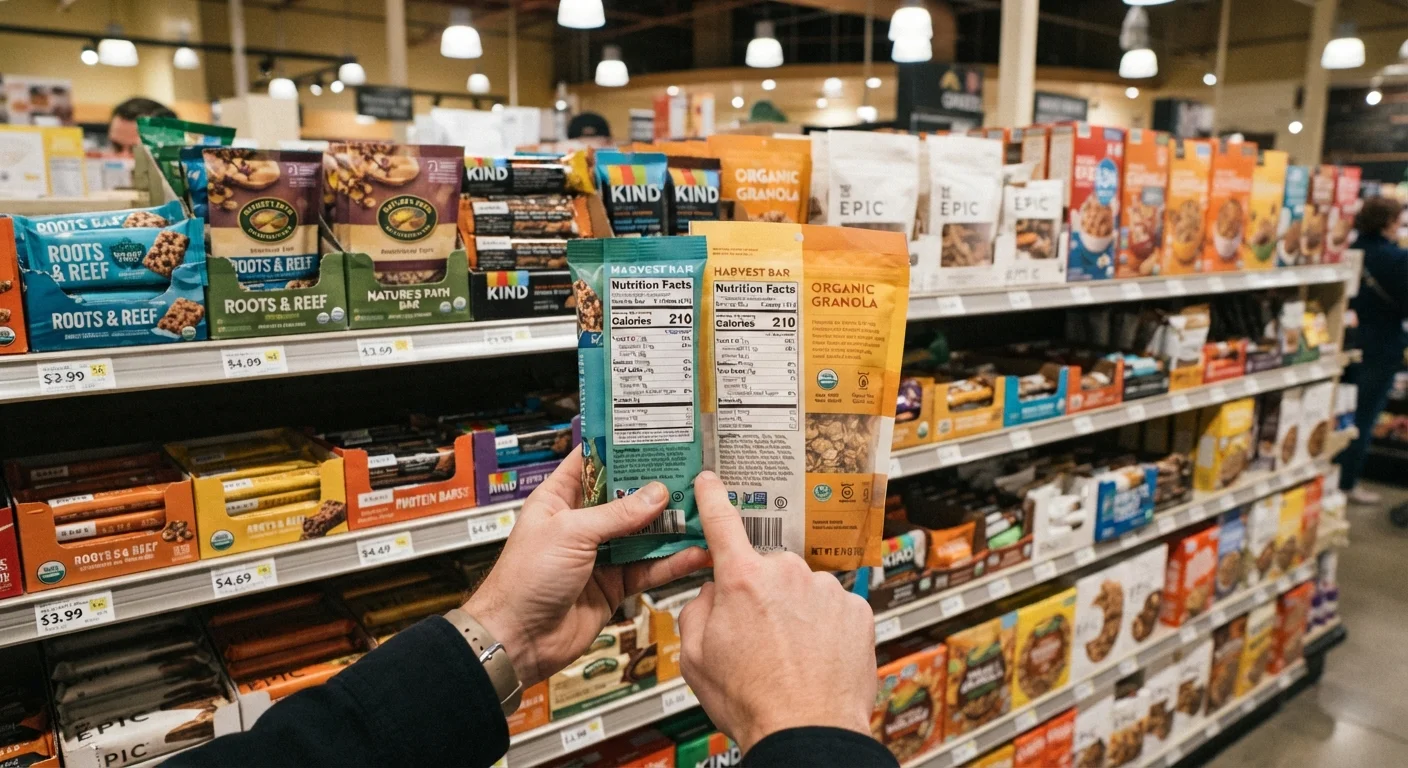
Photo credit: InGlimpse.com | Where Curiosity Finds Answers
In this article
Explores how marketing terms like "natural," "light," and "multigrain" can obscure a product's true nutritional profile.
Key Takeaways
- Terms like 'natural,' 'multigrain,' and 'light' have limited or no legal definitions under FDA rules.
- The Nutrition Facts panel — not the front of the package — tells you what's actually in your food.
- Added sugars, sodium, and refined flours can hide behind health-sounding labels.
- Serving size manipulation is one of the most common ways packaged foods appear healthier than they are.
- Always check the ingredient list: the order of ingredients reveals what a product is mostly made of.
How Front-of-Pack Claims Mislead Shoppers
Food manufacturers invest heavily in front-of-package marketing — and for good reason. Research consistently shows that label claims like "natural," "wholesome," and "made with real fruit" influence purchasing decisions, often more than the Nutrition Facts panel on the back. The problem is that many of these terms carry little or no legal weight. The FDA does not have a formal definition for the word "natural," meaning virtually any product can use it regardless of its ingredient list.
This gap between perception and reality is known as the "health halo" effect — a well-documented cognitive bias in which one positive attribute (a health claim on the label) causes consumers to judge a product as healthier overall. Studies have shown that people tend to underestimate the calorie content of foods bearing health-oriented labels, and may eat larger portions as a result.
Understanding how to cut through this marketing language is one of the most practical nutrition skills you can develop. Our guide to reading a Nutrition Facts label walks through exactly what the numbers on the back panel mean — and which ones deserve the most attention.
Trusting front-of-package health claims at face value.
Why it happens: Vivid packaging, bold claims, and "halo" terms like "organic" or "natural" are designed to signal healthfulness before a shopper reads the fine print.
Ignoring the stated serving size when evaluating nutrition numbers.
Why it happens: Serving sizes are often set smaller than what most people actually eat in one sitting, making calories, sodium, and sugar figures appear more favorable.
Assuming 'multigrain' or 'wheat' means the product is made from whole grains.
Why it happens: These terms sound nutritionally meaningful but do not require that grains be unrefined. Many multigrain products are made predominantly from enriched white flour.
Reading 'no added sugar' as confirmation that a product is low in sugar overall.
Why it happens: The distinction between added and naturally occurring sugars is not always intuitive, and food marketing leans on whichever claim sounds most appealing.
Overlooking sodium content in products marketed as healthy snacks or meal replacements.
Why it happens: Sodium is less visible than fat or sugar in health conversations, and products labeled as "light" or "diet" sometimes compensate for reduced fat with increased salt for flavor.
What the Evidence Says About Common Label Terms
Several widely used label claims deserve particular scrutiny:
- "Multigrain" means a product contains more than one type of grain — but those grains may all be refined, stripping out fiber and nutrients. Look for "100% whole grain" or "whole wheat" as the first ingredient instead.
- "Light" can refer to reduced fat, reduced calories, or even just lighter color or texture. The term requires context: light in what, compared to what?
- "Low sodium" has a legal threshold (140 mg or less per serving), but serving sizes are often unrealistically small, so actual sodium intake can be much higher per realistic portion.
- "No added sugar" does not mean low in sugar — products may still contain high amounts of naturally occurring sugars, concentrated fruit juice, or sugar alcohols.
Added sugars in particular are worth watching closely. The distinction between added and naturally occurring sugars has meaningful implications for health — a topic explored in depth in our article on added vs. natural sugars in the American diet.
57%
Of U.S. calories from ultra-processed foods
A study published in the BMJ estimated that ultra-processed foods account for more than half of daily caloric intake among U.S. adults, many of which carry health-oriented label claims.
~70%
Of packaged foods contain added sugars
Research from the University of North Carolina at Chapel Hill found that roughly 68–74% of products in U.S. grocery stores contain added sweeteners under various ingredient names.
Building a Smarter Label-Reading Habit
The most reliable way to evaluate any packaged food is to flip the package over and read both the Nutrition Facts panel and the ingredient list together. A few practical principles help:
- Check the serving size first. All the numbers on the panel — calories, sodium, sugar — are based on that serving. If you typically eat twice the listed serving, double every value.
- Scan the ingredient list. Ingredients are listed in descending order by weight. If a refined grain, added sugar (in any of its many names: cane syrup, dextrose, maltose), or sodium-heavy ingredient appears in the first three slots, the product's nutritional profile is shaped by that ingredient.
- Don't stop at the calorie count. Two products with identical calories can differ substantially in fiber, protein, saturated fat, and micronutrient content — factors that influence satiety and long-term health.
"Healthy" Labels Don't Guarantee Nutritional Quality
Products certified or labeled as organic, natural, or gluten-free are not automatically nutritious. A gluten-free cookie can be just as high in added sugar and refined starch as a conventional one. Organic certification addresses farming practices, not the overall nutritional profile of the finished product. Always evaluate the full label regardless of certification claims.
The same skepticism that helps with food labels applies broadly to product descriptions across categories. Our piece on reading product descriptions without getting misled covers how vague marketing language operates in other consumer categories as well.
This article is for general informational and educational purposes only and is not a substitute for personalized nutrition advice from a qualified healthcare or registered dietetics professional.

Author
Health Editorial Team
Health Editorial Team is the collective byline for our editorial team and contributor network. Articles published under this byline or an editorial pen name are researched, written, and reviewed according to our editorial standards for clarity, consistency, and independence before publication.
View all articles →