
Reading a Nutrition Facts Label Without Getting Confused
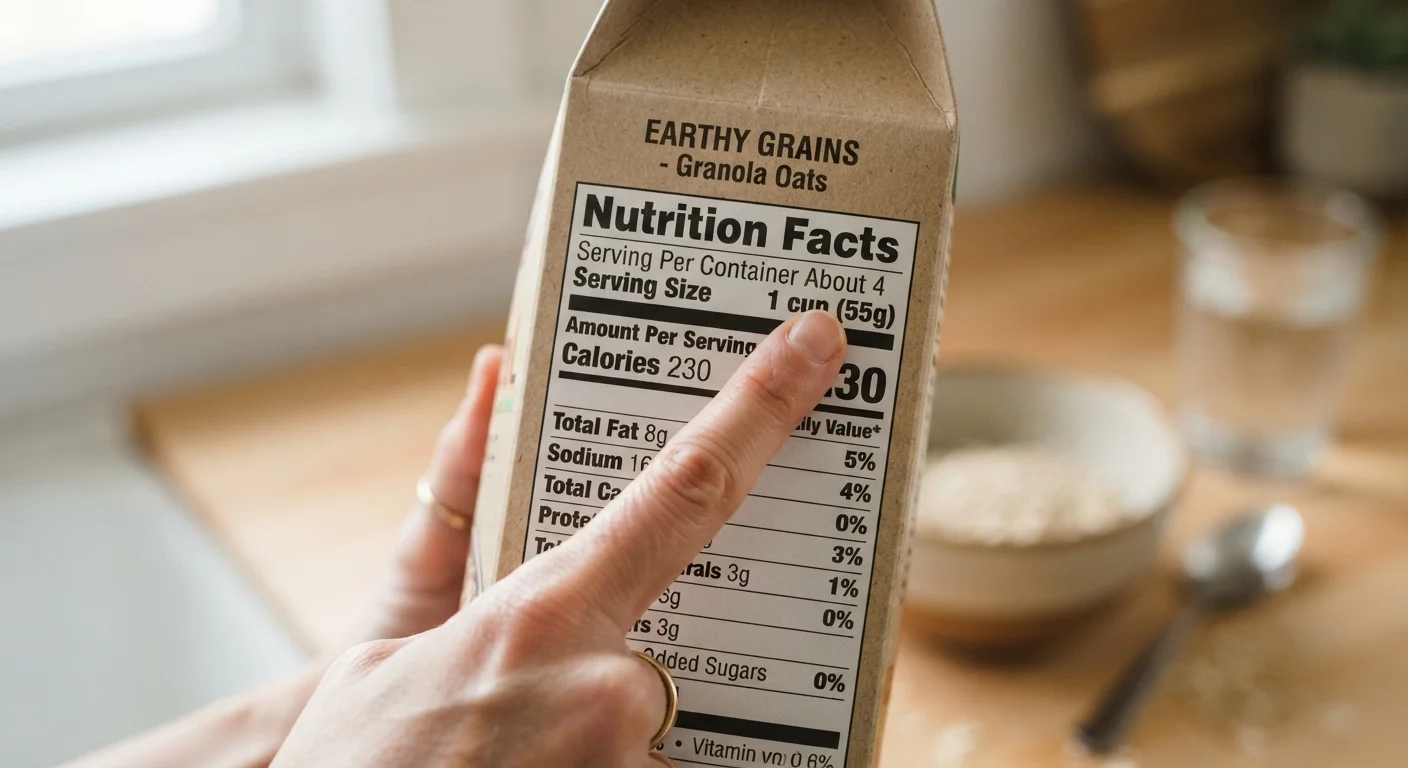
Photo credit: InGlimpse.com | Where Curiosity Finds Answers
In this article
Step-by-step guidance on decoding the Nutrition Facts panel—serving sizes, daily values, and what the numbers really mean.
Key Takeaways
- Serving size is the foundation of every number on the label — always check it first.
- % Daily Value tells you how much a nutrient contributes to a standard 2,000-calorie diet.
- 5% DV or less is generally considered low; 20% DV or more is generally considered high for a nutrient.
- Nutrients like sodium, saturated fat, and added sugars are worth keeping lower in most diets.
- Fiber, vitamins, and minerals are nutrients most Americans benefit from consuming more of.
- Marketing claims on the front of a package don't replace the Nutrition Facts panel.
Why the Nutrition Facts Label Exists — and What It Can Do For You
The Nutrition Facts panel is a federally standardized tool regulated by the U.S. Food and Drug Administration (FDA). It was designed to give consumers consistent, comparable nutrition information across all packaged foods. The most recent major update, finalized in 2016, added a dedicated line for added sugars and made serving sizes reflect amounts people actually eat — not idealized small portions.
Understanding this label is one of the most practical skills in everyday nutrition. Front-of-package claims like "natural," "light," or "multigrain" are largely unregulated and can be misleading. The Nutrition Facts panel cuts through that noise. As we explore in our article on why "healthy" packaged foods are often less healthy than they look, marketing language rarely tells the full story.
If you're newer to thinking about nutrition broadly, Nutrition for Beginners offers a grounding overview of key concepts before diving deeper.
What you will need
How to Read the Label: Step-by-Step
Follow these steps in order the first few times you practice — eventually, scanning a label becomes second nature. Grab a food package from your pantry or refrigerator to work with as you go.
Packaged food item
Provides a real Nutrition Facts label to practice reading as you follow each step.
Smartphone calculator
Helps you quickly multiply nutrient amounts when a package contains multiple servings.
Start with serving size and servings per container
The serving size is listed at the very top of the panel and is the reference point for every number that follows. If the label says one serving is 1 cup and you eat 2 cups, every calorie and nutrient value doubles. Check the servings per container as well — a small bag that looks like a single portion may actually list 2.5 servings.
Note the calories per serving
Calories are displayed prominently just below the serving size. This figure tells you how much energy one serving provides. Remember: if you eat more than one serving, multiply accordingly. Calories alone don't tell the full nutrition story, but they are a useful starting point for understanding energy density.
Review total fat, saturated fat, and trans fat
Total fat includes all fat types. Look specifically at saturated fat — most dietary guidance suggests keeping this lower relative to total daily intake. Trans fat should ideally be as close to zero as possible; even small amounts listed can add up across multiple servings. Unsaturated fats (found in nuts, fish, and plant oils) are not cause for alarm.
Check sodium and cholesterol
Sodium is measured in milligrams (mg). Many processed and packaged foods are high in sodium, so this number is worth scanning — especially for those monitoring blood pressure. Dietary cholesterol guidance has evolved; current research focuses more on saturated and trans fats as drivers of cardiovascular risk, but cholesterol content is still listed on the label for reference.
Examine total carbohydrates, fiber, and added sugars
Total carbohydrates include dietary fiber, total sugars, and added sugars. Dietary fiber supports digestive health and is a nutrient most Americans don't get enough of — see our article on dietary fiber and why it matters for more. Added sugars are the ones introduced during manufacturing, distinct from naturally occurring sugars in fruit or dairy. Keeping added sugars low is a consistent recommendation across major dietary guidelines.
Look at protein and micronutrients
Protein is listed in grams. Below it, you'll find micronutrients — currently required disclosures include Vitamin D, calcium, iron, and potassium, all of which are commonly under-consumed in US diets. For a broader look at what these nutrients do, our guide on key vitamins and minerals every adult should know is a useful companion.
Use % Daily Value to put numbers in context
The % Daily Value (%DV) column, on the right side of the label, tells you how much one serving contributes to a standard 2,000-calorie-per-day diet. A general rule of thumb: 5% DV or less is low for a nutrient; 20% DV or more is high. Use this column to quickly assess whether a food is a meaningful source of fiber or vitamin D, or whether it contributes heavily to your sodium or saturated fat intake for the day.
Comparing Products? Use %DV
When choosing between two similar products, the %DV column makes side-by-side comparison fast and reliable. Look for higher %DV in fiber and key micronutrients, and lower %DV in sodium and saturated fat. You don't need to do any math — the percentage does it for you.
This article is for general informational and educational purposes only and is not a substitute for personalized dietary advice. Individual nutritional needs vary. Consult a registered dietitian or qualified healthcare professional for guidance specific to your health situation.
Putting It All Together in Real Life
Reading a single label is useful; building the habit of comparing labels across similar products is where the real benefit lies. Once you know how to find the serving size and interpret %DV, comparing two breakfast cereals or two soups takes about 30 seconds.
Pairing label reading with a practical sense of portion sizes makes it even more powerful. Our guide on understanding portion sizes without counting every calorie offers visual strategies that complement what you're learning from the label itself.
The goal isn't to optimize every meal or track every gram — it's to make more informed choices more often. The Nutrition Facts panel is a tool in service of that goal, not a source of stress.
Don't Let One Number Drive All Decisions
No single nutrient — not fat, not sugar, not sodium — defines whether a food is "healthy" in the context of an overall diet. Nutritional science consistently shows that eating patterns matter more than individual foods. Use the label to stay informed, not to create rigid rules around specific numbers.

Author
Health Editorial Team
Health Editorial Team is the collective byline for our editorial team and contributor network. Articles published under this byline or an editorial pen name are researched, written, and reviewed according to our editorial standards for clarity, consistency, and independence before publication.
View all articles →