
Understanding Portion Sizes Without Counting Every Calorie
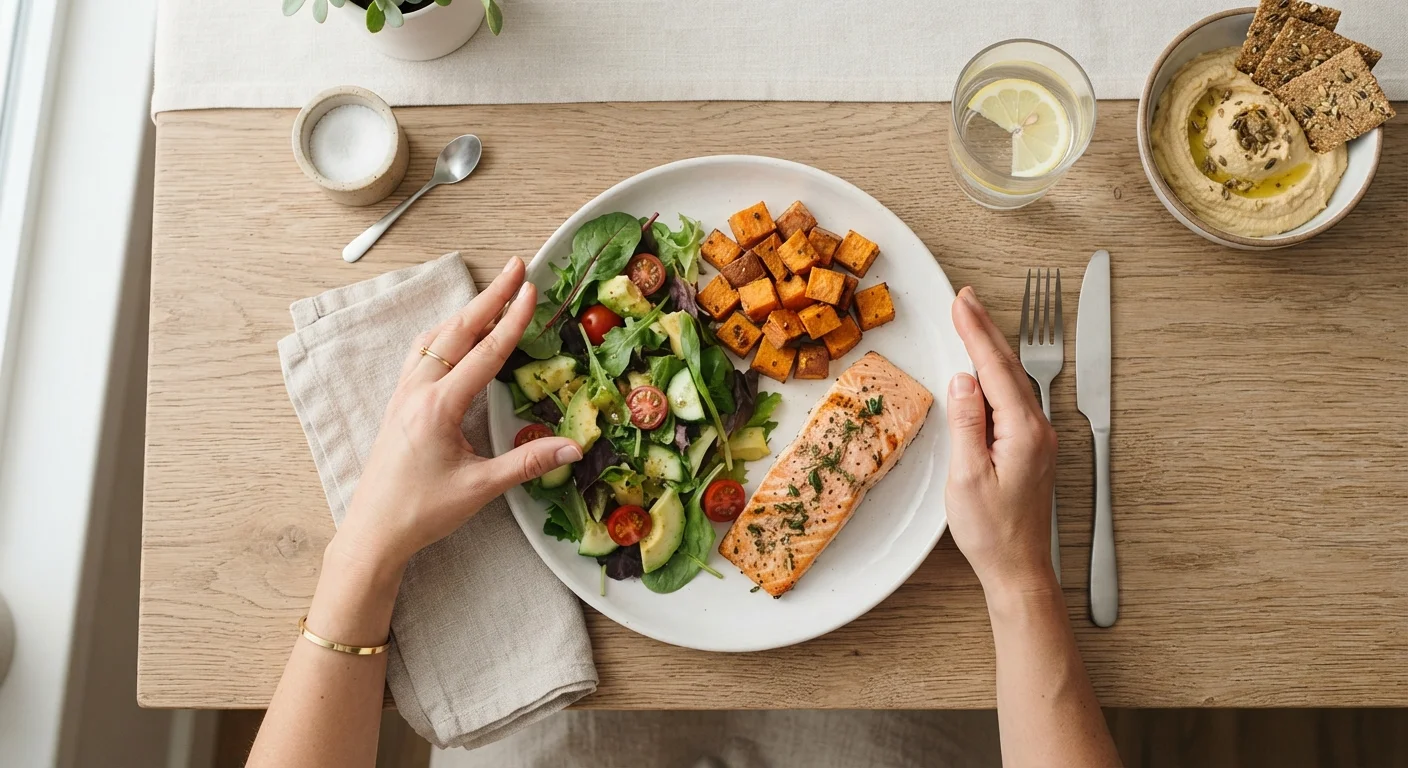
Photo credit: InGlimpse.com | Where Curiosity Finds Answers
In this article
Learn practical, visual methods for gauging appropriate portion sizes so you can eat mindfully without obsessive tracking.
Key Takeaways
- Your hand is a built-in, always-available portion guide that scales with your body size.
- Visual reference objects like a deck of cards or baseball can estimate common food portions accurately.
- Mindful eating cues — not calorie counts — help most people regulate intake more sustainably.
- Plate composition ratios (half vegetables, quarter protein, quarter grains) simplify meal planning.
- Portion awareness is a skill that improves with practice, not a rigid rule to follow perfectly.
Why Portion Awareness Matters More Than Calorie Math
Calorie counting works for some people, but research consistently shows it can be unsustainable — and for many, it increases stress around food without improving eating habits long-term. A more practical middle ground is portion awareness: developing an intuitive sense of how much food your body generally needs at a given meal, without pulling out a food scale every time you sit down to eat.
If you're newer to thinking about nutrition, this foundational nutrition guide covers the core concepts worth understanding first. Once you have that footing, portion sizing becomes a natural next layer.
The goal here isn't perfection — it's building a reliable mental model you can use anywhere: at home, at a restaurant, or at a friend's dinner table.
What you will need
Your Built-In Portion Toolkit
Before memorizing charts, know that your hand is a surprisingly accurate and personalized portion guide — and it scales with your body size. Larger people generally have larger hands and higher calorie needs, so the system self-adjusts naturally.
Your palm
Estimates a single serving of protein foods such as chicken, fish, or tofu — roughly 3–4 oz.
Your closed fist
Approximates one cup, useful for grains, pasta, cereal, and chopped vegetables.
Your cupped hand
Represents about half a cup — a helpful guide for beans, rice, or fruit.
Your thumb
Estimates roughly one tablespoon, ideal for fats like nut butter, oil, or salad dressing.
Standard 9–10 inch dinner plate
Used as the foundation for the plate-method approach to composing a balanced, portioned meal.
For packaged foods, understanding the Nutrition Facts label can help you cross-check visual estimates against listed serving sizes — useful while you're still calibrating your eye.
How to Apply Portion Awareness at Every Meal
The steps below walk you through building a portioned plate using visual cues rather than measurements. With practice, this process takes under a minute.
Fill half your plate with non-starchy vegetables
Before adding anything else, cover half of your plate with vegetables — leafy greens, roasted broccoli, sliced peppers, cucumber, tomatoes, or whatever you have. This sets a high-volume, high-fiber foundation that supports fullness without taking up most of your calorie budget.
Add a palm-sized portion of protein
On one quarter of the remaining plate, place a palm-sized serving of your protein source. This could be grilled chicken, canned tuna, eggs, legumes, tempeh, or cottage cheese. The palm guide — roughly the size and thickness of your hand, excluding fingers — applies to most animal and plant protein sources.
Add a fist-sized portion of grains or starchy foods
Fill the remaining quarter of your plate with a fist-sized portion of a grain or starchy vegetable: brown rice, quinoa, whole-grain bread, sweet potato, or corn. Choosing higher-fiber options where possible slows digestion and supports more consistent energy levels.
Add a thumb-sized portion of fat
A small amount of healthy fat — olive oil used in cooking, avocado sliced on top, or a drizzle of tahini — completes the plate. Use your thumb as a guide: one thumb-tip equals roughly a teaspoon, and one full thumb equals about a tablespoon.
Eat slowly and check in mid-meal
Hunger and fullness signals take roughly 15–20 minutes to reach your brain after your stomach registers food. Pause halfway through your plate, set down your utensil, and ask yourself whether you're still genuinely hungry. This habit — not the plate layout — is ultimately what makes portion awareness work over time.
Portions Vary — And That's Normal
These visual guides are starting points, not fixed rules. Hunger levels shift with activity, sleep, hormonal changes, and stress. If you consistently feel unsatisfied or overly full using these benchmarks, that's useful information — not a failure. Consider consulting a registered dietitian for personalized guidance.
Once you're comfortable portioning individual foods, the next step is understanding how those portions fit together. Building a balanced plate explains how to combine food groups for nutritional completeness without following a strict diet plan.
Common Pitfalls and How to Avoid Them
Even experienced eaters run into a few consistent traps when it comes to portions:
- Package confusion: Many packaged items contain two or more servings per container, making the listed serving size easy to underestimate. Always check the servings-per-container line on the label.
- Eating from large vessels: Research on portion distortion shows that people pour and eat more when using larger bowls, plates, and glasses — not because they're hungry, but because the vessel sets an unconscious baseline. Using standard-sized dinnerware helps.
- Skipping meals and overcorrecting: Arriving at a meal extremely hungry makes portion moderation much harder. Spacing meals reasonably throughout the day supports more consistent portion choices.
Portion Focus Isn't Right for Everyone
For individuals with a history of disordered eating, focusing heavily on food quantities can be counterproductive or harmful. If tracking or portion monitoring feels distressing rather than helpful, speak with a healthcare provider or registered dietitian before continuing. This content is general educational information and is not a substitute for professional guidance.
Building portion habits also pairs well with smart grocery planning. Eating well on a budget covers how to stock your kitchen with nutritious staples so the right foods are always available in the right amounts.
This article is for general informational and educational purposes only and is not a substitute for personalized advice from a registered dietitian or other qualified healthcare professional. Individual nutritional needs vary. Consult a qualified professional before making significant changes to your diet.

Author
Health Editorial Team
Health Editorial Team is the collective byline for our editorial team and contributor network. Articles published under this byline or an editorial pen name are researched, written, and reviewed according to our editorial standards for clarity, consistency, and independence before publication.
View all articles →