
Eating Well on a Budget: Practical Strategies That Don't Require a Nutrition Degree
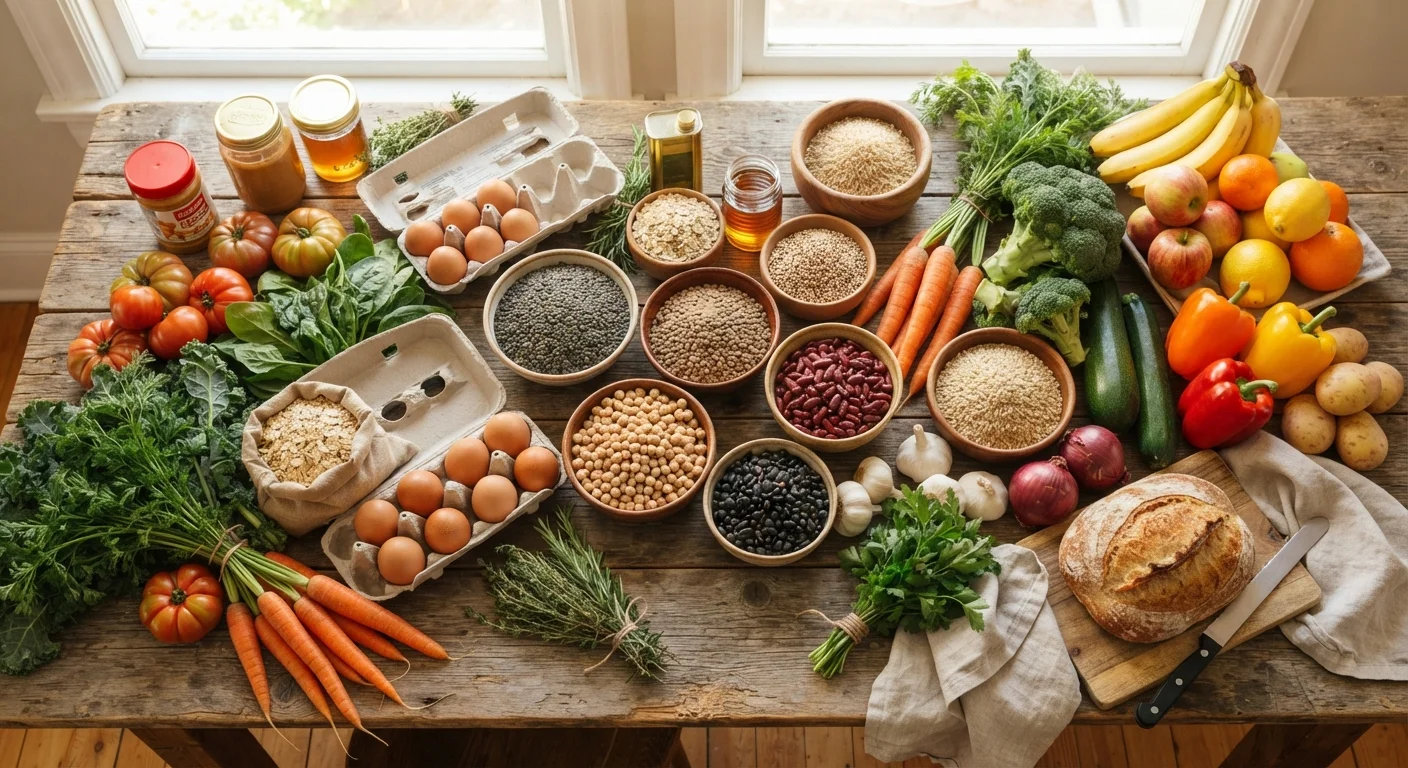
Photo credit: InGlimpse.com | Where Curiosity Finds Answers
In this article
Practical approaches to building nutritious, affordable meals using pantry staples, seasonal produce, and smart planning.
Key Takeaways
- Dried legumes, whole grains, and eggs deliver strong nutrition at a low cost per serving.
- Meal planning before you shop reduces food waste and prevents impulse purchases that inflate grocery bills.
- Seasonal and frozen produce are nutritionally comparable to fresh and consistently more affordable.
- Batch cooking once or twice a week stretches ingredients further and saves significant time.
- A few versatile pantry staples can anchor dozens of different meals without repetition.
Why Budget Eating Gets a Bad Reputation
The idea that eating well costs a lot is pervasive — and largely misleading. Nutrient-dense food and high food costs are not the same thing. Much of the confusion comes from comparing processed convenience foods or restaurant meals against whole ingredients, rather than comparing whole ingredients against each other.
If you're newer to thinking about nutrition fundamentals, the beginner's guide to nutrition offers a grounding framework before you dive into meal planning. Understanding what your body actually needs makes it far easier to shop with purpose rather than anxiety.
The strategies below are drawn from established nutritional science and practical household economics — no special training required.
Build Your Meals Around Low-Cost Nutritional Anchors
Every affordable, nutritious eating pattern shares a common feature: a handful of reliable, inexpensive foods that provide substantial nutritional value per dollar spent. These include:
- Dried or canned legumes — lentils, black beans, chickpeas, and kidney beans are among the most protein- and fiber-dense foods available at any price point.
- Whole grains — oats, brown rice, barley, and whole-wheat pasta provide sustained energy, B vitamins, and fiber at a fraction of the cost of refined alternatives.
- Eggs — widely regarded by nutrition researchers as one of the most complete and affordable protein sources available.
- Frozen vegetables — frozen at peak ripeness, these retain most of their nutrients and cost significantly less than out-of-season fresh produce.
Building meals around these anchors — rather than centering every meal on meat — dramatically lowers per-serving costs while maintaining nutritional quality. For a deeper look at how to compose meals that hit your nutritional bases, see our guide to building a balanced plate.
Plan Before You Shop
A weekly meal plan is one of the highest-return habits in household food management. It eliminates the daily decision fatigue that drives takeout spending, reduces food waste (which the USDA estimates accounts for 30–40% of the US food supply), and ensures you buy what you'll actually use.
Effective planning doesn't need to be elaborate. A rough outline of five to six dinners, with lunches built from leftovers, is sufficient. Cross-reference your plan against what's already in your pantry and refrigerator before writing your list. If you're also working on broader household budget habits, the ground-up budgeting guide covers how to allocate grocery spending within a realistic financial framework.
Cook in Batches, Eat in Variations
Batch cooking — preparing larger quantities of base ingredients at one time — is the practical engine behind most sustainable budget meal strategies. Cook a large pot of grains or legumes on Sunday and you have the foundation for entirely different meals across the week: grain bowls, soups, wraps, or stir-fries.
The key insight is to cook components rather than complete meals, which prevents flavor fatigue. Roasted vegetables, cooked beans, and a batch of whole grains can combine in multiple ways depending on the sauces and seasonings you add each day.
Make Your Freezer Work Harder
Batch-cooked beans and grains freeze exceptionally well in portioned containers. Freeze in meal-sized amounts so you can pull out exactly what you need without defrosting a full batch. This habit turns a two-hour Sunday cooking session into weeks of convenient, ready-to-use ingredients.
Portion awareness also matters here — stretching ingredients well often means being intentional about serving sizes without obsessively measuring everything. Our article on understanding portion sizes without counting calories offers practical, visual methods that fit naturally into this approach.
This article provides general nutritional and financial information for educational purposes only. It is not a substitute for personalized advice from a registered dietitian, healthcare provider, or financial professional. Individual nutritional needs vary — consult a qualified professional for guidance tailored to your circumstances.

Author
Health Editorial Team
Health Editorial Team is the collective byline for our editorial team and contributor network. Articles published under this byline or an editorial pen name are researched, written, and reviewed according to our editorial standards for clarity, consistency, and independence before publication.
View all articles →