
Sugar in the American Diet: Added vs. Natural and Why the Distinction Matters
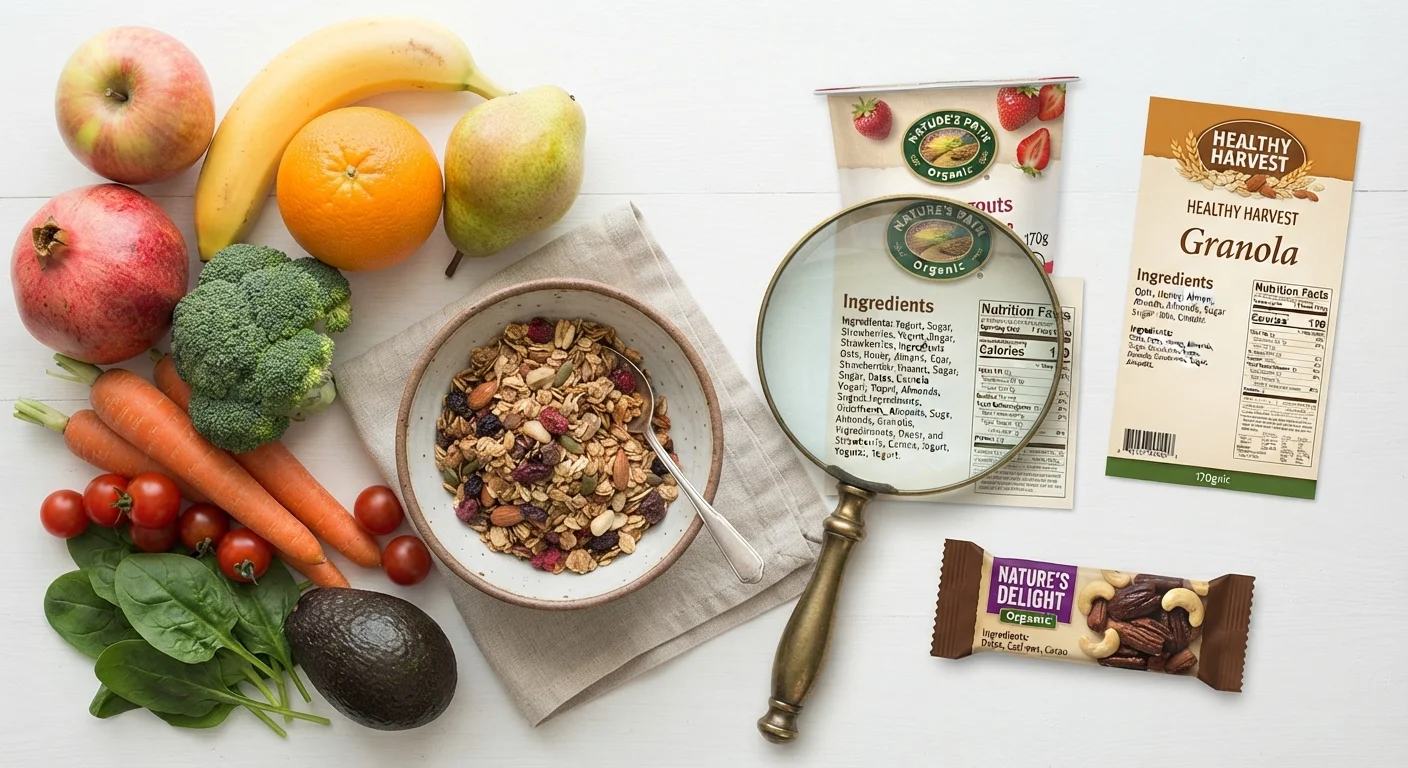
Photo credit: InGlimpse.com | Where Curiosity Finds Answers
In this article
Clarifies the difference between added and naturally occurring sugars, how to spot them on labels, and what research says about intake levels.
Key Takeaways
- Naturally occurring sugars come bundled with fiber, vitamins, and minerals that slow absorption and add nutritional value.
- Added sugars are incorporated during manufacturing or cooking and provide calories without meaningful nutritional benefit.
- The Nutrition Facts label now separates 'Added Sugars' from total sugars, making it easier to identify hidden sources.
- The American Heart Association recommends most adults limit added sugar to no more than 25–36 grams per day.
- Common whole foods like fruit, plain dairy, and vegetables contain natural sugars and are not a primary dietary concern for most people.
- Ultra-processed foods are the largest single source of added sugars in the average American diet.
What Makes These Two Types of Sugar Different
Sugar is sugar at a molecular level — glucose, fructose, and sucrose behave the same chemically whether they come from an apple or a soda. What differs profoundly is the nutritional context in which they arrive in your body.
Naturally occurring sugars are found intact inside whole or minimally processed foods. Lactose in milk and fructose in fruit both count. Crucially, these foods come with dietary fiber, protein, water, vitamins, and minerals that collectively slow digestion, moderate the glucose response, and deliver real nutritional value alongside the sweetness.
Added sugars, by contrast, are sugars and syrups introduced during manufacturing, cooking, or preparation — think high-fructose corn syrup in salad dressing, cane sugar in flavored yogurt, or honey stirred into a granola bar. Because added sugars are stripped of the matrix that surrounds them in whole food, they are absorbed more rapidly and carry no compensating nutrients. Over time, consistently high added-sugar intake is associated in research with increased risk of obesity, type 2 diabetes, cardiovascular disease, and dental caries.
This distinction is why nutrition researchers and public health bodies treat the two categories differently, and why the FDA updated the Nutrition Facts label to call out added sugars as a separate line item. For a deeper look at how to read those panels, see our guide to reading a Nutrition Facts label.
| Criterion | Naturally Occurring Sugar | Added Sugar |
|---|---|---|
| Where it comes from | Intact in whole foods (fruit, dairy, vegetables) | Added during manufacturing or cooking |
| Nutrient package | Comes with fiber, vitamins, minerals | Little to no accompanying nutrients |
| Digestion speed | Slowed by fiber and food matrix | Absorbed more rapidly |
| Label identification | Part of "Total Sugars" only | Listed under "Added Sugars" sub-line |
| Public health guidance | No general restriction recommended | Limit to under 10% of daily calories (Dietary Guidelines) |
| Common sources | Apples, bananas, milk, plain yogurt | Sodas, candy, flavored cereals, sauces |
| Association with health risk | Not independently linked to cardiometabolic risk | High intake linked to obesity, diabetes, cardiovascular disease |
How to Spot Added Sugars on Labels and Ingredient Lists
Added sugar travels under more than 60 names in ingredient lists, which is one reason intake is so easy to underestimate. Beyond the obvious — table sugar, corn syrup, honey, and molasses — watch for terms ending in -ose (dextrose, maltose, sucrose), concentrated fruit juice, agave nectar, brown rice syrup, and evaporated cane juice.
The FDA's updated Nutrition Facts panel, now mandatory for most packaged foods, provides the clearest shortcut: look for the "Includes X g Added Sugars" sub-line beneath Total Sugars. The percentage Daily Value (%DV) next to it is based on a 50-gram daily reference — if a single serving accounts for 20% or more of that DV, the product is a high added-sugar source.
Natural Doesn't Always Mean Low in Added Sugar
Products marketed as "natural" or "made with real fruit" can still contain substantial added sugars. Fruit juice concentrates, for example, are classified as an added sugar when used as a sweetener — even though they originate from whole fruit. Always check the "Added Sugars" line on the Nutrition Facts panel rather than relying on front-of-package claims.
Ingredient lists and label reading are also central to spotting products that lean on marketing language to appear healthier than they are. Our article on why "healthy" packaged foods can mislead unpacks how terms like "natural" and "light" can obscure a product's true sugar load.
What the Research Says About Safe Intake Levels
No health authority recommends eliminating naturally occurring sugars from whole foods; the evidence simply does not support restricting fruit or plain dairy for the general population. The guidance zeroes in on added sugars.
The American Heart Association (AHA) recommends that most women consume no more than 25 grams (about 6 teaspoons) of added sugar per day, and most men no more than 36 grams (about 9 teaspoons). The 2020–2025 Dietary Guidelines for Americans advise keeping added sugars below 10% of total daily calories. Current estimates suggest the average American adult consumes roughly 17 teaspoons of added sugar daily — well above both thresholds.
17 tsp
Average daily added sugar intake for U.S. adults
Estimates from national dietary survey data suggest American adults consume roughly 17 teaspoons of added sugar per day — nearly double the AHA's recommended limit for men.
10%
Added sugar cap as share of daily calories
The 2020–2025 Dietary Guidelines for Americans recommend keeping added sugar intake below 10% of total daily caloric intake.
60+
Names for added sugar on ingredient lists
Nutrition researchers have identified more than 60 different names under which added sugars may appear on packaged food ingredient labels.
Ultra-processed foods — including soft drinks, sweetened cereals, flavored yogurts, and packaged snacks — account for the majority of added-sugar intake in the U.S. diet. Reducing reliance on these products is the most impactful lever most people can pull. For broader context on how processing levels shape nutritional quality, see our whole foods vs. processed foods explainer.
It is also worth noting that dietary fiber — the nutrient found alongside natural sugars in whole fruits and vegetables — actively moderates sugar absorption and supports metabolic health. Learn more in our overview of dietary fiber and why most Americans fall short.
This article provides general nutrition information for educational purposes and is not a substitute for personalized medical or dietary advice. Consult a qualified healthcare professional or registered dietitian for guidance specific to your health situation.

Author
Health Editorial Team
Health Editorial Team is the collective byline for our editorial team and contributor network. Articles published under this byline or an editorial pen name are researched, written, and reviewed according to our editorial standards for clarity, consistency, and independence before publication.
View all articles →