
Whole Foods vs. Processed Foods: What the Difference Actually Means for Your Diet
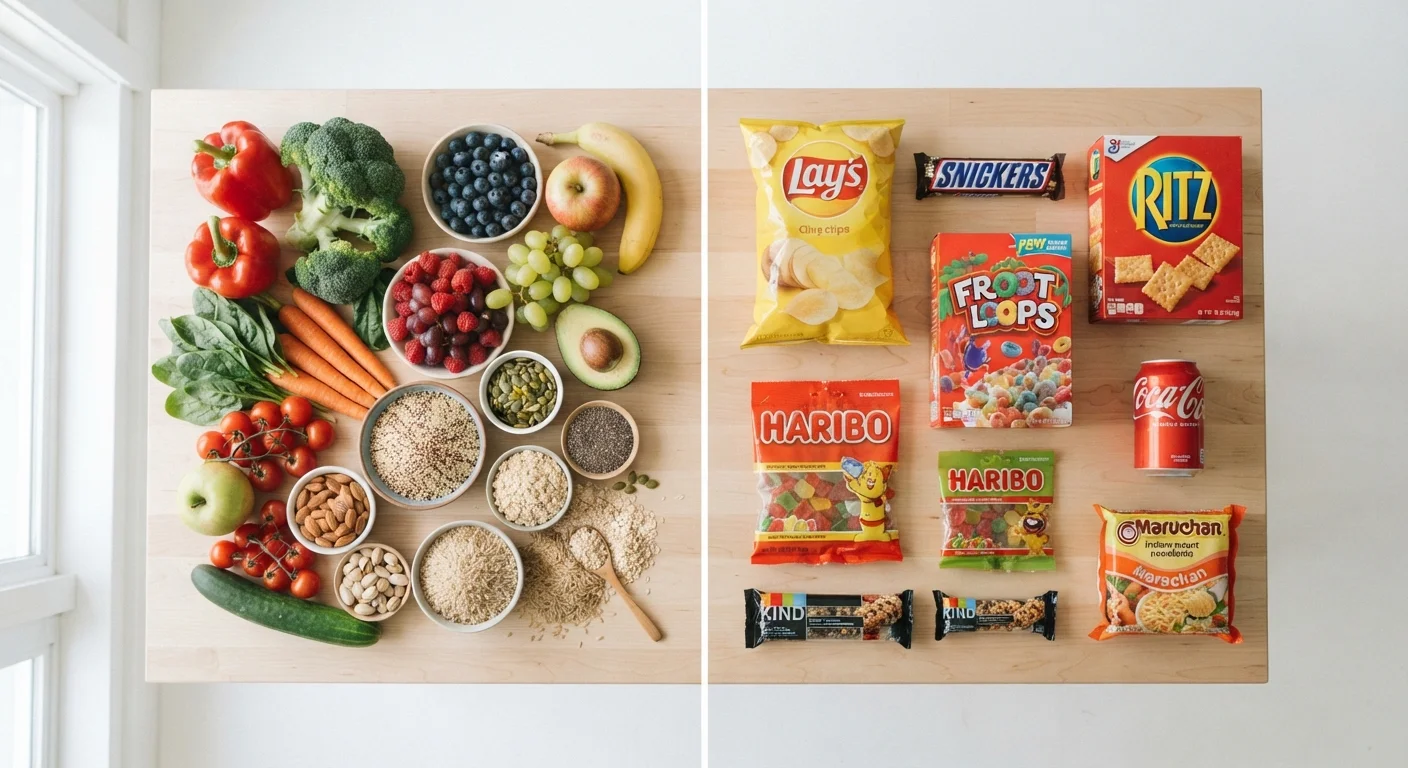
Photo credit: InGlimpse.com | Where Curiosity Finds Answers
In this article
Understand the spectrum from minimally processed to ultra-processed foods and how that distinction shapes your nutritional intake.
Key Takeaways
- Processing exists on a spectrum — canned beans differ fundamentally from packaged snack cakes.
- Ultra-processed foods tend to be lower in fiber and micronutrients while higher in sodium, sugar, and additives.
- Whole foods generally deliver more nutrients per calorie, supporting satiety and long-term dietary quality.
- Minimally processed foods like frozen vegetables can be nutritionally comparable to fresh alternatives.
- Reading ingredient lists, not just nutrition labels, is the most reliable way to assess food processing level.
What 'Processed' Actually Means
The word processed covers an enormous range — from washing and bagging spinach to engineering shelf-stable snacks with dozens of additives. The NOVA classification system, developed by nutrition researchers at the University of São Paulo, divides foods into four groups based on the extent and purpose of processing:
- Group 1 – Unprocessed or minimally processed: Fresh fruits, vegetables, plain meats, eggs, legumes, and plain milk. Natural processes like drying or freezing are permitted.
- Group 2 – Processed culinary ingredients: Oils, butter, flour, sugar, and salt — used to prepare food, not typically eaten alone.
- Group 3 – Processed foods: Items with added salt, sugar, or preservatives but still recognizable — canned tomatoes, cheese, cured meats, bread.
- Group 4 – Ultra-processed foods (UPF): Industrially formulated products containing ingredients rarely found in home kitchens — emulsifiers, artificial flavors, color additives, and modified starches. Think packaged snacks, sodas, fast-food items, and many breakfast cereals.
This framework matters because the nutritional gap between Group 1 and Group 4 is substantial, while the difference between Groups 1 and 3 may be modest or even negligible depending on the specific food.
| Criterion | Whole Foods | Ultra-Processed Foods |
|---|---|---|
| Fiber content | Naturally high; intact in plant foods | Often low; removed during refining |
| Added sugars | Absent or negligible | Frequently high |
| Sodium levels | Naturally low | Often elevated for flavor/preservation |
| Micronutrient density | High; naturally occurring | Lower; sometimes artificially fortified |
| Ingredient list length | Single ingredient or very few | Often 15–30+ ingredients |
| Shelf life | Short; requires refrigeration | Long; stabilizers and preservatives used |
| Satiety per calorie | Generally high due to fiber and protein | Variable; often lower |
How Processing Changes Nutritional Quality
When foods move from minimally processed to ultra-processed, several things tend to happen simultaneously. Fiber is reduced or removed — refining wheat into white flour, for example, strips away the bran and germ, along with their associated B vitamins, magnesium, and fiber. Micronutrients that survive processing are sometimes added back artificially, which is why many packaged cereals are technically 'fortified' but still fall nutritionally short of whole-grain alternatives.
Sodium and added sugars typically climb as processing intensifies. The American diet derives a large share of its added sugar intake from ultra-processed products — a concern given established links between high added sugar intake and metabolic health. For a deeper look at how sugars function in the diet, see our article on added vs. natural sugar.
Whole foods, by contrast, tend to deliver nutrients in their naturally occurring ratios. An apple provides fiber, vitamin C, and polyphenols together — compounds that may work synergistically in ways that isolated supplements do not replicate. Understanding how macronutrients function alongside these foods is covered in our guide to carbs, protein, and fat.
57%
Share of US calories from ultra-processed foods
Research published in BMJ Open estimated that ultra-processed foods account for roughly 57% of total daily energy intake among American adults.
90%
Added sugar from ultra-processed sources
Studies using NHANES data have found that ultra-processed foods contribute approximately 90% of all added sugar consumed in the US diet.
~400%
More sodium in ultra-processed vs. minimally processed diets
A controlled NIH study found participants consumed significantly more sodium — and more calories overall — when eating an ultra-processed diet compared to an unprocessed one.
The Case for Minimally Processed Foods
A nuanced view of processing actually supports some processed foods. Frozen vegetables are picked at peak ripeness and flash-frozen, which preserves nutrients well — in some cases better than fresh produce that has spent days in transit. Plain canned fish, unsweetened yogurt, and bagged lentils are all processed to some degree, but remain nutritionally strong choices.
The practical implication: the goal is not to avoid all processing, but to limit ultra-processed foods while leaning into minimally processed options. A useful rule of thumb is checking the ingredient list. If the list is short and contains items you'd find in a kitchen pantry, the food is likely minimally processed. If it reads like a chemistry textbook, it falls into ultra-processed territory.
For guidance on how food marketing language can obscure these distinctions, packaged foods often look healthier than they are.
Building a Practical Approach
No single meal defines a diet. The evidence consistently supports a pattern where the majority of calories come from whole and minimally processed foods, with ultra-processed items present but not dominant. This is achievable without eliminating convenience foods entirely.
Some actionable starting points:
- Choose whole grains over refined equivalents where the swap is easy — oats instead of sweetened cereals, brown rice instead of instant flavored rice.
- Use canned and frozen vegetables freely — they count toward whole-food intake and reduce prep time.
- Read ingredient lists alongside nutrition facts. A low-calorie product with 30 additives is still ultra-processed.
- Be aware that eating patterns interact. A diet rich in whole foods supports protein quality goals too — see protein source comparisons for more context.
If you're exploring dietary patterns more broadly, our article on plant-based vs. omnivore eating examines how these food-quality principles apply across different diet styles.
This article is for general informational and educational purposes only and is not a substitute for personalized medical or dietary advice. Consult a registered dietitian or qualified healthcare professional for guidance specific to your health needs.

Author
Health Editorial Team
Health Editorial Team is the collective byline for our editorial team and contributor network. Articles published under this byline or an editorial pen name are researched, written, and reviewed according to our editorial standards for clarity, consistency, and independence before publication.
View all articles →