
Plant-Based Eating vs. Omnivore Diets: Weighing the Nutritional Tradeoffs
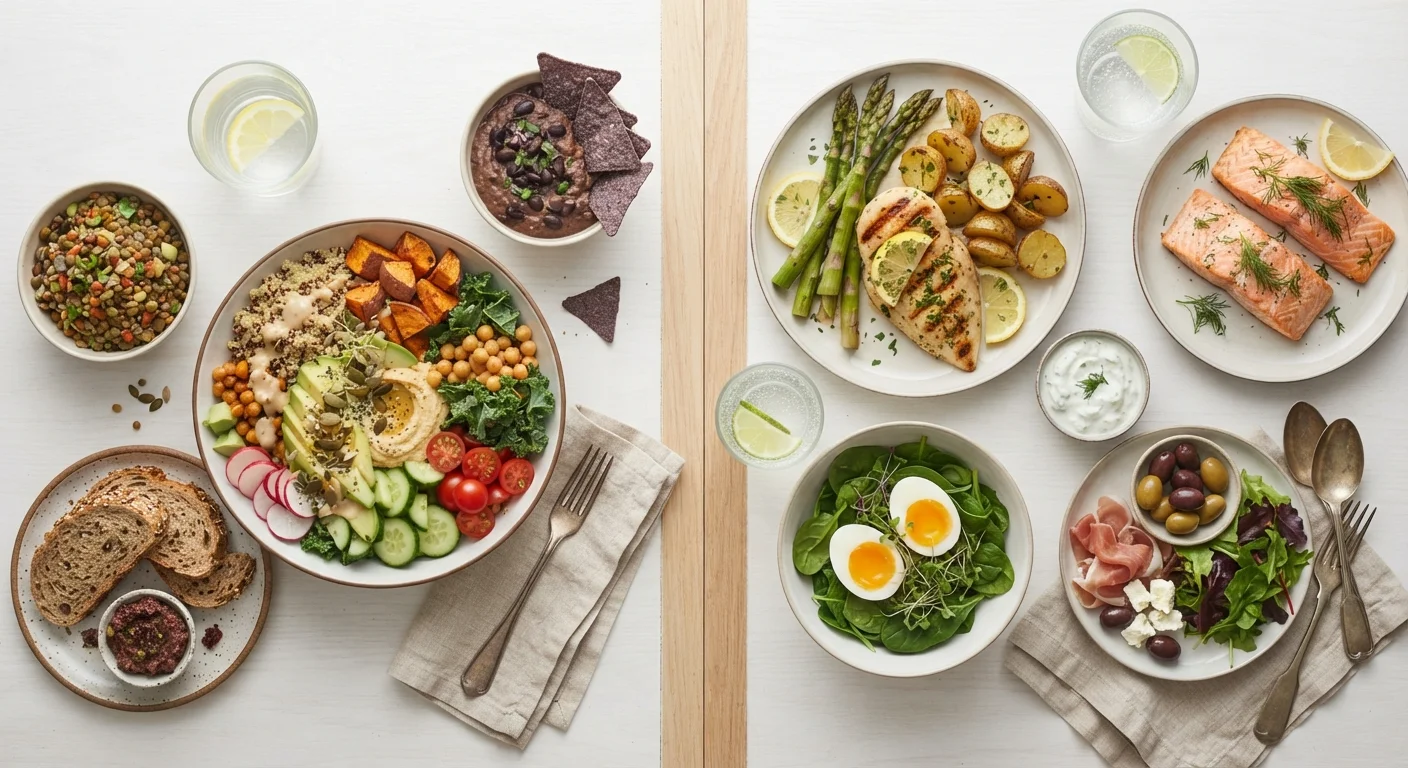
Photo credit: InGlimpse.com | Where Curiosity Finds Answers
In this article
A balanced look at how plant-based and omnivore eating patterns compare on protein, key nutrients, and long-term health considerations.
Key Takeaways
- Plant-based diets are linked to lower risks of heart disease and type 2 diabetes when well-planned.
- Omnivore diets provide easier access to complete proteins, heme iron, and vitamin B12.
- Both patterns carry nutritional gaps when poorly executed — quality and variety matter more than the label.
- Certain nutrients like B12, omega-3s, and zinc require intentional planning or supplementation on plant-based diets.
- Consulting a registered dietitian can help tailor either approach to your individual health needs.
How These Eating Patterns Are Defined
Plant-based eating covers a wide spectrum — from vegan diets that exclude all animal products to flexitarian approaches that limit but don't eliminate meat. Omnivore diets include both animal and plant foods without systematic exclusion of either group.
The critical point often missed in public debate: neither label guarantees a nutritious diet. A plant-based eater who relies on refined grains and processed snacks and an omnivore who rarely eats vegetables are both falling short. For a practical framework on composing meals under any eating pattern, see building a balanced plate.
| Plant-Based Diet | Omnivore Diet | |
|---|---|---|
| Protein completeness | Requires combining sources; soy is complete | Most animal sources are complete proteins |
| Vitamin B12 | Supplementation typically necessary | Readily available from meat, dairy, eggs |
| Iron availability | Non-heme iron; lower absorption rate | Heme iron; absorbed more efficiently |
| Fiber intake | Generally high from whole plant foods | Often lower; depends on vegetable intake |
| Saturated fat exposure | Typically lower | Higher risk if red/processed meats dominate |
| Omega-3s (EPA/DHA) | Limited; algae supplements available | Fatty fish provide direct dietary source |
| Cardiovascular health associations | Favorable in well-planned versions | Favorable when Mediterranean-style |
| Dietary flexibility | More restrictive; requires planning | Broader food access and fewer restrictions |
Protein: Completeness, Bioavailability, and Practical Gaps
Animal proteins — meat, fish, eggs, dairy — are complete proteins, meaning they contain all nine essential amino acids in proportions the body uses efficiently. Most plant proteins are either low in one or more essential amino acids or are absorbed less readily.
That said, plant-based eaters can meet full amino acid needs by eating a variety of protein sources across the day — legumes, whole grains, nuts, seeds, and soy. Soy (tofu, edamame, tempeh) is a notable exception, providing a complete amino acid profile comparable to many animal sources.
For a detailed side-by-side breakdown of animal, plant, and blended protein options including bioavailability data, see protein sources compared.
Combining Plant Proteins Doesn't Have to Be Complicated
You don't need to engineer perfect amino acid balance at every meal. Research suggests that eating a variety of plant protein sources — legumes, grains, nuts, and seeds — across the day is sufficient to meet amino acid needs for most healthy adults. Focus on overall dietary variety rather than precise per-meal calculations.
Nutrients That Require Extra Attention
Both eating patterns have blind spots — but they differ in which nutrients demand the most planning.
On a plant-based diet, watch for:
- Vitamin B12: Found almost exclusively in animal foods. Supplementation is generally necessary for vegans and recommended for many vegetarians.
- Heme iron: The form found in meat is absorbed two to three times more efficiently than non-heme iron from plants. Pairing plant iron sources with vitamin C improves absorption.
- Omega-3 fatty acids (EPA and DHA): Fatty fish are the most direct source. Plant foods like flaxseed provide ALA, which the body converts to EPA and DHA inefficiently. Algae-based supplements offer a direct plant-derived alternative.
- Zinc and calcium: Plant sources contain phytates that can reduce mineral absorption; variety and preparation methods (soaking, fermenting) help mitigate this.
On an omnivore diet, watch for:
- Fiber: Many omnivore eating patterns fall well short of recommended fiber intake, increasing risk of digestive and metabolic issues.
- Saturated fat: Heavy reliance on red and processed meats is consistently associated with elevated cardiovascular risk in epidemiological research.
To audit whether your current habits are covering the bases, this eating pattern audit offers a practical checklist.
Don't Assume 'Plant-Based' Means Nutritionally Complete
Heavily processed plant-based foods — including some meat alternatives — can be high in sodium, saturated fat, and additives while being low in fiber and micronutrients. A plant-based label on a packaged product is not a health guarantee. Prioritize whole or minimally processed plant foods as the foundation of the diet, and read nutrition labels carefully when choosing packaged alternatives.
Long-Term Health Associations
Large observational studies — including data from the EPIC-Oxford cohort and various Adventist Health Studies — show that well-planned plant-based diets are associated with lower rates of heart disease, type 2 diabetes, hypertension, and certain cancers. However, these studies reflect correlation, not guaranteed causation, and confounding lifestyle factors (smoking status, physical activity, healthcare access) make direct attribution difficult.
Omnivore diets that emphasize whole foods, lean proteins, and abundant vegetables also show favorable health outcomes. The Mediterranean dietary pattern — omnivore in structure — is among the most well-studied diets in the world for cardiovascular and cognitive health.
~25%
Lower risk of heart disease in plant-based eaters
A 2019 analysis in the Journal of the American Heart Association found plant-centered diets were associated with roughly 25% lower cardiovascular mortality risk compared to less plant-focused eating patterns.
95%
Of Americans fall short on dietary fiber
Research published in the American Journal of Lifestyle Medicine estimates that approximately 95% of Americans do not meet recommended daily fiber intakes, a gap more common in omnivore diets heavy on animal products.
1 in 5
Adult vegans at risk of B12 deficiency
Studies in populations following vegan diets without supplementation consistently find elevated rates of B12 insufficiency, reinforcing that this nutrient requires active management on fully plant-based diets.
Diet quality appears to matter more than the categorical label. Processed plant-based foods (meat alternatives high in sodium and additives) are not nutritionally equivalent to whole plant foods. For more on how food processing affects nutritional value, see whole foods vs. processed foods.
This article is for general informational purposes only and does not constitute medical or nutritional advice. Consult a registered dietitian or qualified healthcare professional before making significant changes to your diet, especially if you have an existing health condition.

Author
Health Editorial Team
Health Editorial Team is the collective byline for our editorial team and contributor network. Articles published under this byline or an editorial pen name are researched, written, and reviewed according to our editorial standards for clarity, consistency, and independence before publication.
View all articles →