
Small Living Room, Big Personality: Decorating Without Losing Space
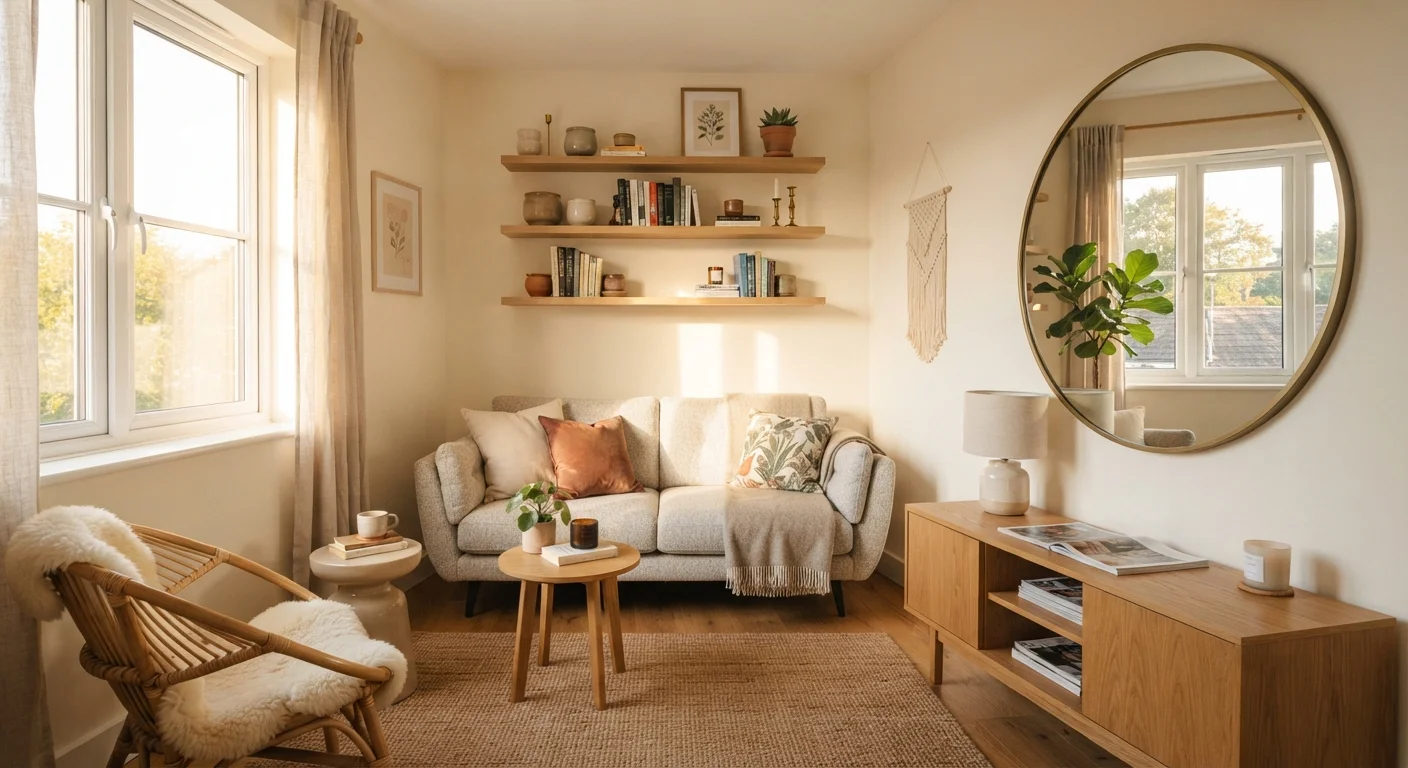
Photo credit: InGlimpse.com | Where Curiosity Finds Answers
In this article
Practical strategies for making a compact living room feel stylish and open—without sacrificing comfort or storage.
Key Takeaways
- Furniture scale matters more than quantity — fewer, right-sized pieces open up a room significantly.
- Vertical space is often underused; shelving and tall accents draw the eye upward and add storage.
- Mirrors and strategic lighting can make a compact room feel substantially larger without renovation.
- A consistent color palette creates cohesion and reduces visual clutter in tight spaces.
- Multi-functional furniture — storage ottomans, nesting tables — maximizes utility without crowding the floor.
- Personality comes from curated accessories, not volume — less clutter reads as more intention.
Why Small Living Rooms Fail — and How to Avoid the Traps
Most small living rooms don't struggle because of their size — they struggle because of decisions made without that size in mind. Oversized sofas that block pathways, too many accent pieces competing for attention, and furniture pushed against every wall are among the most common missteps. The result is a room that feels crowded rather than cozy.
Before buying or moving anything, take stock of what the room actually needs to do. Is it primarily a place to relax, to entertain, to work from home? That function should drive every choice that follows. If you're prone to inherited decor myths — like the idea that dark colors always shrink a room — our guide to common decorating myths is worth a read before you start.
Resist the 'More Is More' Impulse
Small rooms punish over-decorating faster than large ones. Every added object competes for visual attention and reduces the sense of open space. Approach accessories with the mindset that each item should either serve a function or genuinely delight you — not simply fill a gap.
What You'll Need Before You Start
Decorating a small space effectively doesn't require a big budget, but it does require a bit of preparation. Gather your materials and do a quick audit of the room before diving into changes.
What you will need
If you'd like a broader framework, the room-by-room decor refresh checklist can help you identify quick wins across every space in your home.
Tape measure
Measure furniture and room dimensions accurately before committing to any layout or purchase.
Graph paper or room-planning app
Visualize furniture arrangements to scale before moving anything heavy.
Large mirror
Reflects light and creates the visual impression of additional depth in a compact space.
Wall anchors and a stud finder
Required for safely mounting floating shelves or heavy mirrors to walls.
Storage ottoman
Doubles as seating, a coffee table surface, and hidden storage — ideal for small rooms.
Step-by-Step: Decorating a Small Living Room With Intention
Follow these steps in order. Each builds on the one before it, so resist the urge to jump ahead to accessories before the layout and foundation are set.
Measure the room and map a scaled floor plan
Write down the room's length, width, and ceiling height. Note the location of windows, doors, outlets, and any fixed features like radiators or built-ins. Sketch this to scale on graph paper or input it into a free room-planning app. This prevents costly mistakes when sizing furniture.
Edit what's already in the room
Before adding anything, remove what isn't earning its place. Pull everything out if possible, then return items one by one with a reason for each. Furniture that blocks natural pathways, duplicate seating, and decorative items that are simply habit rather than loved should be reconsidered. A cleared floor makes the next steps far easier.
Choose a sofa and anchor furniture scaled to the room
The sofa is usually the largest piece and sets the scale for everything else. Measure your floor plan and select a sofa that leaves at least 18 inches of clearance in front and at the sides for comfortable movement. Sofas with exposed legs and lighter upholstery tend to feel less visually heavy than those with solid skirted bases. Avoid sectionals unless the room genuinely accommodates them without blocking flow.
Use vertical space for storage and visual height
Walls above eye level are frequently wasted in small rooms. Install floating shelves for books, plants, or grouped objects. Tall, narrow bookcases draw the eye upward and add significant storage with a minimal footprint. Hanging curtains close to the ceiling — even when windows are lower — creates an illusion of height that makes the room feel less compressed.
Place a mirror to amplify light and perceived space
A large mirror — ideally positioned to reflect a window or a well-lit area — adds visual depth that no paint color can replicate. Lean a floor mirror against a wall for a no-drill option, or mount one securely using appropriate wall anchors. Avoid placing mirrors where they reflect a cluttered or dark corner, which negates the effect.
Layer your lighting across three levels
Relying on a single overhead light flattens a room and makes it feel institutional. Add at least two additional light sources: a floor lamp in a corner, a table lamp on a side table, or wall sconces if wiring allows. Warm-toned bulbs (2700–3000K) tend to make small spaces feel more inviting than cool white options.
Define the seating zone with a rug
A rug anchors the seating area and signals where the room's main activity happens — important in open-plan spaces or studio apartments where zones need visual definition. Size matters: a rug that's too small makes the room feel disjointed. Aim for the front legs of all seating to sit on the rug, at minimum. A larger rug that fits all furniture legs is even more cohesive.
Renting? Most of These Steps Still Apply
The majority of these changes — furniture editing, lighting layering, mirrors, and rugs — require no permanent modifications. For wall-mounted shelves or sconces, check your lease first. Our renter-friendly decorating guide covers what you can typically do without risking your deposit.
Finishing Touches That Add Character Without Clutter
Once layout, lighting, and storage are sorted, personality can come through in layered, deliberate accents. A single large piece of wall art tends to read better than a cluster of small frames. A well-chosen throw or textured pillow adds warmth without occupying floor space. Our guide to layering textiles explains how rugs, throws, and curtains work together to make a room feel finished rather than fussy.
Houseplants are another low-cost way to inject personality — a single trailing plant on a shelf or a compact specimen near a window adds life without bulk. Match your plant to the actual light conditions in the room; our houseplants as decor guide makes that easier. Keep the overall palette restrained — three colors or fewer across soft furnishings and accents tends to look cohesive rather than chaotic.
Finally, think about how this room connects visually to adjacent spaces. A jarring color shift at the doorway can make both rooms feel smaller. For more on that, see why decorating rooms in isolation backfires.

Author
Home Editorial Team
Home Editorial Team is the collective byline for our editorial team and contributor network. Articles published under this byline or an editorial pen name are researched, written, and reviewed according to our editorial standards for clarity, consistency, and independence before publication.
View all articles →