
Layering Textiles: The Underused Trick Behind Cozy, Finished Rooms
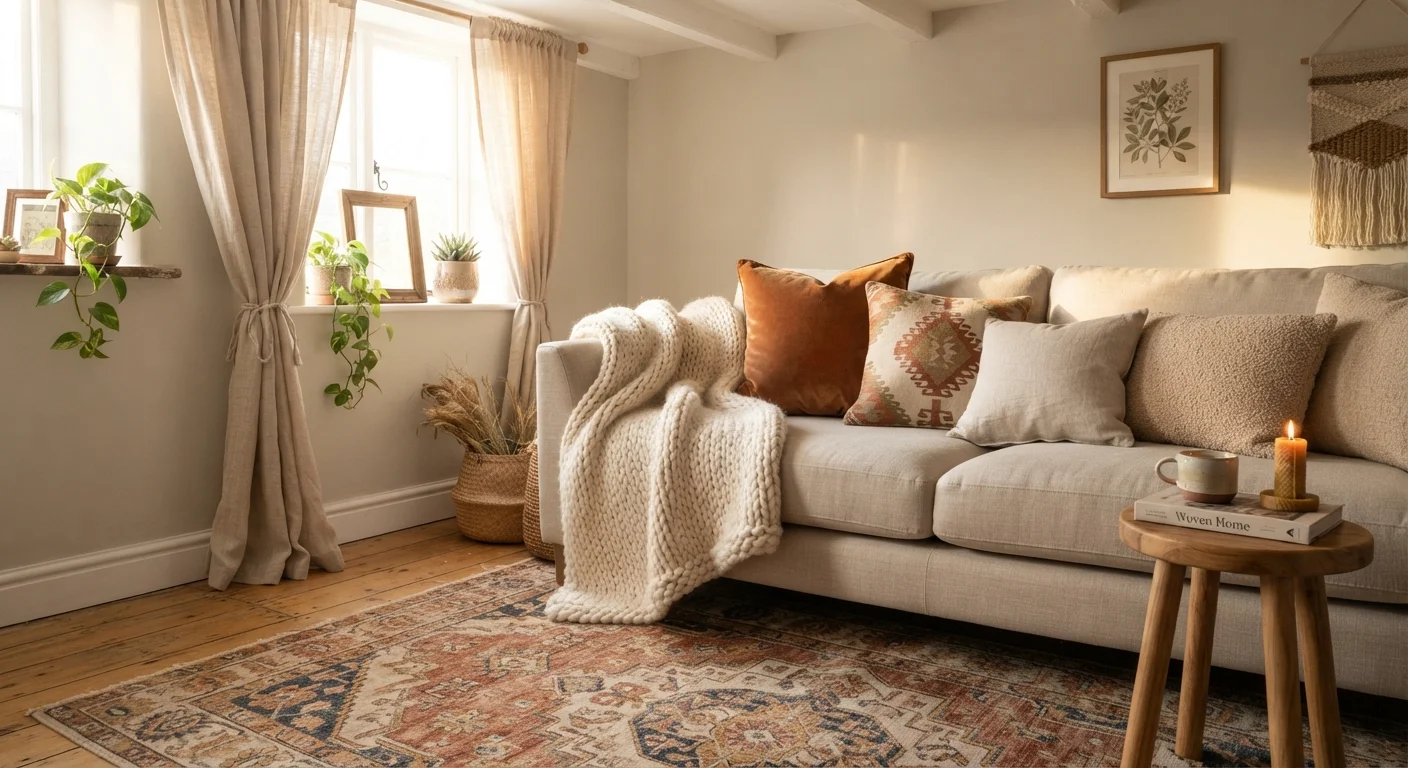
Photo credit: InGlimpse.com | Where Curiosity Finds Answers
In this article
Rugs, throws, pillows, and curtains do more than add comfort—learn how to layer them so a room feels intentional rather than cluttered.
Key Takeaways
- Layering textiles—rugs, throws, pillows, and curtains—adds visual depth that furniture alone cannot provide.
- Mixing textures (smooth, chunky, woven) prevents a room from feeling flat or overly matched.
- Odd numbers of pillows and varying pillow sizes create a more natural, designer-style arrangement.
- Anchoring every seating area with a properly sized rug ties furniture groupings together visually.
- Restraint matters: too many competing patterns or textures creates visual noise rather than warmth.
Why Textiles Do the Heavy Lifting in a Room
Furniture sets the bones of a room, but textiles give it personality. Walls, floors, and upholstered pieces provide structure—rugs, throws, curtains, and pillows are what signal warmth, intentionality, and care. A sofa alone looks utilitarian; the same sofa with a textured throw and a few well-chosen pillows reads as a destination.
The reason layering works is rooted in how we perceive space. Rooms with varied surface textures and tonal depth feel more finished because the eye has more to engage with—without necessarily registering why. If you've ever walked into a well-decorated room and felt it just worked without identifying a single standout piece, layered textiles were likely doing that quiet work.
This approach also applies beyond living rooms. Bedrooms, reading nooks, and even entryways benefit from the same principles. For guidance on thinking across your whole home rather than room by room, see why decorating rooms in isolation almost always backfires.
The Core Practices for Layering Textiles Well
These principles apply whether you're starting from scratch or refreshing an existing room. They're meant to guide judgment, not replace it—your space and preferences will always shape the final outcome.
Start with a rug that's large enough to anchor the entire seating group.
An undersized rug isolates furniture rather than unifying it, making the room feel disjointed. A rug that allows the front legs of sofas and chairs to rest on it creates a cohesive zone. This is the single highest-impact textile decision in most living rooms.
Mix at least three distinct textures within any given textile grouping.
A single texture—say, all smooth cotton—reads as flat and incomplete. Contrast is what creates the layered effect: rough against smooth, matte against sheen, loose-weave against tight. Three textures is a useful minimum to achieve real depth without chaos.
Use odd numbers when arranging decorative pillows.
Even-numbered arrangements tend to feel symmetrical and static. Odd groupings—three or five pillows, for instance—create a slightly asymmetric balance that looks relaxed and natural rather than staged.
Vary pattern scale so prints don't compete with each other.
Mixing patterns works when scales differ significantly. A large-scale geometric and a small-scale floral can coexist because they occupy different visual registers; two medium-scale prints of similar size will clash.
Hang curtains close to the ceiling and extend the rod beyond the window frame.
Curtains hung at window height make ceilings feel lower and windows feel smaller. Mounting the rod 4–6 inches below the ceiling and extending 6–12 inches past each side of the frame adds vertical texture and makes rooms feel more expansive.
Keep a consistent color thread across all textile layers.
Layering different materials and patterns only coheres when there's a shared color logic tying them together. This doesn't mean matching—it means pulling a hue from one textile and repeating it in small doses elsewhere.
Quick Wins You Can Implement Today
You don't need to overhaul a room to start benefiting from textile layering. Small, targeted changes often produce the most noticeable improvements.
For smaller rooms where space is a real constraint, these tactics pair well with the strategies in our guide on decorating a small living room with big personality.
Common Missteps—and How to Avoid Them
Layering is forgiving, but a few consistent mistakes undermine even a well-intentioned room.
- Matching too perfectly. When every textile is the same fabric family or color family, the room reads as a showroom rather than a home. Introduce at least one unexpected material—jute among cotton, velvet among linen.
- Undersized rugs. A rug that only fits under the coffee table fails to anchor the seating area. In a living room, front legs of all main seating pieces should ideally rest on the rug.
- Overcrowding pillows. More pillows isn't always better. When pillows leave no room for sitting, they stop feeling inviting and start feeling decorative in the worst sense.
- Neglecting curtains. Many people stop at rugs and pillows. Curtains (hung high and wide, close to the ceiling and beyond the window frame) add vertical texture and make ceilings feel taller.
Pattern Mixing Isn't Guesswork
A useful rule of thumb: anchor the room with one dominant pattern (often the rug or a large pillow), choose a secondary pattern at a noticeably different scale, and keep any third pattern subtle or near-solid. This creates layering without overwhelming the eye. You don't need to be precise—stepping back and squinting at the arrangement often reveals whether it reads as harmonious or chaotic.
Understanding texture as a design lever is foundational here—it connects directly to the broader principles covered in color, pattern, and texture as the three levers of every well-decorated room.

Author
Home Editorial Team
Home Editorial Team is the collective byline for our editorial team and contributor network. Articles published under this byline or an editorial pen name are researched, written, and reviewed according to our editorial standards for clarity, consistency, and independence before publication.
View all articles →