Night Driving Demands More Than You Think
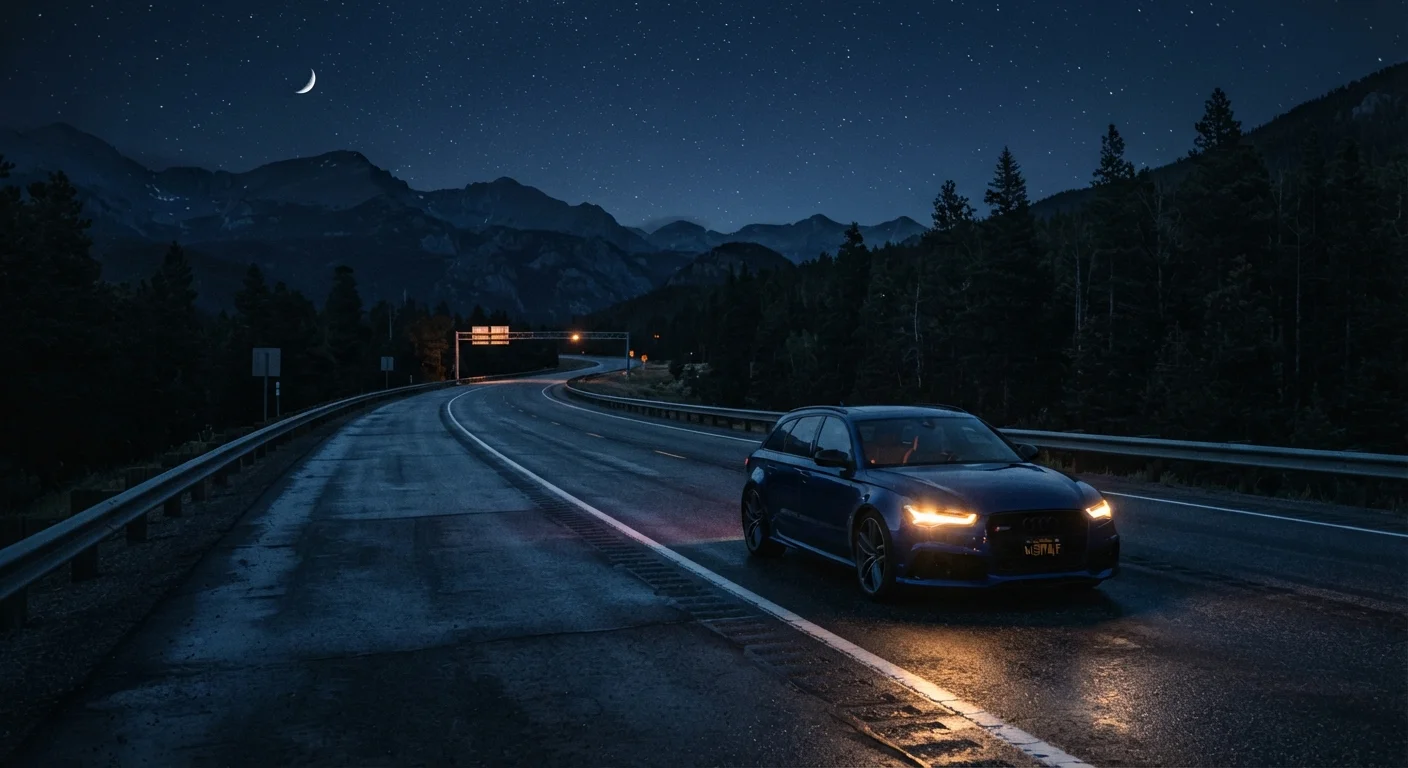
Photo credit: InGlimpse.com | Where Curiosity Finds Answers
In this article
Low visibility, fatigue, and impaired drivers make nighttime roads riskier. Here's what every motorist should know before driving after dark.
Key Takeaways
- Fatal crash rates are significantly higher at night despite fewer vehicles on the road.
- Reduced visibility, driver fatigue, and impaired drivers are the three dominant nighttime hazards.
- Simple habits — clean headlights, adjusted following distance, and managing fatigue — meaningfully reduce your risk.
- Overdriving your headlights is a common and dangerous mistake most drivers don't realize they're making.
Why Night Driving Is Statistically Riskier
Traffic volume drops sharply after dark, yet the proportion of fatal crashes rises. According to the National Safety Council, roughly half of all traffic fatalities occur at night despite nighttime accounting for a much smaller share of total miles driven. The math is stark: nighttime roads are disproportionately dangerous.
Three factors drive this imbalance. First, human vision degrades substantially in low light — depth perception, color recognition, and peripheral vision all suffer. Second, driver fatigue is far more prevalent at night, with the body's circadian rhythm naturally pushing toward sleep in the late-night and early-morning hours. Third, impaired driving — whether from alcohol, drugs, or extreme fatigue — is concentrated during overnight hours. Understanding these hazards is the starting point for driving more safely after dark.
For a broader look at how environment shapes crash risk, see our breakdown of highway vs. city driving risks.
~50%
Share of fatal crashes occurring at night
The National Safety Council estimates roughly half of all traffic fatalities in the U.S. occur during nighttime hours.
3x
Higher fatal crash risk at night vs. daytime
Per mile driven, fatal crash rates are approximately three times higher after dark, according to NHTSA data.
80%
Potential headlight output lost to lens oxidation
Industry estimates suggest severely oxidized headlight lenses can reduce usable light output by up to 80 percent compared to new lenses.
Best Practices for Safer Night Driving
Adjusting your habits for darkness isn't complicated, but it requires deliberate choices before and during every nighttime trip.
Never overdrive your headlights — always keep stopping distance within your sight distance.
Standard low-beam headlights illuminate roughly 160–200 feet ahead, but at 60 mph a vehicle needs around 200 feet to stop safely. Driving faster than your headlights allow means you may not be able to stop before hitting an obstacle you can see. This is one of the most common — and correctable — nighttime mistakes.
Clean your headlights and windshield before nighttime trips.
Oxidized or yellowed headlight lenses can reduce light output by up to 80 percent compared to new lenses — severely cutting your visibility without triggering any warning light. A dirty windshield scatters oncoming headlight glare, creating visual noise that makes it harder to spot hazards.
Increase your following distance to at least four seconds after dark.
The standard three-second following distance assumes adequate visibility and full reaction capacity. At night, both are reduced. An extra second of buffer gives you more time to detect and respond to brake lights, debris, or pedestrians that appear suddenly.
Use high beams on unlit roads, and dim them correctly for oncoming traffic.
Many drivers underuse their high beams on dark, unlit stretches, significantly limiting their sight distance. Equally, failing to dim high beams for oncoming traffic can temporarily blind other drivers, creating a hazard. Most guidelines recommend switching to low beams when an oncoming vehicle is within about 500 feet.
Watch the sides of the road, not just the center, to spot pedestrians and animals.
Pedestrians and large animals typically appear at the edges of your headlight beam before they move into your lane. Scanning the shoulders — not fixating on the lane markings — gives earlier warning and more time to react.
Dim your instrument panel and interior lights to reduce eye strain and glare.
Bright dashboard lighting creates a reflective layer on the inside of your windshield and forces your eyes to constantly adjust between bright interior light and the dark road ahead. Most vehicles allow dashboard brightness to be reduced — check your owner's manual if you're unsure how.
Fatigue: The Invisible Night Hazard
Drowsy driving is one of the most underestimated dangers on nighttime roads. The body's circadian rhythm creates strong biological pressure to sleep between roughly midnight and 6 a.m. — a window that overlaps heavily with late-night commutes, long-distance travel, and shift-worker schedules. Critically, most fatigued drivers are poor judges of their own impairment.
Warning signs include frequent yawning, difficulty maintaining a consistent speed, lane drift, and trouble remembering the last few miles driven. If any of these appear, pulling off at a safe, well-lit location is the right call — not pushing through. Our article on drowsy driving and reaction time explains in detail how sleep deprivation impairs your driving ability in ways that closely mirror alcohol intoxication.
“Fatigue impairs driving in ways that closely resemble alcohol — slowed reaction time, reduced vigilance, and compromised decision-making. The difference is that drowsy drivers tend to underestimate how impaired they actually are.”
— National Highway Traffic Safety Administration, U.S. federal road safety agency
Teen drivers face compounded risk after dark — reduced experience combined with higher fatigue susceptibility makes nighttime one of the most dangerous periods for new motorists. See our guide on teen driver risk for more context.
Quick Actions to Take Before Your Next Night Drive
Most of these steps take under five minutes and can be built into a simple pre-trip habit — especially for long drives or unfamiliar roads.
Distraction also compounds nighttime risk. Navigation adjustments, music controls, and passenger conversations all pull attention away from a road that demands more of it after dark. Our piece on distracted driving beyond your phone covers how non-phone distractions are equally disruptive.

Author
Autos Editorial Team
Autos Editorial Team is the collective byline for our editorial team and contributor network. Articles published under this byline or an editorial pen name are researched, written, and reviewed according to our editorial standards for clarity, consistency, and independence before publication.
View all articles →