Merging Onto a Freeway Without Causing a Crisis
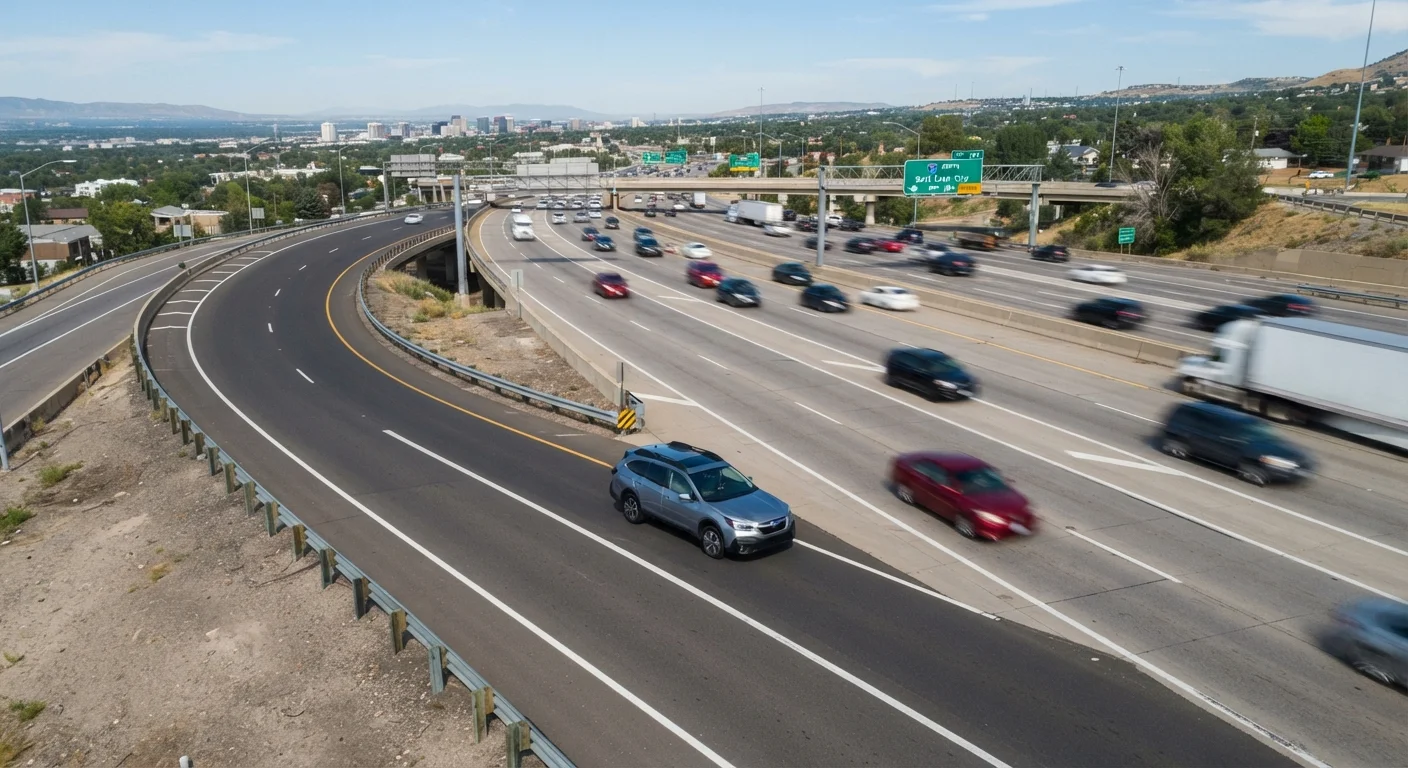
Photo credit: InGlimpse.com | Where Curiosity Finds Answers
In this article
Poor merging is a leading cause of highway collisions. This step-by-step walkthrough covers speed matching, gap selection, and blind spots.
Key Takeaways
- Match freeway traffic speed before you reach the merge point — not after.
- Pick a gap in traffic before you enter the ramp, then commit to it.
- Always check mirrors and physically turn to scan your blind spot before merging.
- Never stop at the end of an on-ramp unless traffic flow makes it unavoidable.
- Signal early so nearby drivers can anticipate and accommodate your merge.
- Freeway drivers have right-of-way, but both drivers share responsibility for a safe merge.
Why Merging Goes Wrong
Freeway merges concentrate a lot of risk into a short stretch of pavement. A driver accelerating from a standstill, a gap that closes faster than expected, a mirror that misses a car sitting in the blind spot — any one of these can turn a routine entry into a collision. The good news is that poor merging is almost entirely a skill problem, not a luck problem. Understanding what goes wrong is the first step toward fixing it.
The most common errors are speed mismatch (arriving at the merge point too slow or too fast relative to traffic), late gap selection (scanning for an opening only after the ramp runs out), and skipping the blind-spot check. For a deeper look at what mirrors miss, see our guide to vehicle blind spots.
What you will need
What You Need Before You Start
Merging safely requires no special equipment, but a few things should be in good working order before you drive on any freeway.
Properly adjusted side and rearview mirrors
Reduce blind-spot size and give you an accurate view of traffic approaching from behind.
Working turn signals
Communicate your merge intention to freeway traffic in advance.
Adequate tire tread
Ensures the vehicle responds predictably when you accelerate or need to brake quickly.
Once these basics are confirmed, the technique itself is straightforward.
Step-by-Step: How to Merge Safely
Follow each step in order. The sequence matters — by the time your ramp ends, all decisions should already be made.
Read traffic flow before you commit to the ramp
As you approach the on-ramp, glance ahead at freeway traffic through any available sightline. Note the approximate speed of vehicles and whether there are natural gaps forming. This early read gives you several seconds of extra planning time that most drivers waste.
Signal before you begin accelerating
Activate your turn signal as soon as you enter the on-ramp. Nearby freeway drivers need time to react — ideally they will adjust their speed or position to help create a gap. Signaling late, at the point of merger, gives everyone far less time to respond.
Accelerate to match freeway speed
Use the full length of the acceleration lane to bring your vehicle up to the speed of traffic — typically 55 to 70 mph depending on the posted limit and actual flow. Your goal is to be traveling at roughly the same speed as the vehicles in the right lane by the time you are ready to merge. A car moving 40 mph trying to enter 65 mph traffic is a hazard to everyone behind it.
Select a gap and commit to it
Identify a gap in the right lane large enough for your vehicle with a buffer on both ends. A gap of roughly four seconds of space — the time it takes for a trailing vehicle to reach the spot you'll occupy — is a reasonable target. Once you choose a gap, commit to it. Last-second gap changes are a primary cause of merge collisions.
Check mirrors, then physically turn to scan your blind spot
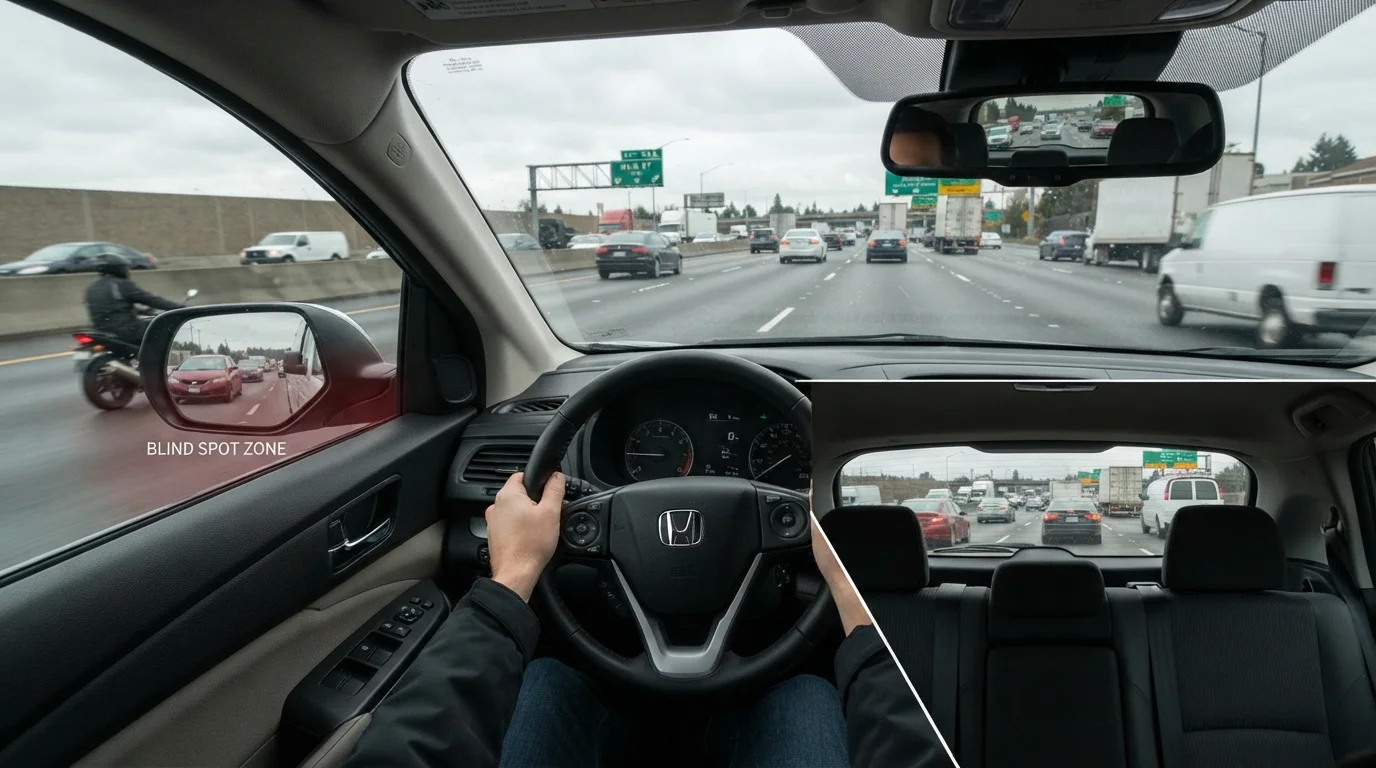
About two seconds before moving into your chosen gap, check your left side mirror, then your rearview mirror, then do a quick physical head turn to scan the blind spot over your left shoulder. Mirrors alone cannot cover the area alongside your rear quarter panel. This physical check is non-negotiable.
Merge smoothly and cancel your signal
Steer gradually into the lane — no sharp cuts. Maintain your speed through the lane change; sudden braking after merging can catch the driver behind you off guard. Once you are fully in the lane and stabilized, cancel your turn signal and maintain the speed of surrounding traffic.
Use the Whole Ramp — Every Time
Many drivers begin scanning for gaps too late and arrive at the merge point still well below freeway speed. Treat the entire acceleration lane as preparation runway. The earlier you match speed and select a gap, the calmer and safer the actual merge becomes.
For context on why spacing matters once you are on the freeway, see the science behind the 3-second following rule.
Special Situations and Common Pitfalls
Short or steep ramps: Some older interchanges give you very little acceleration room. If the ramp is short, begin accelerating earlier and more aggressively — within legal speed limits — and select your gap sooner than you normally would.
Heavy or stopped traffic: When freeway traffic is congested and slow, you may need to yield and briefly slow to a crawl rather than accelerate to speed. This is the one scenario where stopping near the ramp end is sometimes unavoidable. In all other situations, do not stop.
Zipper merging: When a lane ends and two lanes must share one, traffic engineers recommend the zipper method — each vehicle taking turns alternately. Resisting the urge to cut ahead or to block merging drivers keeps overall flow moving faster for everyone.
Stopping on the Ramp Creates Serious Risk
Coming to a full stop at the end of an on-ramp — unless absolutely forced to by gridlocked traffic — is dangerous. A stopped vehicle on an acceleration lane cannot match freeway speeds in the space remaining and becomes an obstacle for drivers behind on the ramp. If you miss a gap, slow significantly but keep rolling while a new gap opens.
New and teen drivers often find freeway merging the most anxiety-producing skill to learn. If that applies to someone you know, understanding the elevated risks new drivers face can help put the challenge in context. For a broader view of how freeway driving differs from city conditions, see our highway vs. city driving breakdown.

Author
Autos Editorial Team
Autos Editorial Team is the collective byline for our editorial team and contributor network. Articles published under this byline or an editorial pen name are researched, written, and reviewed according to our editorial standards for clarity, consistency, and independence before publication.
View all articles →