
DIY Car Maintenance vs. Taking It to a Shop
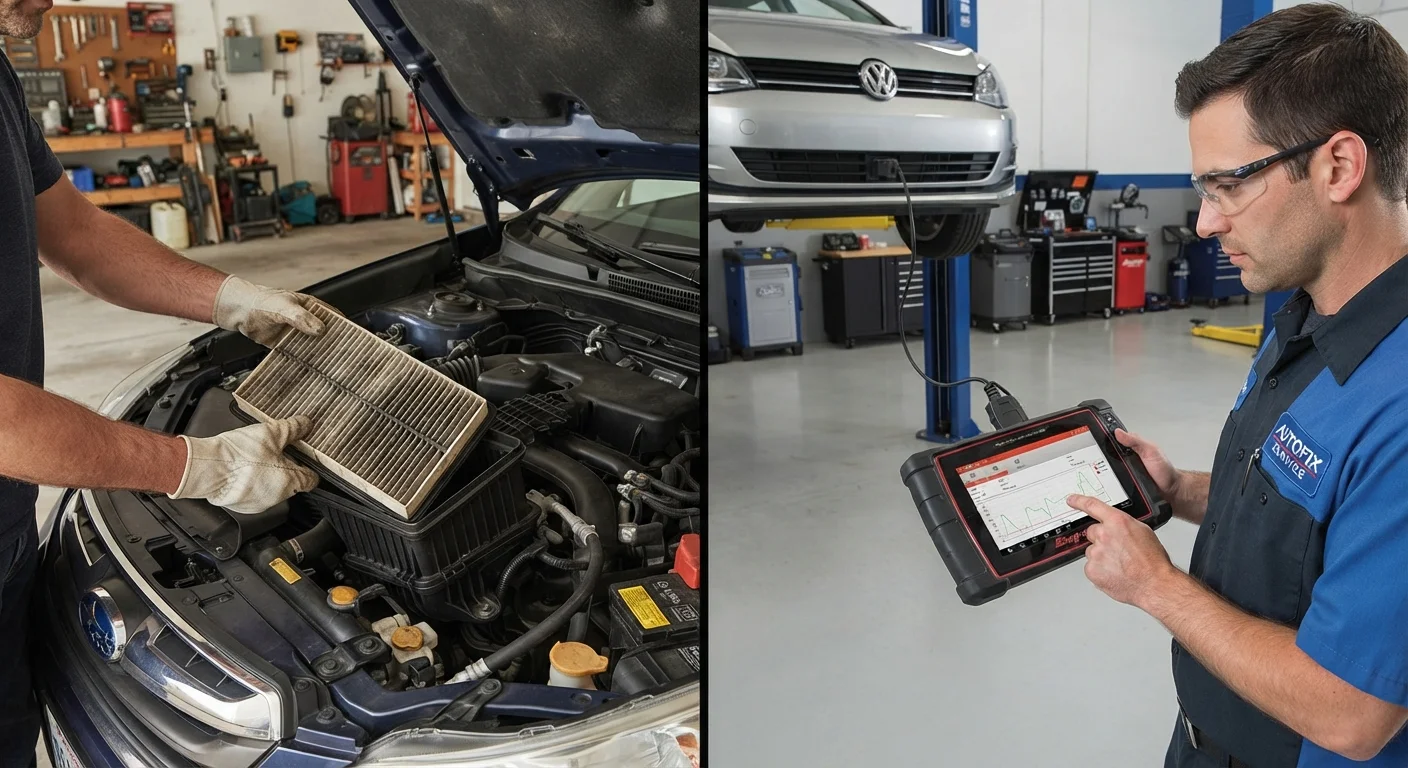
Photo credit: InGlimpse.com | Where Curiosity Finds Answers
In this article
A balanced look at which maintenance tasks are practical for most owners to handle themselves and which ones are better left to a qualified mechanic.
Key Takeaways
- DIY maintenance can save money on simple tasks like air filter replacements and wiper blades.
- Complex repairs involving brakes, suspension, or electronics carry real safety risks if done incorrectly.
- Warranty terms and vehicle complexity may limit what's practical to do at home.
- Knowing which tasks to DIY and which to delegate protects both your car and your wallet.
- A qualified mechanic brings diagnostic tools and expertise that most home setups can't replicate.
Saves money on routine, low-skill tasks
Labor costs at a shop often exceed the cost of parts by a significant margin. For simple jobs like air filter swaps or wiper replacements, doing it yourself can reduce the bill considerably.
Builds useful mechanical knowledge
Hands-on familiarity with your vehicle helps you catch problems earlier and communicate more effectively with mechanics when professional service is needed.
Work gets done on your schedule
You don't need an appointment or a loaner car. Quick tasks like checking fluid levels or replacing a cabin filter can be done in your driveway in under 30 minutes.
Control over parts quality
When you source your own parts, you can choose the grade that fits your budget and vehicle - including OEM-equivalent options rather than whatever the shop stocks.
Mistakes can create safety hazards
Incorrectly performed brake, suspension, or steering work can make a vehicle dangerous to drive. Safety-critical repairs have very little margin for error.
Modern vehicles are increasingly complex
Electronic control systems, active safety features, and sealed components on newer vehicles often require professional-grade diagnostic tools that most home mechanics don't own.
Can void warranty coverage
DIY repairs that are improperly performed - or not documented according to warranty terms - may give a manufacturer grounds to deny a related warranty claim.
Hidden costs offset some savings
Specialized tools, correct fluids and parts, and the time required can narrow the cost advantage significantly, especially for jobs you'll only do once or twice.
Missed professional diagnostic opportunity
Mechanics often spot developing problems during routine service - worn belts, leaking seals, corroded connections - that an untrained eye would overlook entirely.
What DIY Maintenance Actually Covers
Not all car maintenance is created equal. Some tasks are genuinely accessible to most owners with minimal tools and a bit of confidence. Others require specialized equipment, technical training, or access to systems that are difficult to work on safely outside a professional environment.
On the accessible end: replacing engine air filters, swapping wiper blades, topping off or changing engine oil (on vehicles without complex undercarriage access), replacing cabin air filters, checking and inflating tires, and changing out burned-out bulbs on many older vehicles. These tasks are well-documented, low-risk when performed carefully, and often covered in your owner's manual.
On the shop-required end: brake system repairs, suspension and steering work, transmission service, timing belt or chain replacement, airbag system work, and anything requiring a scan tool to clear fault codes or calibrate safety sensors. Monitoring your own fluids is a practical in-between - checking levels is straightforward, but diagnosing why a fluid is low often isn't.
Saves money on routine, low-skill tasks
Labor costs at a shop often exceed the cost of parts by a significant margin. For simple jobs like air filter swaps or wiper replacements, doing it yourself can reduce the bill considerably.
Builds useful mechanical knowledge
Hands-on familiarity with your vehicle helps you catch problems earlier and communicate more effectively with mechanics when professional service is needed.
Work gets done on your schedule
You don't need an appointment or a loaner car. Quick tasks like checking fluid levels or replacing a cabin filter can be done in your driveway in under 30 minutes.
Control over parts quality
When you source your own parts, you can choose the grade that fits your budget and vehicle - including OEM-equivalent options rather than whatever the shop stocks.
The Real Downsides of Going It Alone
DIY maintenance has genuine appeal, but it's not without risk. A mistake on a brake job or suspension component isn't just inconvenient - it can be dangerous. Even simpler tasks carry downsides if done incorrectly or with the wrong parts.
Mistakes can create safety hazards
Incorrectly performed brake, suspension, or steering work can make a vehicle dangerous to drive. Safety-critical repairs have very little margin for error.
Modern vehicles are increasingly complex
Electronic control systems, active safety features, and sealed components on newer vehicles often require professional-grade diagnostic tools that most home mechanics don't own.
Can void warranty coverage
DIY repairs that are improperly performed - or not documented according to warranty terms - may give a manufacturer grounds to deny a related warranty claim.
Hidden costs offset some savings
Specialized tools, correct fluids and parts, and the time required can narrow the cost advantage significantly, especially for jobs you'll only do once or twice.
Missed professional diagnostic opportunity
Mechanics often spot developing problems during routine service - worn belts, leaking seals, corroded connections - that an untrained eye would overlook entirely.
There's also the issue of modern vehicle complexity. Many newer cars use electronic systems that require manufacturer-specific scan tools to service properly. Staying on top of scheduled maintenance matters whether you DIY or not - but skipping professional inspections entirely can mean missing problems that don't show obvious symptoms until they become expensive.
When the Shop Is Worth Every Dollar
There are situations where paying a qualified mechanic isn't just convenient - it's the responsible choice. Safety-critical systems top the list. Brakes, steering components, wheel bearings, and tires all directly affect your ability to control the vehicle. An error in any of these areas can put you, your passengers, and other drivers at risk.
Warranty coverage is another consideration. Many new and certified pre-owned vehicles require service to be performed by a qualified technician (and documented) to maintain warranty validity. Check your warranty terms before deciding to DIY anything covered under it.
Check Your Warranty Before You DIY
Many new vehicle warranties - and some extended warranties - include language about how and where maintenance must be performed to remain valid. You generally don't have to use a dealership for routine maintenance under federal Magnuson-Moss Warranty Act protections, but work must be done correctly and documented. Review your specific warranty terms or consult your dealership before doing any DIY work on a vehicle still under coverage.
When you do visit a shop, going in informed helps. Knowing what to ask a mechanic before authorizing any repair can help you evaluate whether the recommendation makes sense for your situation. And for a broader picture of what your car actually needs and when, understanding your maintenance schedule is a practical starting point.
~$100/hr
Typical shop labor rate in the US
Average hourly labor rates at independent repair shops across the US commonly range from $80 to $130, according to industry surveys - making labor the dominant cost in many repairs.
3 of 4
Vehicle owners who handle at least one DIY task
Consumer research has consistently found a majority of US vehicle owners perform at least basic maintenance tasks themselves, such as checking tire pressure or replacing wiper blades.
Making the Call: A Practical Framework
A useful rule of thumb: if a task requires lifting the vehicle safely, working near fuel lines or brake lines, or involves any safety system, default to a professional. If the task is documented in your owner's manual, requires only basic hand tools, and doesn't affect vehicle safety systems directly, it's likely within reach for a careful, motivated owner.
Cost savings are real but not automatic. Factor in the cost of tools you don't already own, the correct parts (quality matters - cheap components can fail faster), and the time investment. Some jobs make financial sense to DIY repeatedly; others only break even once you've bought the necessary equipment.
Building good ownership habits - including knowing which maintenance items are on the horizon - pays off regardless of who does the work. Consistent maintenance habits tend to keep repair costs lower over a vehicle's life, whether you're doing them yourself or relying on a shop. And if deferred maintenance has ever felt tempting, the compounding cost of skipping routine service is a useful reminder of what's actually at stake.

Author
Autos Editorial Team
Autos Editorial Team is the collective byline for our editorial team and contributor network. Articles published under this byline or an editorial pen name are researched, written, and reviewed according to our editorial standards for clarity, consistency, and independence before publication.
View all articles →