
SPF Every Day: The Science Behind Why Sunscreen Is Non-Negotiable
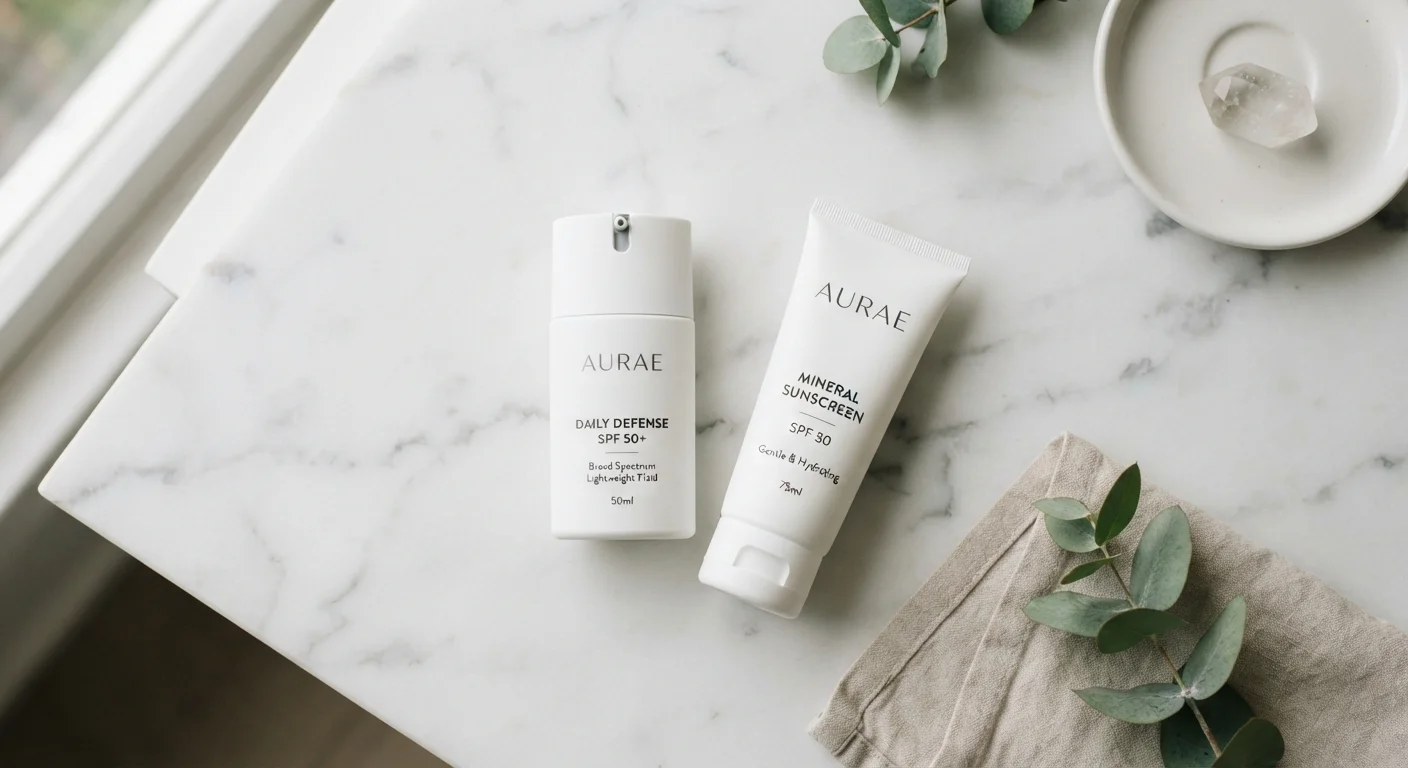
Photo credit: InGlimpse.com | Where Curiosity Finds Answers
In this article
Daily sunscreen use is the single most evidence-supported step in any skincare routine. Here's what the research actually says.
Key Takeaways
- UV radiation causes cumulative skin damage even on cloudy days and through windows.
- SPF 30 broad-spectrum sunscreen blocks roughly 97% of UVB rays reaching the skin.
- Daily sunscreen use is strongly associated with reduced risk of skin cancer and premature aging.
- Reapplication every two hours during outdoor exposure is necessary to maintain protection.
- Both chemical and mineral sunscreens are effective when used correctly and consistently.
What UV Radiation Actually Does to Skin
The sun emits two types of ultraviolet radiation that reach the Earth's surface: UVB and UVA. UVB rays are shorter-wavelength and are the primary cause of sunburn — the visible, acute sign that skin cells have been damaged. UVA rays are longer-wavelength, penetrate deeper into the dermis (the skin's structural layer), and are responsible for the breakdown of collagen and elastin that leads to fine lines, uneven tone, and loss of firmness over time.
Crucially, UVA rays are present at relatively consistent levels throughout the day and year, and they pass through clouds and standard window glass. This is why dermatologists are clear that UV exposure is not just a beach-day problem — it is a daily, cumulative reality.
1 in 5
Americans who develop skin cancer by age 70
According to the Skin Cancer Foundation, skin cancer is the most common cancer in the United States.
97%
UVB rays blocked by SPF 30
SPF 30 filters approximately 97% of UVB radiation under ideal application conditions; SPF 50 filters roughly 98%.
Up to 80%
UV rays that penetrate cloud cover
The American Academy of Dermatology notes that significant UV exposure occurs even on overcast days.
Repeated UV exposure without protection causes DNA damage in skin cells. The body repairs much of this damage, but errors accumulate. Those errors are understood to be a primary driver of most skin cancers, including the more serious melanoma. For context, the Skin Cancer Foundation notes that one in five Americans will develop skin cancer by age 70.
How Sunscreen Actually Works
Sunscreens work through one of two mechanisms — or a combination of both in many formulas. Mineral filters (zinc oxide and titanium dioxide) sit on the skin's surface and physically scatter or reflect UV rays before they penetrate. Chemical filters (such as avobenzone, octinoxate, and octocrylene) are absorbed into the skin, where they absorb UV energy and release it as heat rather than allowing it to damage skin cells.
The SPF number on a label refers specifically to UVB protection. The broad-spectrum designation — now required in the U.S. for any product making anti-aging or skin-cancer-prevention claims — indicates that the formula also provides meaningful UVA protection.
Apply More Than You Think You Need
Most people use far less sunscreen than the amount tested in SPF trials. For the face and neck, aim for roughly a quarter teaspoon — more than most people intuitively apply. Under-application is one of the most common reasons daily SPF underperforms in real life.
One important nuance: SPF is tested in lab conditions using 2 milligrams of product per square centimeter of skin. Studies consistently show that most people apply roughly one-quarter to one-half of that amount in everyday use — which means the actual protection received is considerably lower than what the label promises. Applying generously and reapplying every two hours during sun exposure closes that gap significantly.
For more on how SPF fits into a full daily routine, see Your First Skincare Routine: What Every Step Actually Does.
The Evidence Behind Daily Use
The case for daily, year-round sunscreen use is grounded in decades of research rather than beauty industry marketing. A landmark study published in the Annals of Internal Medicine followed more than 900 adults over four years and found that those assigned to daily sunscreen use showed no detectable increase in skin aging at the end of the study period — a meaningful result compared to the discretionary-use group.
“Sun protection is the closest thing we have to a true anti-aging product. The evidence that sunscreen prevents skin cancer and reduces signs of aging is stronger than the evidence behind nearly any other skincare ingredient.”
— Henry W. Lim, Former president of the American Academy of Dermatology and dermatology department chair
Beyond aging, the evidence on skin cancer prevention is substantial. Regular sunscreen use has been associated with a reduced incidence of squamous cell carcinoma, and some research suggests a protective effect against melanoma with consistent use over time.
It is worth noting that sunscreen alone does not fully eliminate UV risk — it works best as part of a broader approach that includes shade, protective clothing, and avoiding peak UV hours when possible. But as a daily, low-effort habit, it carries one of the strongest evidence bases of any skincare intervention available.
Common myths about sunscreen — including the idea that darker skin tones don't need it or that SPF in makeup is sufficient — are addressed in detail in Skincare Myths That Dermatologists Wish Would Disappear.
Making Daily SPF a Realistic Habit
The most effective sunscreen is the one that fits realistically into your life. Modern formulations are available in a wide range of textures — lightweight serums, tinted moisturizers, gel formulas — meaning there is no longer a single-texture reason to skip it. For acne-prone skin, non-comedogenic (non-pore-clogging) mineral formulas are commonly recommended. For very dry skin, a hydrating chemical formula may feel more comfortable.
Placement in your routine matters too. Sunscreen should be the final step in your morning routine, applied after moisturizer and before any makeup. This applies regardless of whether you're heading outside — UV exposure happens at windows and during brief outdoor moments like a commute. For a broader look at why your morning and evening routines should differ, see Morning vs. Evening Skincare: Why Your Routine Shouldn't Be Identical.
If you are building a stripped-back routine and wondering what truly earns its place, SPF consistently tops that list. Building a Minimal Skincare Routine That Still Works makes the case for why sunscreen survives even the most edited approach to skincare.
This article is for general informational and educational purposes only. It is not a substitute for professional medical or dermatological advice. If you have concerns about your skin health, consult a qualified healthcare provider.
Frequently Asked Questions

Author
Style Editorial Team
Style Editorial Team is the collective byline for our editorial team and contributor network. Articles published under this byline or an editorial pen name are researched, written, and reviewed according to our editorial standards for clarity, consistency, and independence before publication.
View all articles →