
Reading a Skincare Ingredient Label Without a Chemistry Degree
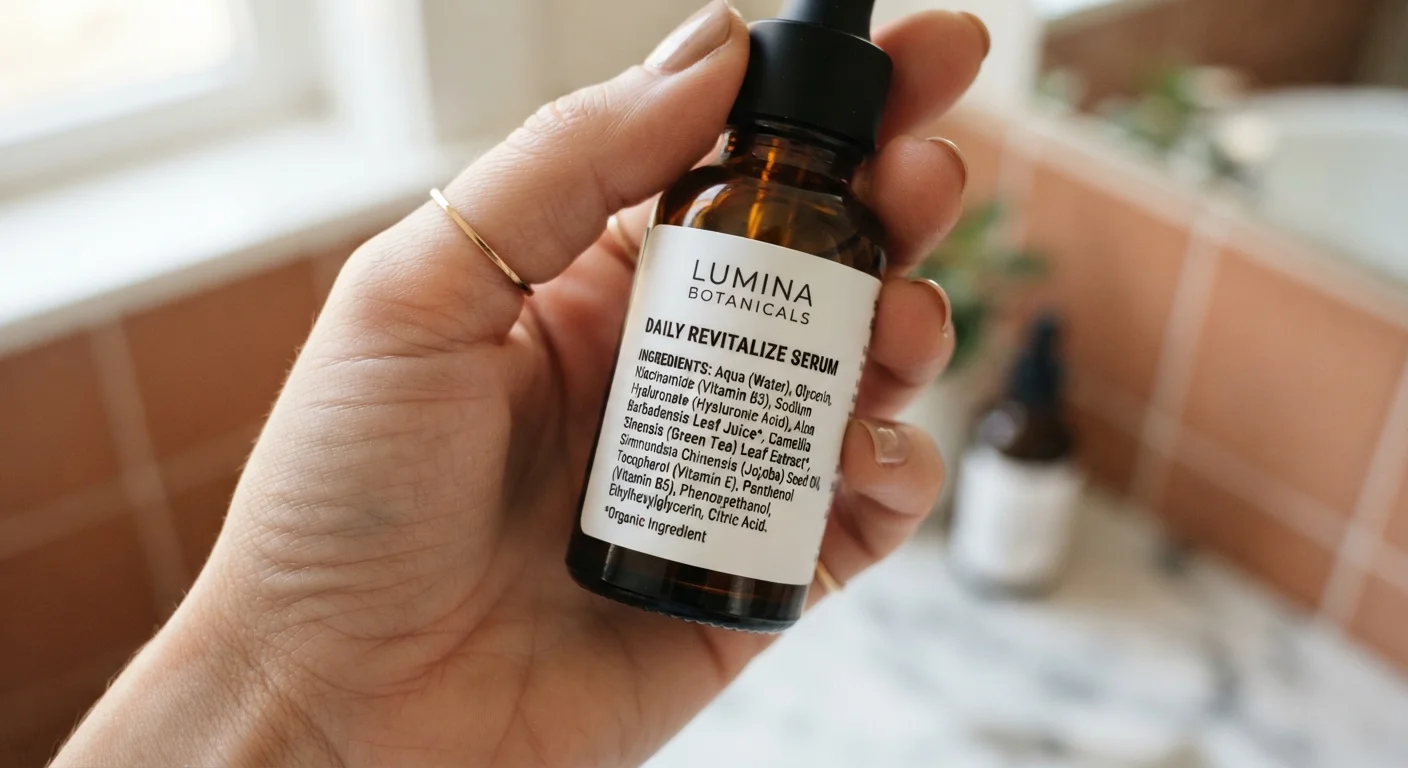
Photo credit: InGlimpse.com | Where Curiosity Finds Answers
In this article
Ingredient lists can be intimidating. Learn how to decode INCI names, understand order of concentration, and spot key actives.
Key Takeaways
- Ingredients are listed in descending order of concentration, so the first five matter most.
- INCI names are standardized international terms — many sound intimidating but are simply water or plant extracts.
- Actives near the bottom of the list may still be effective if formulated at low working concentrations.
- Fragrance and preservatives often appear near the end but can still trigger sensitivities.
- Learning a handful of key ingredient categories is enough to evaluate most products confidently.
Why Ingredient Labels Look So Confusing
Pick up almost any serum or moisturizer and flip it over. The ingredient list often reads like a chemistry exam: Niacinamide, Butylene Glycol, Hydroxyethylcellulose, Phenoxyethanol. The reason labels look this way is intentional — cosmetic products sold in the U.S. are required by the FDA to list ingredients using INCI names (International Nomenclature of Cosmetic Ingredients), a globally standardized naming system. INCI names are designed for regulatory consistency across countries, not consumer readability.
The good news is that you don't need a chemistry background to use these labels effectively. A few simple rules unlock most of what you'll ever need to know. The same logic applies across product categories — if you've ever tried reading a nutrition facts label, you'll find the approach surprisingly similar.
What you will need
How to Decode a Skincare Ingredient Label
Follow these steps each time you evaluate a new product. With practice, scanning an ingredient list takes under a minute.
Find the INCI ingredient list
Look for the list labeled Ingredients on the back or bottom of the product. In the U.S., this list is required by the FDA for all cosmetics. If a product is also classified as an over-the-counter drug (such as a sunscreen or acne treatment), it will have a separate Drug Facts panel listing active drug ingredients — read both.
Apply the concentration rule
Ingredients are listed from highest to lowest concentration. Water (Aqua) is the first ingredient in most water-based products — often making up 60–80% of the formula. Everything in the top five to seven ingredients is present in meaningful amounts. Once you pass roughly 1% concentration, ingredient order can vary, which is why preservatives and fragrance typically cluster near the end.
Translate intimidating INCI names
Many names that look alarming are benign or even beneficial. Tocopherol is vitamin E. Ascorbic acid is vitamin C. Camellia sinensis leaf extract is green tea. When you encounter an unfamiliar term, search it alongside the word INCI or check a reputable cosmetic ingredient database. This habit quickly builds a working vocabulary.
Locate the active ingredients
If a product claims to brighten, exfoliate, or firm, look for the ingredient responsible for that function. For exfoliating products, you'd look for AHAs (such as glycolic or lactic acid) or BHAs (salicylic acid). For brightening claims, niacinamide or ascorbic acid are common. Finding these actives within the first half of the list generally signals a more meaningful concentration.
Check for personal sensitivities
Scan for ingredients you know you react to — common culprits include Fragrance (Parfum), essential oils, certain preservatives like formaldehyde releasers (e.g., DMDM hydantoin), and high-concentration alcohols (denatured alcohol, listed as Alcohol Denat.). If you have a known allergy or sensitivity, patch-testing a new product on a small skin area before full use is a prudent step.
Build Your Reference List Over Time
Keep a simple note on your phone with ingredients you know work well for your skin — and ones to avoid. Over time this becomes a personalized cheat sheet that makes shopping much faster. You don't need to memorize everything at once; even knowing five to ten key terms puts you well ahead of most label readers.
Common Ingredient Categories Worth Recognizing
Once you understand the ordering rules, it helps to recognize a few broad categories:
- Humectants (attract moisture): glycerin, hyaluronic acid, propylene glycol
- Emollients (soften and smooth): squalane, jojoba oil, dimethicone
- Occlusives (seal moisture in): petrolatum, shea butter, beeswax
- Actives (targeted treatment): niacinamide, retinol, ascorbic acid (vitamin C), salicylic acid
- Preservatives (prevent microbial growth): phenoxyethanol, ethylhexylglycerin, sodium benzoate
- Fragrance: listed as Fragrance or Parfum — a potential irritant for sensitive skin types
For a plain-language explanation of the most talked-about treatment ingredients, see our glossary of skincare actives. And if you're also evaluating hair products, the same decoding skills apply — our guide on sulfates, silicones, and parabens in hair products walks through that category in detail.
Marketing Terms Don't Appear on INCI Labels
Words like 'natural,' 'clean,' 'non-toxic,' and 'dermatologist-tested' are marketing claims — they have no standardized regulatory definition in U.S. cosmetics law. Always evaluate the actual ingredient list rather than relying on front-of-pack claims. What's listed on the back is the authoritative record of what's in the product.

Author
Style Editorial Team
Style Editorial Team is the collective byline for our editorial team and contributor network. Articles published under this byline or an editorial pen name are researched, written, and reviewed according to our editorial standards for clarity, consistency, and independence before publication.
View all articles →