
Trimming and Growth: Separating the Folklore from the Facts
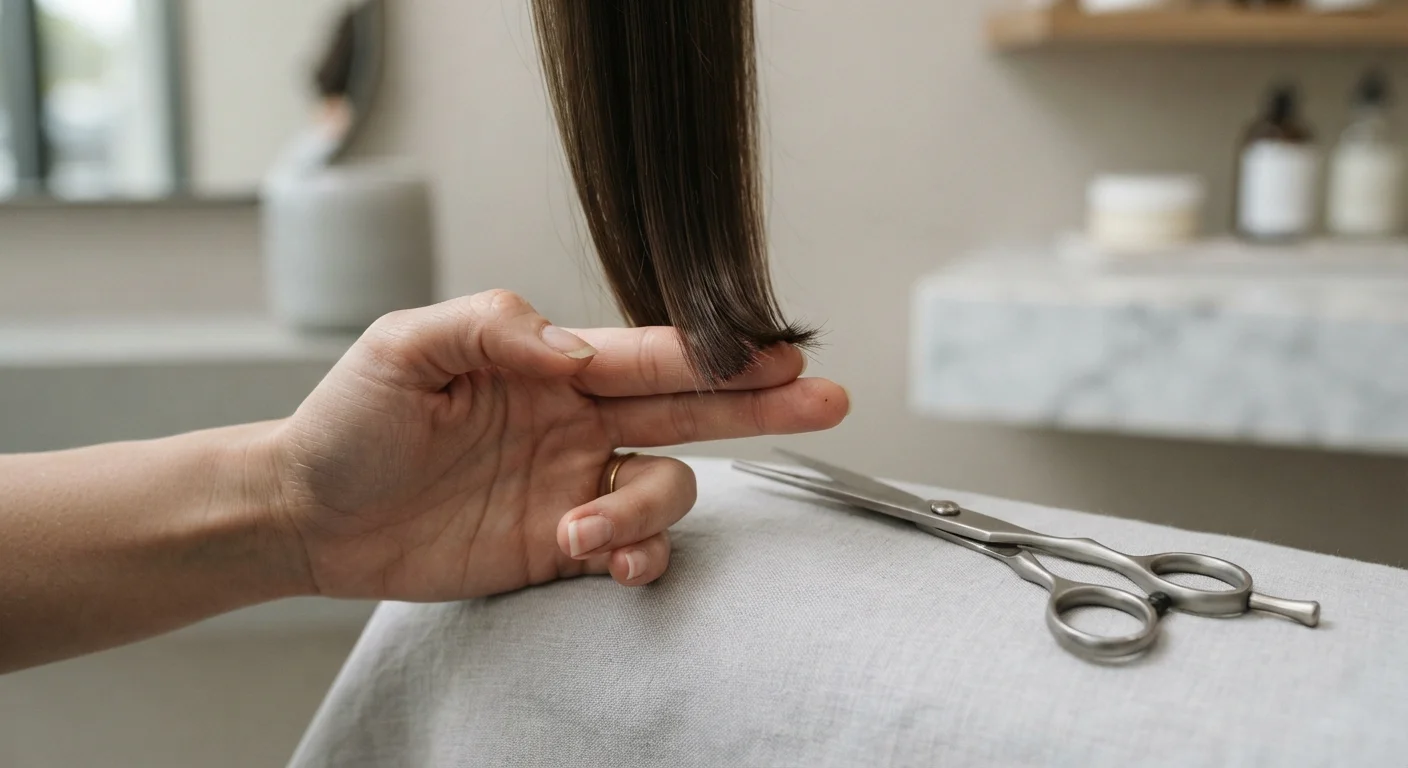
Photo credit: InGlimpse.com | Where Curiosity Finds Answers
In this article
Does cutting your hair really make it grow faster? Unpack this and other widely believed hair growth myths with evidence-based clarity.
Key Takeaways
- Trimming hair removes split ends but does not affect the rate of growth at the scalp.
- Hair growth is determined by follicle biology, genetics, and overall health — not scissors.
- Many popular hair growth beliefs persist despite lacking scientific support.
- Scalp health and reduced breakage are the most evidence-backed paths to retaining length.
Why Hair Growth Myths Are So Sticky
Few grooming topics generate as much confident, well-intentioned misinformation as hair growth. Advice passed down through families, amplified on social media, and repeated in salons often sounds authoritative — but traces back to observation bias or simple misunderstanding of how hair biology actually works.
Hair grows from follicles embedded in the scalp. Each follicle cycles through phases of active growth (anagen), transition (catagen), and rest (telogen). Everything that influences how quickly or fully hair grows happens at the follicle level — not at the visible strand. That fundamental fact alone debunks a surprising number of popular claims.
Understanding what the science actually supports helps you make smarter decisions about your routine — and stop wasting effort on practices that don't move the needle. For a broader look at how scalp condition shapes what you see in the mirror, see our guide to scalp health and hair health.
Myth
Cutting your hair makes it grow faster.
Fact
Trimming has no effect on growth rate; hair grows from follicles in the scalp, not from the ends.
This is probably the most durable hair myth in existence. The confusion likely arises because hair that is regularly trimmed looks healthier and thicker — and people associate looking healthy with growing faster. In reality, scissors never touch the follicle. Growth rate is determined by follicular biology, hormones, and genetics. What regular trims genuinely do is remove split ends before they travel up the shaft and cause breakage, which helps you retain length more effectively over time. That's a real and worthwhile benefit — it's just not the same as acceleration.
Myth
Brushing your hair 100 strokes a day stimulates growth.
Fact
Excessive brushing causes mechanical damage and breakage; gentle brushing to distribute oils is sufficient.
The 100-stroke rule is a Victorian-era beauty ritual that has outlasted any evidence supporting it. Sebum (the scalp's natural oil) does benefit from gentle distribution along the shaft, and light stimulation from brushing may briefly increase local circulation. However, aggressive or excessive brushing creates friction that chips away at the hair's cuticle layer — the overlapping scale-like cells that protect the strand — leading to frizz, split ends, and breakage. A few deliberate, gentle strokes with an appropriate brush for your hair type is all that's needed.
Myth
Rinsing with cold water makes hair grow longer and stronger.
Fact
Cold water can temporarily flatten the cuticle for a smoother appearance, but it does not alter growth or strand strength.
Cold-water rinses are a popular styling tip, and there is a kernel of logic behind them: cooler water can help close the cuticle scales, reducing frizz and adding a brief boost of shine. What it cannot do is penetrate the follicle to speed growth or chemically reinforce the protein bonds within the strand. The structural strength of hair depends on its keratin composition and how well the cuticle is intact — factors influenced by chemical processing, heat, and mechanical handling, not rinse temperature.
Myth
Frequent shampooing stunts hair growth.
Fact
Shampooing frequency appropriate to your scalp type supports a healthy follicular environment and does not inhibit growth.
The idea that washing 'strips' the scalp and suppresses growth has led many people to go weeks between washes, sometimes with counterproductive results. Sebum, sweat, product residue, and environmental pollutants accumulate on the scalp and can contribute to inflammation and clogged follicles if left unaddressed. Most scalp specialists recommend cleansing as often as your scalp type requires — whether that's daily, twice a week, or less — using a gentle, sulfate-appropriate shampoo for your needs. Over-washing to the point of chronic scalp dryness and irritation is worth avoiding, but appropriate cleansing is not harmful to growth.
Myth
Hair grows significantly faster in summer than in any other season.
Fact
Some research suggests modest seasonal variation in hair growth, but the effect is small and not consistent across all people.
A frequently cited small study observed that hair in the anagen phase may be somewhat more common in summer months, and some researchers have proposed that UV exposure or hormonal fluctuations tied to daylight could play a minor role. However, this evidence is limited and the practical difference — if any — is minimal. Season is far less influential on perceived hair growth than breakage patterns, protective habits, or the natural variability of your growth cycle. Treating summer as a guaranteed growth window is likely to lead to disappointment.
What Actually Influences Hair Growth and Length Retention
Once the myths are cleared away, the evidence points to a shorter, less dramatic list of factors that genuinely matter.
~6 inches
Average scalp hair growth per year
Dermatology literature consistently cites approximately half an inch per month as the average adult scalp hair growth rate, with meaningful individual variation.
2–6 years
Typical anagen (active growth) phase duration
The length of the anagen phase — largely determined by genetics — sets the maximum length any individual strand can reach before it sheds naturally.
50–100
Normal daily hair shed count
According to the American Academy of Dermatology, losing 50 to 100 hairs per day is considered within the normal range for adults.
Genetics set the ceiling. Your anagen phase length — which determines the maximum length your hair can reach — is largely inherited. No topical product changes that ceiling.
Nutrition plays a supporting role. Deficiencies in iron, zinc, biotin, and protein are associated with hair shedding; correcting a true deficiency can restore normal growth. But supplementing beyond adequacy in people who are not deficient generally shows little benefit. The connection between diet and hair is explored further in our look at nutrition myths.
Minimising breakage is the practical lever most people underuse. Hair that breaks as fast as it grows never appears to gain length. Protective practices — gentle detangling, reduced heat exposure, and styles that don't create constant tension — help retain the length you've already grown. Our guide to protective styling covers when and how these approaches work best.
Scalp health creates the conditions for follicles to do their job. Chronic inflammation, product buildup, and certain scalp conditions can impair the follicular environment. Keeping the scalp clean and balanced is one of the most consistently supported habits in hair care. For the full picture on caring for every layer of your hair, the full-spectrum hair care overview is a useful starting point.
Sudden or Significant Hair Loss Warrants Professional Evaluation
Noticeable increases in shedding, patchy loss, or thinning that concerns you are not situations to address with home remedies alone. These can signal underlying health conditions including thyroid disorders, nutritional deficiencies, hormonal changes, or scalp conditions that respond well to proper diagnosis and treatment. Consult a dermatologist or your primary care provider rather than self-treating based on online advice.

Author
Style Editorial Team
Style Editorial Team is the collective byline for our editorial team and contributor network. Articles published under this byline or an editorial pen name are researched, written, and reviewed according to our editorial standards for clarity, consistency, and independence before publication.
View all articles →