
Grain-Free vs. Grain-Inclusive Dog Food: Understanding the DCM Debate
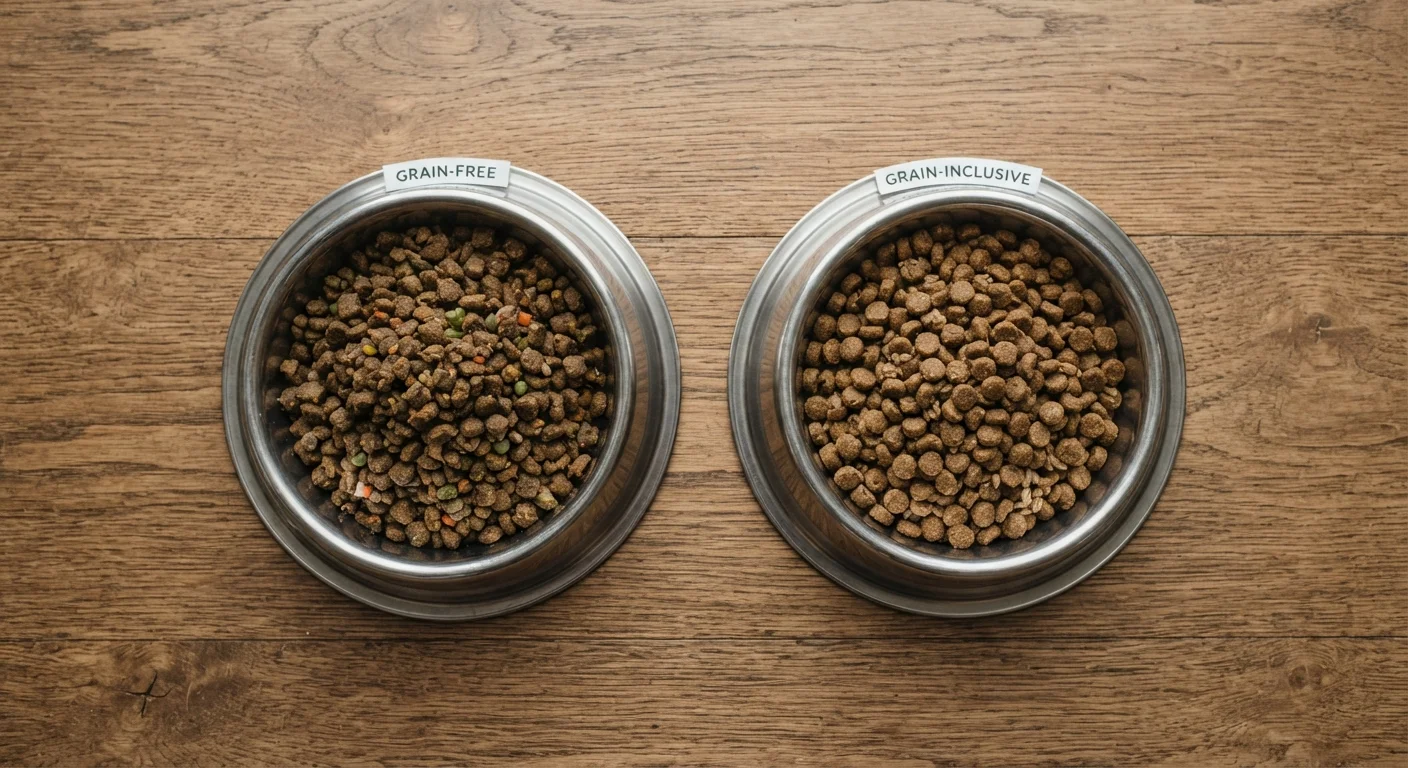
Photo credit: InGlimpse.com | Where Curiosity Finds Answers
In this article
The FDA's investigation into grain-free diets and dilated cardiomyopathy raised important questions. Here's what's known, unknown, and still evolving.
Key Takeaways
- The FDA investigated a possible link between grain-free diets and dilated cardiomyopathy (DCM) in dogs beginning in 2018.
- No definitive causal relationship between grain-free diets and DCM has been established as of the investigation's public updates.
- True grain allergies in dogs are relatively uncommon; most sensitivities involve proteins, not grains.
- Grain-inclusive diets have a longer history of safety testing and nutritional research behind them.
- Consulting a veterinarian or board-certified veterinary nutritionist is essential before changing your dog's diet.
What Started the DCM Debate
In July 2018, the U.S. Food and Drug Administration (FDA) issued an alert announcing it was investigating reports of dilated cardiomyopathy (DCM) — a serious condition where the heart muscle weakens and enlarges — in dogs eating grain-free diets. The cases were notable partly because they appeared in breeds not traditionally predisposed to DCM, such as Golden Retrievers and Labrador Retrievers.
The reports involved diets high in legumes (lentils, peas, chickpeas) and potatoes, which often serve as carbohydrate substitutes in grain-free formulas. Researchers and veterinary cardiologists hypothesized these ingredients might interfere with taurine metabolism — an amino acid critical to heart function — though the exact mechanism remained unclear.
The FDA published several updates through 2019, naming specific diet categories involved in reported cases, but the agency consistently noted that it had not established a definitive causal link. The investigation reflected genuine scientific concern, not a formal recall or regulatory finding of causation.
Where the FDA Investigation Stands
The FDA's investigation into diet-associated DCM generated significant public and veterinary attention, but did not result in a product recall or a formal causation finding. The agency has stated that the investigation is complex and that multiple factors — including genetics and individual dog metabolism — may contribute to DCM risk. Pet owners should check the FDA's website for the most current updates, as this remains an evolving area of research.
What the Science Actually Shows
Understanding this debate requires separating what is known from what remains uncertain. DCM has multiple causes, including genetics, infections, and nutritional deficiencies. Taurine-deficient DCM is a recognized, treatable subtype — and some dogs on grain-free diets have shown improvement after taurine supplementation and diet changes, which supports a nutritional hypothesis.
However, peer-reviewed evidence establishing grain-free diets as a direct, independent cause of DCM has not emerged conclusively. Some researchers have pointed out methodological limitations in how cases were reported and analyzed. The FDA's investigation wound down without a formal regulatory action, though the agency has said research is ongoing.
~1–2%
Dogs with true food allergies
Veterinary estimates suggest food allergies affect a small minority of dogs, with proteins — not grains — as the most common triggers.
560+
DCM cases reported to FDA (2014–2019)
The FDA's 2019 update identified over 560 reports of DCM potentially linked to diet, though the agency stressed causation was not established.
16
Diet brands cited in FDA's 2019 update
The FDA named 16 brands whose diets appeared most frequently in reported DCM cases, the majority of which were grain-free formulas.
True grain allergies are also much rarer than marketing might suggest. According to veterinary dermatology research, proteins — particularly beef, dairy, and chicken — are far more common dietary allergens in dogs than grains. This matters because many owners choose grain-free diets believing grains are the source of their dog's sensitivities.
For a broader look at how pet food labels can shape (and sometimes mislead) buyer perception, see our guide on what 'complete and balanced' actually means on a pet food label.
Head-to-Head: Key Differences
Both diet types can meet AAFCO nutritional standards on paper, but they differ meaningfully in ingredient composition, research depth, and associated risks. The table below highlights key contrasts.
| Criterion | Grain-Free | Grain-Inclusive |
|---|---|---|
| Primary carbohydrate source | Legumes, potatoes, sweet potatoes | Rice, oats, barley, corn, wheat |
| FDA DCM investigation involvement | Frequently cited in reported cases | Not associated with investigation |
| Long-term safety research | Limited; relatively newer category | Extensive; decades of feeding trials |
| Appropriate for grain allergy | Yes, if grain allergy is confirmed | Not suitable for confirmed grain allergy |
| Taurine metabolism concerns | Some evidence of potential interference | No identified concern |
| AAFCO compliance possible | Yes, many formulas qualify | Yes, most formulas qualify |
It's worth noting that not all grain-free diets are identical — formulations vary widely by manufacturer. Similarly, grain-inclusive diets range from simple whole-grain recipes to those using refined grain fractions. Reading the label carefully remains essential regardless of which category you're considering.
How to Make a Well-Informed Choice
Given the unresolved science, most veterinary nutritionists recommend defaulting to grain-inclusive diets for dogs without a confirmed medical reason to avoid grains. This isn't because grains are inherently superior, but because they carry a longer track record of safety and a deeper base of nutritional research.
If your dog has symptoms you suspect are diet-related — chronic digestive upset, skin issues, or lethargy — work with your veterinarian to identify the actual trigger before switching food categories. An elimination diet trial, supervised by a vet, is the standard diagnostic approach for suspected food sensitivities. Switching to grain-free on a hunch may not address the real problem and could introduce new variables.
For breeds with genetic predispositions to DCM (Doberman Pinschers, Boxers, Great Danes, Irish Wolfhounds), periodic cardiac screening is advisable regardless of diet. Discuss frequency and monitoring with your veterinarian.
Before making any diet change, our practical checklist for evaluating any pet food can help you assess nutritional adequacy and manufacturer transparency. And if grain-free claims sound compelling, our article on common pet nutrition myths is worth reading first.
This article is for general informational and educational purposes only and does not constitute veterinary or medical advice. Always consult a licensed veterinarian or board-certified veterinary nutritionist before making changes to your pet's diet, especially if your dog has an existing health condition.

Author
Pets Editorial Team
Pets Editorial Team is the collective byline for our editorial team and contributor network. Articles published under this byline or an editorial pen name are researched, written, and reviewed according to our editorial standards for clarity, consistency, and independence before publication.
View all articles →