
Reading the Label: What's Actually in Your Pet's Food
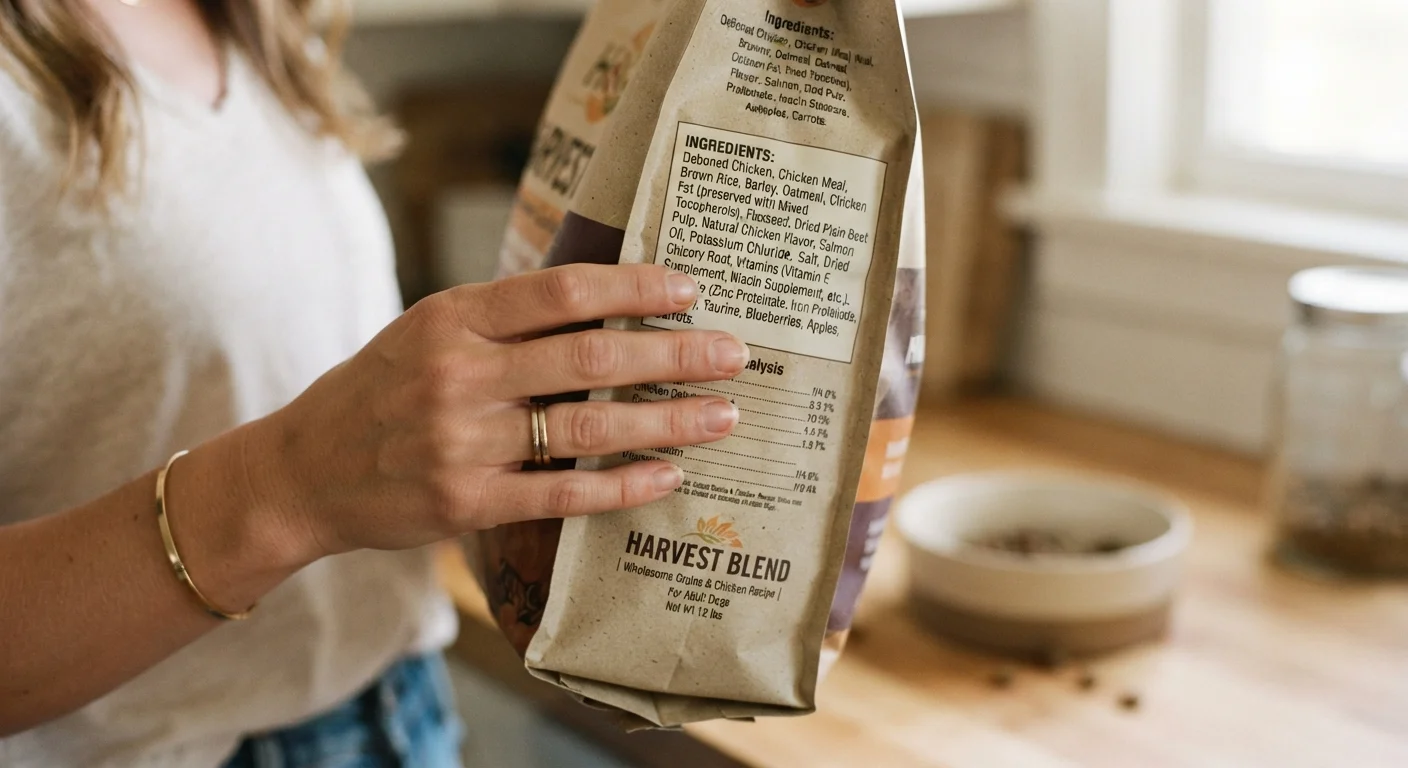
Photo credit: InGlimpse.com | Where Curiosity Finds Answers
In this article
Ingredient lists, guaranteed analysis, and AAFCO statements explained — so you can understand what you're feeding your dog or cat.
Key Takeaways
- Ingredients are listed by weight before processing, so moisture content affects their rank.
- The guaranteed analysis shows minimum or maximum nutrient levels, not exact amounts.
- An AAFCO nutritional adequacy statement tells you whether a food is complete and balanced for a specific life stage.
- Ingredient splitting can make less desirable ingredients appear lower on the list than they actually are.
- Marketing terms like 'natural' or 'holistic' have limited or no regulatory definition on pet food labels.
- Always consult your veterinarian before making significant changes to your pet's diet.
The Ingredient List: What's Really There
The ingredient list is the first place most owners look — and also the most misread section of any pet food label. Ingredients are listed in descending order by weight before processing. This is a critical detail: fresh chicken, for instance, is roughly 70% water. Once cooked, it shrinks dramatically, meaning an ingredient listed first may contribute far less to the finished food than it appears.
This doesn't make fresh meat a poor ingredient — it's nutritious and digestible — but it does mean the order of ingredients only tells part of the story. A food listing 'deboned chicken, chicken meal' uses two forms of the same protein; chicken meal is a concentrated, dried protein source that can actually deliver more protein per pound than its fresh counterpart.
Be aware of ingredient splitting, a labeling pattern where one ingredient appears in multiple forms (for example, 'brown rice,' 'rice bran,' and 'rice flour' listed separately). Each form ranks lower individually, but together they may outweigh the first-listed protein. Our ingredient list walkthrough explains these patterns in practical detail.
Look Past the Front of the Bag
Regulatory information — the ingredient list, guaranteed analysis, and AAFCO statement — lives on the back or side panel. Front-of-pack claims like 'natural' or 'premium' are marketing and carry little or no regulatory weight. Make the back panel your starting point when evaluating any new food.
The Guaranteed Analysis: Numbers with Limits
Directly below or beside the ingredient list, you'll find the guaranteed analysis — a panel listing minimum crude protein, minimum crude fat, maximum crude fiber, and maximum moisture. These are regulatory minimums and maximums, not exact measurements. A food stating '26% minimum crude protein' could legally contain 30% protein.
The numbers are also expressed on an as-fed basis, meaning they include the product's moisture content. This makes it difficult to directly compare a wet food (which may show 8% protein) with a dry kibble (which may show 30%), even if the dry matter protein content is similar. To compare accurately, you'd need to calculate dry matter percentages — a step explained by most veterinary nutritionists and worth asking your vet about.
2
Ways a pet food can substantiate an AAFCO adequacy claim
Per AAFCO model regulations: formulation against nutrient profiles, or controlled animal feeding trials — the latter is generally considered the more rigorous standard.
4
Required items in every guaranteed analysis panel
FDA regulations mandate minimum crude protein, minimum crude fat, maximum crude fiber, and maximum moisture on all commercial pet food labels sold in the US.
~70%
Water content of fresh meat before processing
Because ingredients are weighed before cooking, high-moisture proteins like fresh chicken rank higher on lists than their post-processing contribution may suggest.
The guaranteed analysis won't tell you about digestibility, ingredient quality, or amino acid completeness. For that level of detail, some manufacturers publish extended nutrient profiles; it's reasonable to contact a company directly or look for a board-certified veterinary nutritionist's involvement in formulation.
The AAFCO Statement: The Most Important Line on the Label
Perhaps the single most informative piece of text on any pet food label is the AAFCO nutritional adequacy statement. This statement, when present, confirms that the food is 'complete and balanced' for a specific life stage — such as adult maintenance, growth and reproduction (puppies or kittens), or all life stages.
A food meets this claim in one of two ways: by formulation (the recipe meets AAFCO's published nutrient profiles on paper) or by feeding trial (the food was fed to actual animals under controlled conditions and animals maintained acceptable health markers). Feeding-trial substantiation is generally considered a higher standard, though formulation-based foods can also be nutritionally sound.
If the label reads 'for intermittent or supplemental feeding only,' the food is not complete and balanced and should not serve as a pet's sole diet. This phrase often appears on treats, toppers, and certain specialty products. For a full explanation of what these regulatory phrases really mean, see our dedicated guide to AAFCO adequacy claims.
Marketing Language vs. Regulated Terms
Pet food packaging is rich with marketing language — 'natural,' 'holistic,' 'human-grade,' 'ancestral,' 'premium.' Only a handful of these terms carry any regulatory definition. AAFCO defines 'natural' as derived from plant, animal, or mined sources without chemically synthetic processes, but the term 'holistic' has no official definition whatsoever in pet food regulation.
'Human-grade' is occasionally used but is only meaningful if the entire food — ingredients and processing facility — meets USDA standards for human food. Most products using this phrase do not meet that bar, though some do; it requires verification rather than trust.
This dynamic closely mirrors what happens with human food marketing — a topic explored in our related piece on how 'healthy' packaged food labels can mislead. The pattern is familiar: emotive language on the front of the package, regulated information buried on the back.
Grain-Free Labels Deserve Extra Scrutiny
If you're considering a grain-free diet, it's worth knowing that the FDA investigated a potential link between grain-free diets and dilated cardiomyopathy (DCM) in dogs. The science remains evolving and no definitive cause has been established. Our article on the grain-free and DCM debate covers what is and isn't known. Speak with your veterinarian before choosing a grain-free formula.
For a structured way to evaluate any food beyond the label alone, the pet food evaluation checklist is a useful next step. And for broader context on your pet's nutritional needs, visit the Pet Nutrition hub.
This article provides general educational information about pet food labeling and is not a substitute for personalized veterinary advice. Always consult a licensed veterinarian or board-certified veterinary nutritionist before making significant changes to your pet's diet.
Frequently Asked Questions

Author
Pets Editorial Team
Pets Editorial Team is the collective byline for our editorial team and contributor network. Articles published under this byline or an editorial pen name are researched, written, and reviewed according to our editorial standards for clarity, consistency, and independence before publication.
View all articles →