
Unit Pricing: The Shelf Tag Detail Most Shoppers Ignore
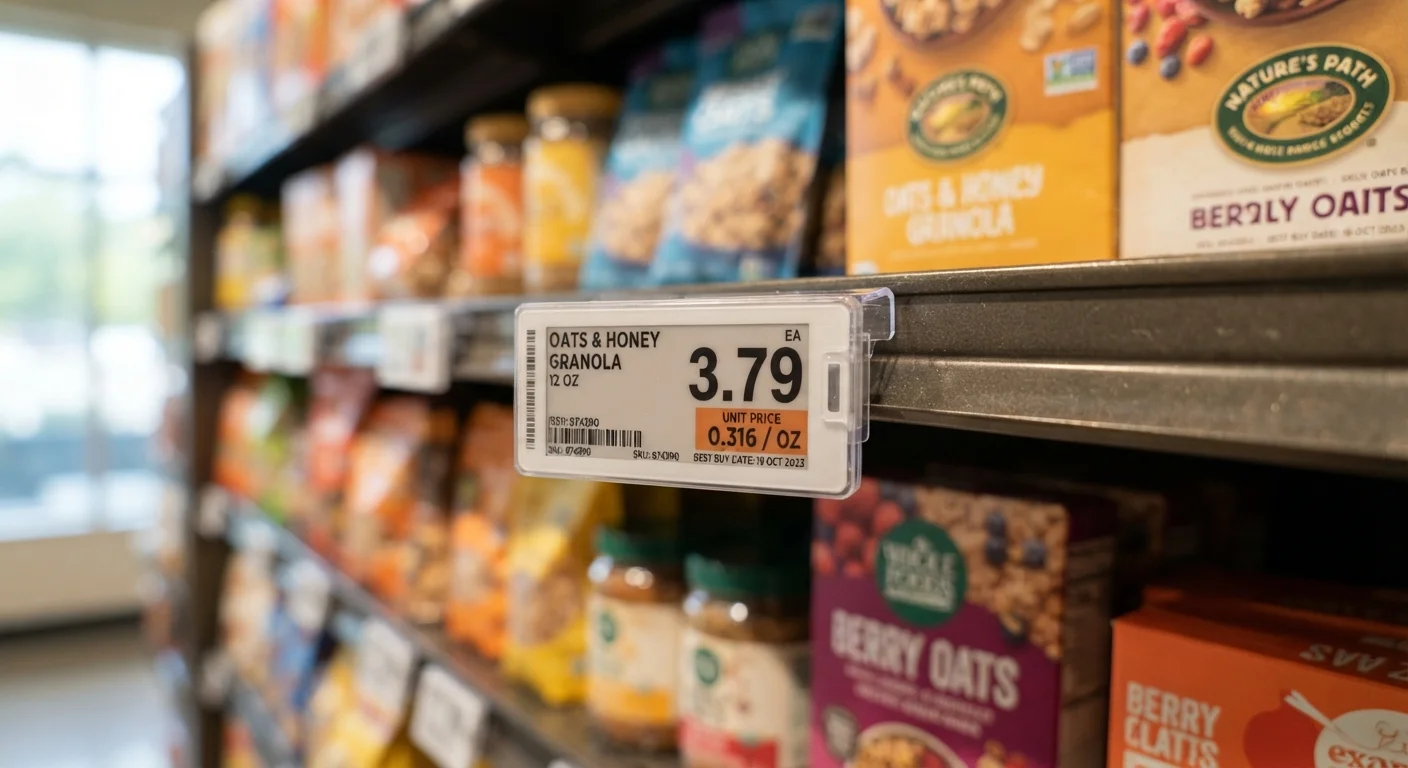
Photo credit: InGlimpse.com | Where Curiosity Finds Answers
In this article
Unit price labels reveal the true cost per ounce, count, or foot. Here's how to read them and use them to stretch your grocery budget.
Key Takeaways
- Unit price shows cost per common measurement, not per package — making size-to-size comparisons accurate.
- A larger package does not always have a lower unit price; this assumption costs shoppers money.
- Store brands and mid-size packages sometimes offer a better unit price than the largest size.
- Unit pricing labels use different base units, so always compare products using the same unit.
- Knowing how to read unit prices is a foundational grocery budgeting skill.
What the Small Number on the Shelf Tag Actually Means
Most shoppers focus on the large, bold total price on a shelf label and move on. The smaller figure — often tucked in a corner — is the unit price, and it's arguably the more useful number. It tells you what you're actually paying per ounce, per count, per square foot, or whatever standardized measurement applies to that product.
Without unit pricing, comparing a 12-ounce jar to an 18-ounce jar of the same product requires mental math most people skip. With unit pricing, the comparison is instant: whichever has the lower cost per ounce is the better value — assuming quality and need are equal.
This matters because retailers structure package sizes in ways that make direct price comparison difficult. Understanding unit pricing cuts through that complexity. It's the same concept that helps you evaluate a personal budget's true allocation — breaking a large number down into its component parts. Understanding where every dollar goes starts with knowing exactly what you're paying for each item in your cart.
Unit Pricing Laws Vary by State
More than two dozen U.S. states have passed some form of unit pricing regulation for grocery and household products, but the scope, enforcement, and product categories covered differ significantly. Some regulations apply only to stores above a certain size. If you shop at a smaller retailer or a discount club format and don't see unit prices, the store may not be legally required to display them — though you can always calculate the figure yourself.
The Biggest Misconception: Bigger Isn't Always Cheaper Per Unit
The assumption that the largest available size always delivers the lowest unit price is widespread — and frequently wrong. Retailers rotate promotional pricing on smaller sizes, which can temporarily make them cheaper per ounce than the jumbo option sitting right beside them. Store brands in mid-size formats sometimes undercut both the name-brand large size and the store-brand large size on a per-unit basis.
This pattern shows up regularly with products like cereal, shampoo, canned goods, and paper products. The only way to know for certain is to check the unit price directly. Assuming otherwise is one of the psychological pricing tactics retailers rely on — the expectation that bigger signals better value nudges shoppers toward larger (and sometimes higher-margin) packages.
32+
U.S. states with some form of unit pricing law
Requirements and enforcement vary widely; coverage and product categories differ by state statute.
~$1,500
Estimated average annual household grocery spending per person
Based on U.S. Bureau of Labor Statistics Consumer Expenditure data; small per-unit savings compound across hundreds of annual purchases.
How to Read Unit Price Labels Correctly
Unit price labels vary slightly by retailer, but they share a common structure. You'll typically see the unit price expressed as a dollar amount followed by the measurement — for example, $0.18 / oz or $1.24 / 100 ct. Here's what to check before comparing:
- Same unit? Confirm both products use the same base measurement. Comparing one product priced per ounce to another priced per pound requires a conversion first.
- Same product type? Unit pricing is only useful when comparing like-for-like. A concentrated detergent and a standard detergent aren't directly comparable by fluid ounce — one goes further per use.
- Sale impact? A sale price on a smaller package may create a temporarily lower unit price. Check whether a sale price or the regular price is reflected on the tag.
If a tag is missing a unit price, dividing the total price by the number of units listed on the package gives you the same figure. This quick calculation also applies when comparing products across categories — the same skill used to evaluate pet food labels by ingredient weight applies here to price-per-unit logic.
Screenshot the Shelf Tag for Later Reference
If you're comparing two products and want to think about it before committing, take a quick photo of the shelf tag with your phone. The unit price will be captured alongside the total price, giving you an accurate reference when you're ready to decide — no mental math required later.
Practical Situations Where Unit Pricing Pays Off
Unit pricing is most valuable when a category has many size and format options. The more choices available, the harder side-by-side comparison becomes — and the more a standardized per-unit figure helps.
Knowing what you actually consume also matters. A lower unit price on a large package isn't a saving if part of the product goes to waste before you use it — particularly relevant for fresh or perishable goods. This intersects with mindful consumption habits; understanding realistic serving sizes, for instance, helps you judge whether a bulk quantity is genuinely practical. See our article on understanding portion sizes without obsessive tracking for a practical take on realistic consumption estimates.
This article is for general informational and educational purposes only and does not constitute financial or professional advice. Pricing practices vary by retailer and region; always verify details at point of purchase.
Frequently Asked Questions

Author
Home Editorial Team
Home Editorial Team is the collective byline for our editorial team and contributor network. Articles published under this byline or an editorial pen name are researched, written, and reviewed according to our editorial standards for clarity, consistency, and independence before publication.
View all articles →