
Psychological Pricing Tactics Retailers Use — and How to Recognize Them
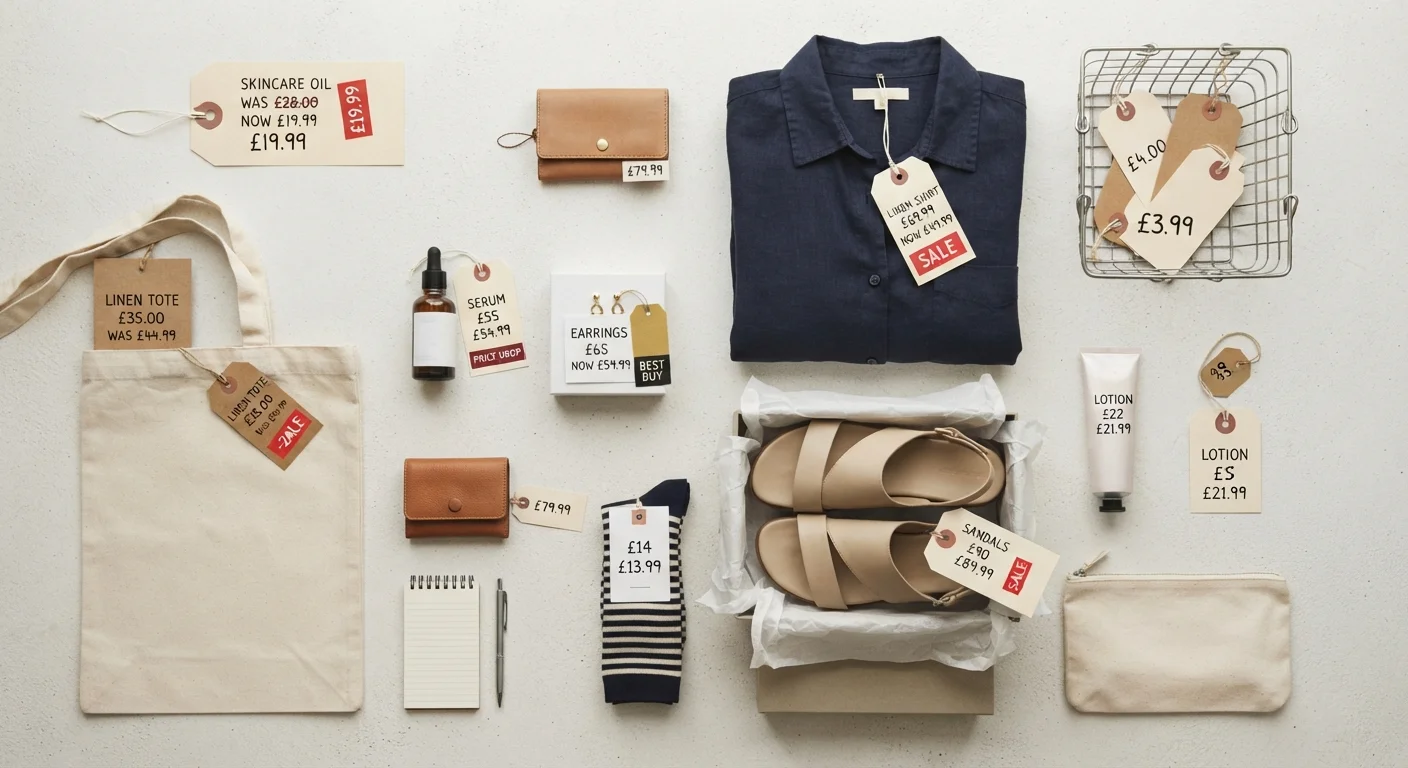
Photo credit: InGlimpse.com | Where Curiosity Finds Answers
In this article
From $9.99 to 'buy two, get one,' pricing strategies are designed to shape your decisions. Understanding them is the first step to shopping more deliberately.
Key Takeaways
- Charm pricing ($9.99 instead of $10) exploits how the brain reads numbers left to right, making prices feel smaller.
- Bundle deals and quantity minimums often push shoppers to buy more than they actually need.
- Artificial anchor prices and fake 'original' prices can make an ordinary retail price look like a discount.
- Recognizing these tactics doesn't require expertise — just a moment of deliberate evaluation before purchasing.
Pricing is designed — not neutral
Every price you see in a store or on a website has been deliberately set. That's not cynical — it's just how retail works. But beyond the dollar amount itself, the way a price is displayed, framed, and surrounded by other prices is also a choice. Retailers and their merchandising teams draw on decades of behavioral research to present prices in formats that tend to increase spending.
None of this requires a conspiracy theory. It simply means that being a more deliberate shopper involves recognizing the formats, not just the numbers. The six tactics below are among the most common you'll encounter — in grocery aisles, department stores, and online checkouts alike.
These tactics aren't inherently deceptive
Psychological pricing is a normal and legal part of retail strategy. Awareness of these techniques isn't about assuming bad faith from retailers — it's about giving yourself the information to make decisions that reflect your actual needs and budget, rather than reactions to framing.
Six pricing tactics worth knowing
Charm pricing: the power of $.99
Prices ending in .99 or .95 are among the most studied phenomena in consumer psychology. Because English-speaking readers process numbers left to right, a price of $4.99 registers closer to $4 than to $5 — even though the difference is a single cent. Researchers often call this the left-digit effect.
Retailers use charm pricing across categories, from groceries to electronics. The fix is straightforward: round the price up in your head before deciding whether it feels reasonable.
Rounding $4.99 up to $5 in your head neutralizes the left-digit effect instantly.
Anchor pricing and inflated 'original' prices
When a tag shows both a crossed-out 'original' price and a lower 'sale' price, the higher number acts as a psychological anchor. Even if the original price was never widely charged, its presence makes the current price feel like a bargain by comparison.
This practice is common enough that some states have rules governing how reference prices must be substantiated. To evaluate any sale tag critically, see our guide to what 'sale price' actually means.
An anchor price only creates perceived value — the current price still needs to stand on its own merits.
Bundle deals and quantity minimums
Offers framed as '3 for $10' or 'buy two, get one' are designed to increase total spend. In many cases, the per-unit price is identical whether you buy one or three — but the framing creates an implied obligation to buy the full quantity.
Before accepting a bundle, check the single-unit price. Unit price labels on grocery shelves make this comparison easy and are required in many states. If you don't need three, buying one is not 'leaving savings on the table.'
A bundle is only a deal if you would have bought that quantity at full price anyway.
Decoy pricing: making the middle option look right
When retailers offer three tiers — small, medium, and large — the middle option is often priced to feel like the obvious value. The expensive tier makes the middle seem reasonable; the cheap tier is sometimes priced close enough to the middle that it nudges buyers upward.
This is sometimes called the compromise effect or decoy effect in behavioral economics literature. It's common in streaming subscriptions, coffee sizing, and food service portions. Ask yourself: which size do I actually need, not which one seems like the smart pick relative to the others?
The 'middle option' often exists precisely to make you feel shrewd for choosing it.
Scarcity and urgency cues
Labels like 'Only 3 left!' or countdown timers create artificial pressure to decide quickly. When urgency is elevated, deliberate evaluation takes a back seat to impulse. These cues are especially common in online retail environments, where they can be generated dynamically regardless of actual inventory.
If a deal feels urgent, a useful countercheck is to ask: would this item or a comparable one be available tomorrow at a similar price? Common online shopping myths often exploit exactly this kind of time-pressure framing.
Manufactured urgency is designed to prevent the comparison shopping that works against the retailer.
Loyalty pricing that creates an illusion of exclusivity
Member prices and loyalty discounts are real savings in some programs — but in others, the 'non-member' price is inflated specifically to make the member price appear valuable. If the member price is consistently the only price anyone pays, it's effectively just the regular price with extra steps.
Evaluating whether a loyalty program genuinely benefits you — rather than primarily benefiting the retailer through data collection and spending lock-in — is worth doing before you sign up. Our loyalty program evaluation guide walks through what to look for.
If the member price is always available, it's simply the regular price dressed up as a perk.
Build a simple pre-purchase habit
Before completing any non-routine purchase, take 30 seconds to ask two questions: Do I need this quantity or size? And what would this item cost if there were no sale tag attached? These two checks neutralize the most common pricing tactics without requiring detailed research.
Shopping more deliberately — without overthinking it
The goal here isn't to approach every shopping trip with suspicion or to spend more time analyzing prices than actually buying things. Most of these tactics are neutralized by a single moment of deliberate thought: Is this price genuinely good for what I need, or does it just feel that way because of how it's displayed?
If you want to go further, understanding how seasonal pricing cycles work can also help you time non-urgent purchases. See our guide to shopping seasonality for a practical overview of when timing genuinely pays off. And before returning anything that didn't meet expectations, it's worth knowing your rights — our return policy guide explains what retailers can and can't refuse.
Recognizing pricing tactics takes practice, but it quickly becomes second nature — and it costs nothing.

Author
Home Editorial Team
Home Editorial Team is the collective byline for our editorial team and contributor network. Articles published under this byline or an editorial pen name are researched, written, and reviewed according to our editorial standards for clarity, consistency, and independence before publication.
View all articles →