
What Interior Designers Mean When They Talk About 'Scale'
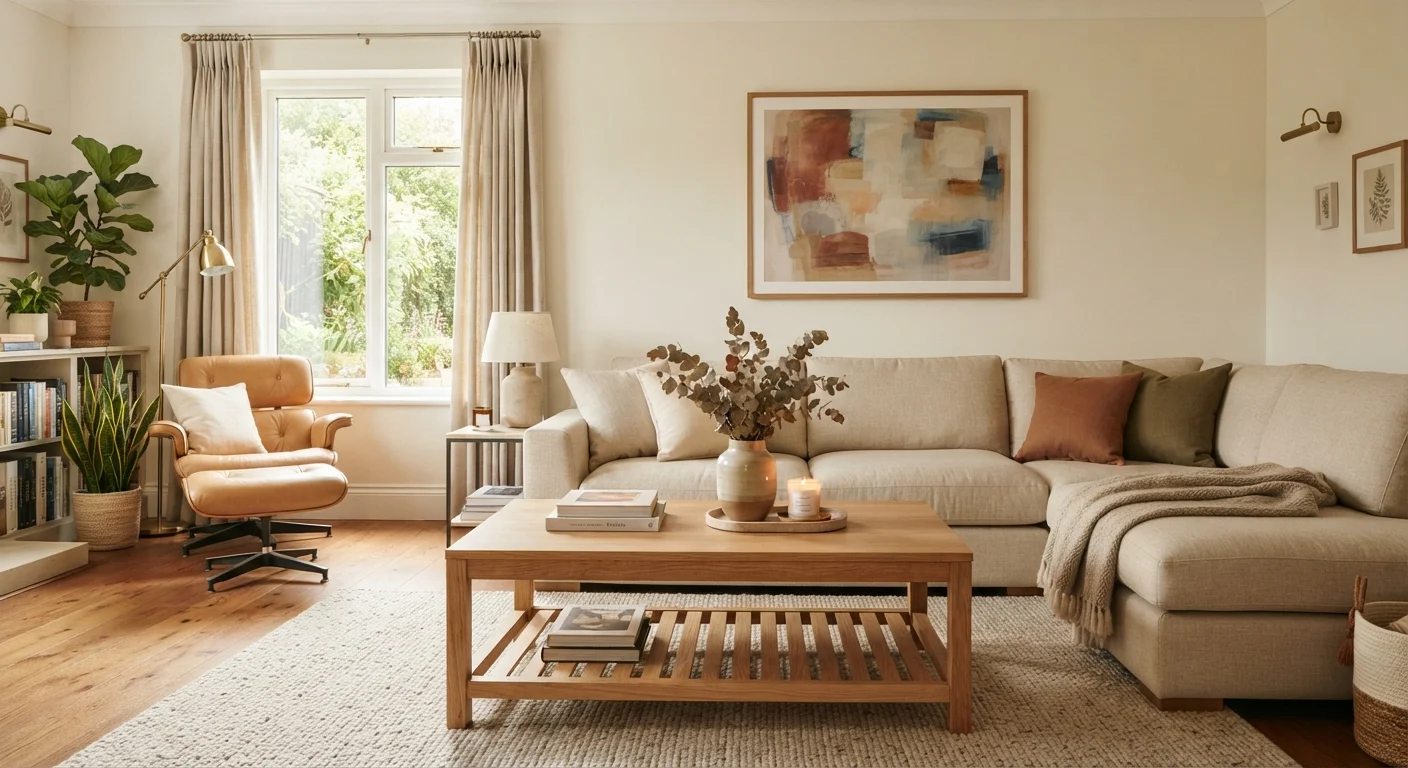
Photo credit: InGlimpse.com | Where Curiosity Finds Answers
In this article
Scale is one of the most referenced—and least explained—concepts in home decor. Here's what it actually means and why it matters.
Key Takeaways
- Scale describes how the size of an object relates to its surroundings, not its absolute dimensions.
- Mismatched scale is one of the most common—and fixable—reasons a room feels off.
- Ceiling height, room footprint, and existing furniture all affect whether a new piece will be in scale.
- Small rooms can handle larger-scaled pieces if chosen thoughtfully; tiny items almost always read as clutter.
- Checking scale before purchasing is as important as checking color or material.
Why Scale Gets Talked About So Much
Walk into a room that feels inexplicably uncomfortable and there's a reasonable chance scale is the culprit. A sofa that swallows the room. A dining table that seems marooned in open space. A piece of art so small it looks like an afterthought on a nine-foot wall. These are scale problems—and they're remarkably common.
Interior designers reference scale constantly because it operates beneath conscious awareness. Most people sense something is wrong before they can name it. Understanding the concept gives you a framework to diagnose the problem and, more importantly, avoid creating it in the first place.
Scale also interacts directly with visual weight, which explains why rooms can feel lopsided even when the furniture arrangement looks logical on paper.
Scale vs. Proportion: A Quick Clarification
Designers sometimes use 'scale' and 'proportion' interchangeably in casual conversation, which adds to the confusion. Technically, proportion describes size relationships within a single object—how a chair's arms relate to its seat, for example—while scale describes how that object relates to everything around it. For most decorating decisions, scale is the concept that does the most practical work.
The Core Idea: Size Is Always Relative
A seven-foot sectional is not inherently too big. In a 600-square-foot studio, it dominates. In an open-plan family room with twelve-foot ceilings, it might be exactly right. That relativity is the whole point.
When assessing scale, designers think about three relationships simultaneously:
- Object to room: Does this piece fit the square footage and ceiling height without overwhelming or disappearing?
- Object to object: Does this new chair relate sensibly in size to the existing sofa and side table?
- Object to human: Does furniture serve the people using it—seats at a comfortable height, tables at a functional reach?
All three layers matter. A piece can be perfectly proportioned to the room's footprint but feel wrong if it towers over every other element in the space.
Measure Before You Shop
Write down your room dimensions—length, width, and ceiling height—before visiting any showroom or browsing online. Knowing that your living room is 14 by 18 feet with 8-foot ceilings gives you an immediate filter: anything that would occupy more than roughly 60–70% of the floor area needs careful consideration. Having those numbers on hand takes the guesswork out of scale decisions in the moment.
Common Scale Mistakes—and How to Spot Them
The most frequent errors tend to fall into predictable patterns:
- Undersized rugs: A rug that only fits under the coffee table, leaving sofa legs floating on bare floor, is the single most common scale mistake in living rooms. Designers generally recommend that at least the front legs of all major seating rest on the rug.
- Small artwork on large walls: One medium-sized print centered on a wide expanse of wall rarely works. Either go larger or create a grouped arrangement with enough combined mass to hold the wall.
- Too many small accessories: A cluster of tiny objects reads as visual noise rather than intentional decor. Consolidating into fewer, larger pieces usually improves a space immediately.
These issues compound when rooms are decorated in isolation rather than as part of a connected whole. For a deeper look at that pitfall, see why decorating rooms in isolation backfires.
Practical Ways to Check Scale Before You Commit
The most reliable tool is simple: blue painter's tape on the floor. Outline the footprint of a sofa, rug, or table you're considering and live with it for a day. This low-stakes test reveals immediately whether the piece will fit or overwhelm the space.
For artwork and mirrors, cut kraft paper to the intended size and tape it to the wall. Standing back and looking at it from across the room gives a far more accurate read than any mental calculation.
If you're working with a small living space, strategies for small living rooms can help you apply scale thinking specifically to tighter footprints. And remember that scale doesn't work in isolation—color, pattern, and texture all interact with perceived size in ways that can make a well-scaled room feel even more cohesive.
Frequently Asked Questions

Author
Home Editorial Team
Home Editorial Team is the collective byline for our editorial team and contributor network. Articles published under this byline or an editorial pen name are researched, written, and reviewed according to our editorial standards for clarity, consistency, and independence before publication.
View all articles →