
The Honest Case For and Against Minimalist Home Decor
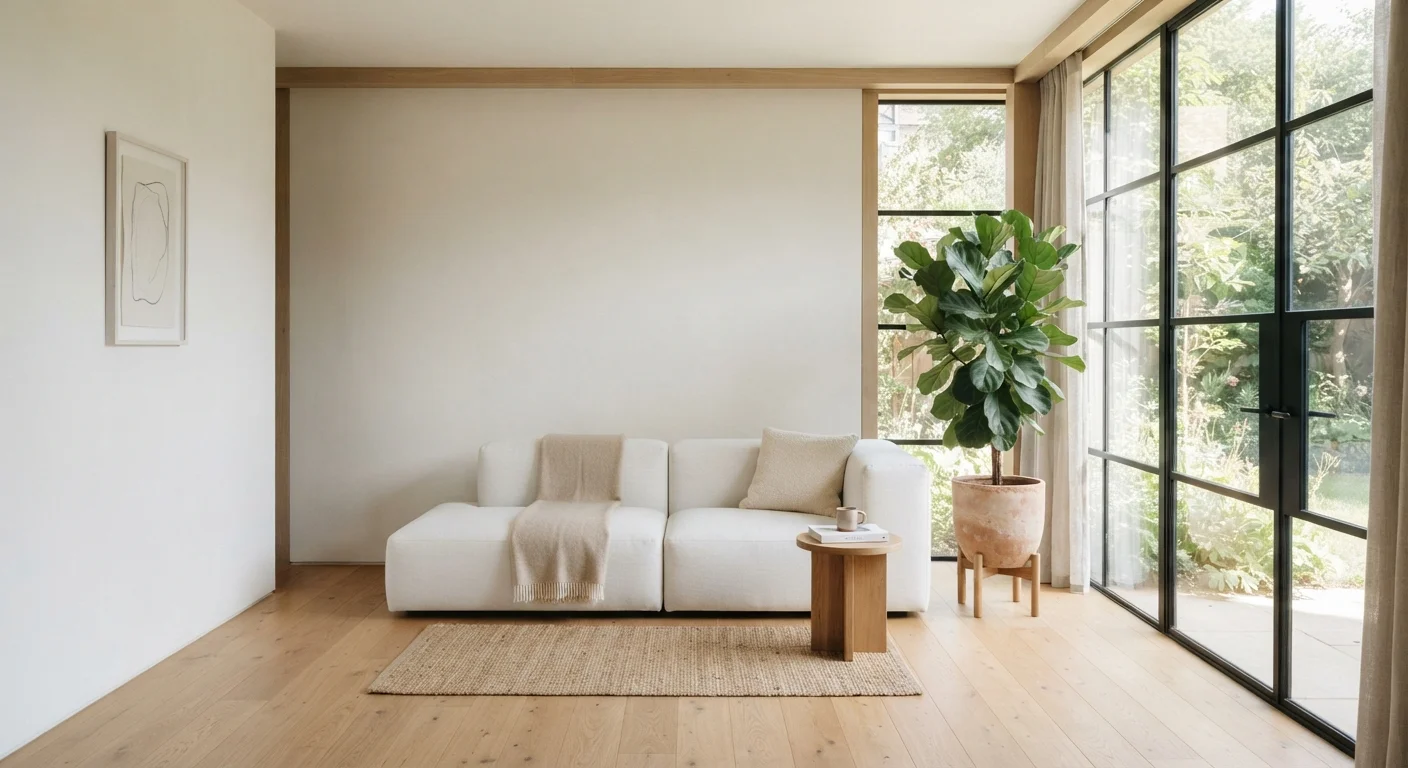
Photo credit: InGlimpse.com | Where Curiosity Finds Answers
In this article
Minimalism is widely admired but not always practical. A balanced look at what it genuinely offers and where it falls short for everyday living.
Key Takeaways
- Minimalist decor can reduce visual clutter and make small spaces feel larger.
- Maintaining a truly minimalist home requires ongoing discipline, not just a one-time declutter.
- The style can feel cold or impersonal if not balanced with warmth and texture.
- Minimalism works best when it matches how you actually live, not just how you want photos to look.
- A hybrid approach — paring back without going bare — suits many households better than strict minimalism.
Creates a greater sense of visual calm
Reducing the number of competing visual elements in a room lowers cognitive load. Designers and psychologists broadly agree that cluttered environments can contribute to stress, while ordered spaces tend to feel more restful.
Makes small spaces feel larger and airier
Negative space — intentional emptiness — is a well-established technique for making rooms read as bigger than their footprint. Minimal furniture and clear sightlines help a small room breathe.
Easier and faster to keep clean
Fewer objects on surfaces means less dusting, less rearranging, and faster tidying. This is one of the most practical and underrated benefits of a pared-back approach.
Encourages more deliberate purchasing decisions
Adopting a minimalist mindset naturally prompts you to question whether a new item genuinely adds value before bringing it home, which can reduce impulse spending over time.
Timeless aesthetic with long-term flexibility
Clean, neutral interiors tend to age well and are easier to update with small additions rather than wholesale redesigns. This flexibility can save money and effort over the long term.
Difficult to maintain with a full household
Children, multiple occupants, and active hobbies all produce physical objects that resist minimalist organization. The look demands consistent discipline that's easy to underestimate.
Can feel cold, sterile, or unwelcoming
Without careful attention to texture, natural materials, and warmth, minimalist rooms often feel more like display spaces than lived-in homes. Personality is harder to express in a stripped-back environment.
Functional storage needs don't disappear
People still need places for bills, keys, medications, seasonal items, and everyday tools. Minimalist design hides rather than eliminates these needs, which can create hidden chaos behind closed doors.
Not naturally suited to collectors or hobbyists
Books, instruments, artwork, and craft supplies are meaningful to many people. Minimalism as a rigid standard can pathologize normal ownership and create unnecessary tension with personal identity.
High-quality minimal pieces tend to be expensive
The minimalist ideal typically relies on a few well-made, visually quiet items. Furniture that reads as intentionally simple is often priced at a premium, making the look inaccessible on a limited budget.
What Minimalist Decor Actually Means
Minimalism in home decor is often defined by what it leaves out: excess furniture, decorative clutter, competing patterns, and anything without a clear purpose. The aesthetic emerged from mid-century modernist design principles and has been popularized through social media and design publications as shorthand for calm, intentional living.
In practice, it usually means neutral color palettes, clean-lined furniture, limited ornamentation, and deliberate negative space — the breathing room left empty on purpose. But there's a wide spectrum between a sparse, gallery-like interior and a home that simply avoids unnecessary accumulation. Understanding where you land on that spectrum matters before deciding whether minimalism is worth pursuing.
As with most design trends, the magazine version and the lived-in reality are rarely the same. Our guide on common decorating myths covers how aspirational aesthetics can set unrealistic expectations.
The Genuine Advantages
Minimalism has earned its popularity for substantive reasons, not just visual trends.
Creates a greater sense of visual calm
Reducing the number of competing visual elements in a room lowers cognitive load. Designers and psychologists broadly agree that cluttered environments can contribute to stress, while ordered spaces tend to feel more restful.
Makes small spaces feel larger and airier
Negative space — intentional emptiness — is a well-established technique for making rooms read as bigger than their footprint. Minimal furniture and clear sightlines help a small room breathe.
Easier and faster to keep clean
Fewer objects on surfaces means less dusting, less rearranging, and faster tidying. This is one of the most practical and underrated benefits of a pared-back approach.
Encourages more deliberate purchasing decisions
Adopting a minimalist mindset naturally prompts you to question whether a new item genuinely adds value before bringing it home, which can reduce impulse spending over time.
Timeless aesthetic with long-term flexibility
Clean, neutral interiors tend to age well and are easier to update with small additions rather than wholesale redesigns. This flexibility can save money and effort over the long term.
~10%
Average US home size increase since 1970s
Despite homes growing significantly larger over recent decades, surveys consistently show Americans feel they have less usable, organized space — suggesting accumulation has outpaced square footage.
1 in 4
US households with a garage too cluttered to park in
According to a survey by the US Department of Energy, roughly a quarter of two-car garage owners cannot fit even one car inside due to stored belongings — illustrating how quickly space fills up.
Beyond the visual benefits, minimalist spaces tend to be faster to clean and easier to maintain. With fewer surfaces covered and fewer objects to move around, routine tidying takes less time. That practical payoff is often understated in design coverage, which tends to focus on aesthetics over livability.
For renters working within strict limitations, a pared-back approach can also make the most of what's already there. See how this plays out in renter-friendly decorating strategies that work without permanent changes.
Where Minimalism Falls Short
The case against minimalism is worth taking seriously — especially for households that don't match the profile minimalist interiors assume.
Difficult to maintain with a full household
Children, multiple occupants, and active hobbies all produce physical objects that resist minimalist organization. The look demands consistent discipline that's easy to underestimate.
Can feel cold, sterile, or unwelcoming
Without careful attention to texture, natural materials, and warmth, minimalist rooms often feel more like display spaces than lived-in homes. Personality is harder to express in a stripped-back environment.
Functional storage needs don't disappear
People still need places for bills, keys, medications, seasonal items, and everyday tools. Minimalist design hides rather than eliminates these needs, which can create hidden chaos behind closed doors.
Not naturally suited to collectors or hobbyists
Books, instruments, artwork, and craft supplies are meaningful to many people. Minimalism as a rigid standard can pathologize normal ownership and create unnecessary tension with personal identity.
High-quality minimal pieces tend to be expensive
The minimalist ideal typically relies on a few well-made, visually quiet items. Furniture that reads as intentionally simple is often priced at a premium, making the look inaccessible on a limited budget.
Families with children, people who work from home across multiple functions, or anyone with hobbies that produce physical stuff — instruments, craft supplies, sports gear — often find the minimalist ideal difficult to maintain without constant effort. The style can subtly communicate that normal living is an aesthetic problem to be solved, which is an unfair burden.
If a small living room is your challenge, the solution isn't necessarily less — it's smarter arrangement. Our piece on decorating compact living rooms offers practical strategies that don't require you to own almost nothing.
Finding a Middle Ground That Actually Works
Most people benefit from the principles behind minimalism without needing to adopt it wholesale. Reducing visual noise, being selective about what you display, and resisting the impulse to fill every surface are all achievable without turning your home into a showroom.
Minimalism Is a Spectrum, Not a Ruleset
There's no official threshold at which a home qualifies as minimalist. The term is descriptive, not prescriptive. Applying selective minimalist thinking — reducing clutter on a single surface, committing to one color palette in a room — can deliver real benefits without requiring a wholesale lifestyle change. Think of it as a direction to move toward rather than a destination to reach.
A useful starting point is the room-by-room audit approach — identifying what's genuinely adding to a space versus what's simply accumulated. The room-by-room decor refresh checklist is a practical tool for exactly that kind of selective editing.
The goal isn't a particular look — it's a home that reflects how you actually want to live. For some households that means almost nothing on the walls; for others, it means one thoughtfully arranged shelf instead of five overcrowded ones. Both are valid outcomes of the same underlying thinking.

Author
Home Editorial Team
Home Editorial Team is the collective byline for our editorial team and contributor network. Articles published under this byline or an editorial pen name are researched, written, and reviewed according to our editorial standards for clarity, consistency, and independence before publication.
View all articles →