
Natural Light and Artificial Light: How Each Shapes the Feel of a Room
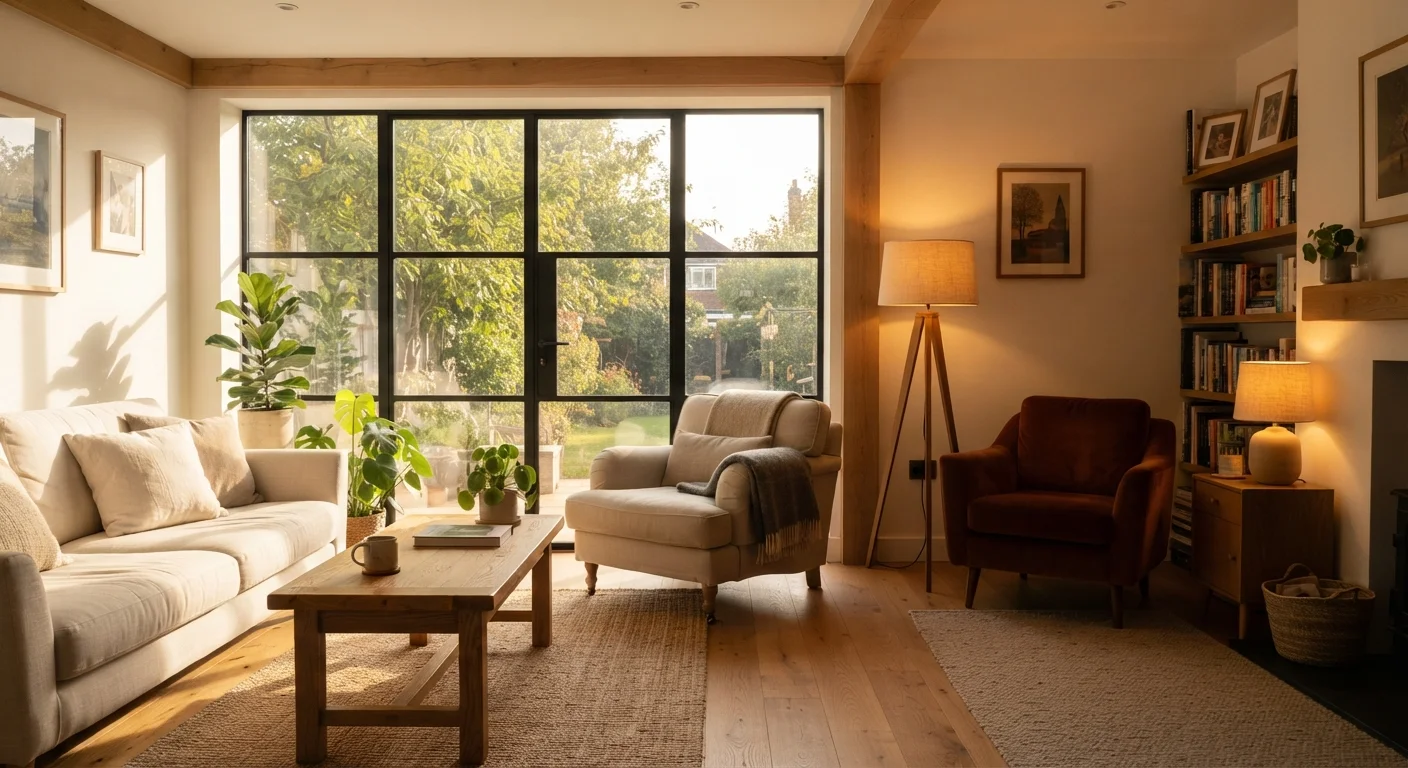
Photo credit: InGlimpse.com | Where Curiosity Finds Answers
In this article
Lighting affects color, mood, and perceived size. Understand how natural and artificial sources behave differently so you can use both well.
Key Takeaways
- Natural light changes throughout the day and varies by window orientation, making it dynamic but unpredictable.
- Artificial light is consistent and controllable, but its color temperature strongly influences how colors and textures read.
- The direction and quality of a light source — not just its brightness — shapes how large or intimate a room feels.
- Layering both light types gives you flexibility to match the room's mood to the time of day or activity.
- Paint colors, finishes, and fabrics can look dramatically different under natural versus artificial light — always test samples in situ.
Why Light Is a Design Material, Not an Afterthought
Most people think about furniture, color, and textiles when decorating — and treat lighting as something that gets sorted out last. In practice, light is the lens through which every other design decision is perceived. Change the lighting, and the same sofa, rug, and wall color can read entirely differently.
Both natural and artificial light affect three core dimensions of a room: color rendering (how accurately hues appear), perceived size and depth (how spacious or intimate the space feels), and mood (the emotional temperature of the environment). Understanding how each light source behaves lets you make deliberate choices rather than hoping for the best. For a broader look at how visual perception shapes a room, see how visual weight affects balance.
Natural Light: Dynamic, Directional, and Hard to Predict
Sunlight is full-spectrum — it contains the complete range of visible wavelengths, which is why colors tend to look most true-to-life in daylight. A paint chip that looks perfect in the hardware store under fluorescent tubes can read as a completely different shade once it's on your north-facing wall in January.
The key variables with natural light are orientation and time of day:
- South-facing rooms receive consistent, warm light throughout the day — they tend to amplify warm paint tones and can make cool colors feel more balanced.
- North-facing rooms get indirect, cooler light that can make colors shift slightly blue or gray, and shadows tend to be softer and more diffused.
- East-facing rooms are brightest in the morning and dim by afternoon; west-facing rooms do the opposite.
This dynamism is one of natural light's genuine strengths — a room can feel energizing at 9 a.m. and calm by 4 p.m. without any intervention. The drawback is that you can't control it. Glare, seasonal shifts, and tree canopy all affect what you actually get. If you have houseplants, orientation matters for them too — see matching plants to your actual light conditions for guidance.
~30%
Color appearance shift by light source
Research in color science consistently shows that the same painted surface can reflect noticeably different hues under daylight versus warm incandescent conditions — a shift users often underestimate when selecting paint in-store.
2700K–3000K
Most common residential bulb temperature
The U.S. residential lighting market has long gravitated toward warm white LED replacements in this range as direct successors to traditional incandescent bulbs.
Artificial Light: Consistent but Color-Shifting
Artificial light is controllable — you can set the intensity, direction, and (with the right fixtures) the color temperature. That control comes with a trade-off: different bulb types render colors differently, and the wrong choice can muddy your carefully selected palette.
Color temperature, measured in Kelvins (K), is the most important variable to understand:
- Warm white (2700–3000K) mimics incandescent light. It flatters skin tones and wood finishes, creates a cozy feel, and tends to amplify yellows, oranges, and reds while muting cool tones.
- Neutral white (3500–4000K) is closer to midday daylight. It reads as crisp and clean, making it a common choice for kitchens and workspaces.
- Cool white/daylight (5000–6500K) is the closest to natural sunlight and tends to make colors appear most accurate — useful in a studio or craft space, but often too harsh for living areas.
Beyond temperature, the direction of artificial light shapes perceived depth. Overhead-only lighting flattens a room; adding floor lamps, table lamps, or wall sconces creates layered shadows that give walls and furniture more dimension. This principle connects directly to how texture is revealed by raking light.
Test Bulbs Before Committing to a Fixture
Before installing multiple matching fixtures throughout a room, buy one bulb or a small set and live with it for a few evenings. Observe how your wall color, furniture, and artwork read under that light at different times of night. A color temperature that looks fine in a showroom can feel clinical or dingy in your actual space. Swapping bulb temperature is inexpensive; rewiring or replacing multiple fixtures is not.
How to Use Both Sources Together
The most effective approach in most homes is to treat natural and artificial light as complementary rather than competing. A few practical principles:
- Always test paint and fabric samples under both conditions. Hold a sample against the wall in full daylight and again under your evening lighting. If it works in both, you're on solid ground. This is one of the decor truths covered in common decorating myths worth revisiting.
- Layer your artificial sources. Aim for at least three light zones in a main living area: ambient (overall fill), task (focused on a work surface or reading spot), and accent (highlighting a texture or object).
- Use window treatments to modulate natural light. Sheer curtains diffuse harsh midday glare while preserving brightness. Blackout options give you full control in bedrooms or media rooms.
- Match color temperature to room function. Warmer bulbs in bedrooms and dining areas; cooler temperatures where focus and clarity matter.
If you want a structured way to audit each room's current lighting setup, the room-by-room decor refresh checklist walks through this and other high-impact adjustments room by room.
| Natural Light | Artificial Light | |
|---|---|---|
| Color rendering accuracy | Highest — full spectrum | Varies by bulb type and Kelvin rating |
| Controllability | Low — depends on orientation and weather | High — dimmable, directional, switchable |
| Consistency throughout the day | Changes with time, season, and sky | Consistent whenever switched on |
| Impact on mood | Dynamic; can energize or calm by time of day | Set by fixture choice and placement |
| Effect on perceived room size | Large windows visually expand a space | Depends on layering and directionality |
| Cost to adjust | Window treatments; structural changes are costly | Bulb swaps and fixtures are relatively low-cost |

Author
Home Editorial Team
Home Editorial Team is the collective byline for our editorial team and contributor network. Articles published under this byline or an editorial pen name are researched, written, and reviewed according to our editorial standards for clarity, consistency, and independence before publication.
View all articles →