
The Credit Utilization Rate: A Closer Look at a Heavily Weighted Factor
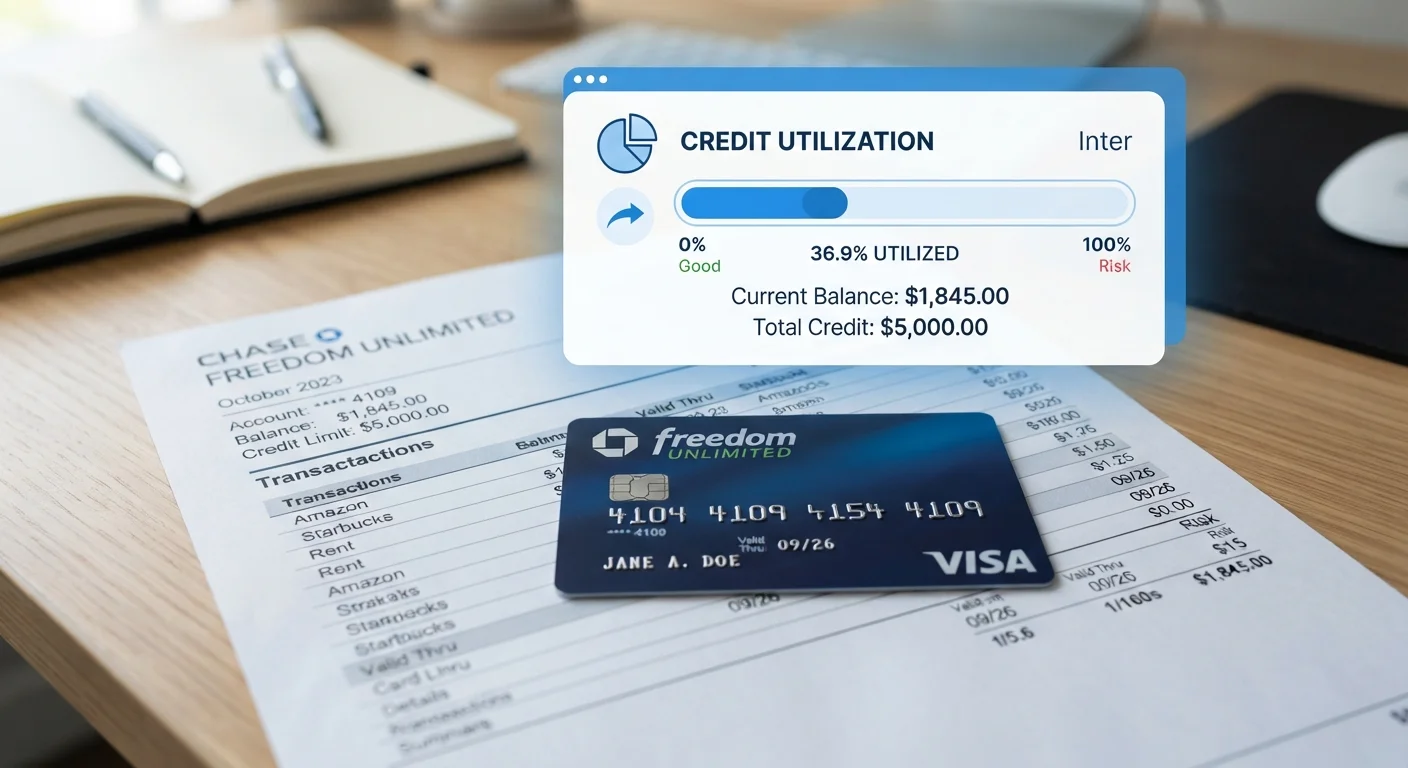
Photo credit: InGlimpse.com | Where Curiosity Finds Answers
In this article
Credit utilization is one of the most influential factors in your score, yet it's widely misunderstood. Learn what it is, how it's calculated, and how it shifts.
Key Takeaways
- Credit utilization accounts for roughly 30% of a FICO Score, making it one of the most impactful factors you can directly control.
- Both your overall utilization across all cards and the utilization on each individual card can affect your score.
- Keeping utilization below 30% is a widely cited guideline, but lower rates — often under 10% — tend to produce the best scoring outcomes.
- Utilization is not a permanent mark; it updates when issuers report new balances, so it can shift quickly in either direction.
- Actions like paying down balances, requesting a credit limit increase, or keeping paid-off accounts open can all reduce your utilization rate.
Why Utilization Carries So Much Weight
Of all the factors that shape a credit score, credit utilization is one of the few that consumers can meaningfully shift in a short period of time. Under the FICO scoring framework, the "Amounts Owed" category — which utilization dominates — represents approximately 30% of a score. Only payment history, at around 35%, carries more influence. For a full breakdown of how each scoring factor fits together, see our guide to what credit scores actually measure.
The reason lenders and scoring models focus on utilization is straightforward: a borrower who consistently uses a high proportion of their available credit may be signaling financial stress, reduced ability to absorb unexpected expenses, or increased reliance on credit to cover everyday costs. Conversely, someone who maintains low balances relative to their limits demonstrates that they can access credit without depending on it.
~30%
FICO score weight for Amounts Owed
According to FICO, the Amounts Owed category — heavily driven by credit utilization — accounts for approximately 30% of a standard FICO Score.
<10%
Utilization rate common among top scorers
Consumers with FICO Scores in the exceptional range (800+) typically carry utilization rates well below 10%, according to FICO data on high-scoring consumers.
30%
Widely cited utilization guideline
Consumer financial education sources, including the Consumer Financial Protection Bureau, commonly reference 30% as a general utilization threshold to stay under for credit health.
How Credit Utilization Is Actually Calculated
Utilization is calculated in two distinct ways, and both matter.
- Overall utilization: The sum of all revolving balances divided by the sum of all revolving credit limits. If you carry $3,000 across three cards with a combined $15,000 in limits, your overall utilization is 20%.
- Per-card utilization: Each individual card's balance relative to its own limit. A card with a $500 balance and a $1,000 limit sits at 50% — a figure that can drag your score down even if your overall rate looks healthy.
Only revolving credit lines — primarily credit cards and home equity lines of credit (HELOCs) — factor into these calculations. Installment debt like auto loans or mortgages is tracked separately and does not count toward your utilization rate.
One detail many people miss: the balance that gets reported to credit bureaus is typically your statement balance, not the amount you owe on any given day. That means a card you pay in full every month may still show a non-zero utilization depending on when your issuer transmits data to the bureaus.
Practical Ways to Manage Your Utilization
Because utilization recalculates monthly, it responds faster to corrective action than most other credit factors. Several strategies can help lower it.
Pay Down Balances Strategically
Targeting cards where utilization is highest — rather than spreading payments evenly — tends to produce the biggest scoring benefit per dollar paid. Per-card utilization matters, so a maxed-out card with a low limit can be disproportionately damaging.
Consider Requesting a Credit Limit Increase
A higher limit on an existing card immediately lowers your utilization percentage, assuming your balance stays the same. Most issuers allow limit increase requests without a hard inquiry, though some may pull your credit, which carries its own minor implications. Learn more about how those inquiries work in our explanation of hard versus soft inquiries.
Keep Paid-Off Accounts Open
Closing a credit card removes its limit from your available pool. Even if you never use it, an open account with a zero balance contributes positively to your total available credit. This is one area where the instinct to "clean up" your credit file can backfire — a point explored further in our article on common credit score myths.
Time Your Payments Carefully
Making a payment before your statement closing date — rather than by the due date — can reduce the balance your issuer reports to the bureaus. This is sometimes called "paying ahead of the statement."
Pay Before Your Statement Closes
If you want to lower the balance your issuer reports to the credit bureaus, make your payment before your statement closing date — not just by the due date. Many issuers report your statement balance, so reducing it before that snapshot is taken can lower your reported utilization for that billing cycle. Check your account's statement closing date to time your payments effectively.
Putting Utilization in Context
Credit utilization is powerful, but it is one piece of a larger profile. If you're preparing for a significant borrowing decision, reviewing your full credit picture — including payment history, account age, and recent inquiries — is essential. Our credit readiness checklist walks through exactly what to evaluate before submitting a loan application.
The broader takeaway: unlike a missed payment, which stays on your report for seven years, a high utilization rate carries no permanent mark. Bring the balance down and your score can respond within a single reporting cycle. That responsiveness makes utilization one of the most actionable levers in personal credit management — but it requires consistent attention, not a one-time fix.
This article is for general informational and educational purposes only and does not constitute personalized financial or credit advice. Individual results will vary. Consult a qualified financial professional for guidance specific to your situation.
Frequently Asked Questions

Author
Finance Editorial Team
Finance Editorial Team is the collective byline for our editorial team and contributor network. Articles published under this byline or an editorial pen name are researched, written, and reviewed according to our editorial standards for clarity, consistency, and independence before publication.
View all articles →