
Physical vs. Chemical Exfoliation: Choosing the Right Approach for Your Skin
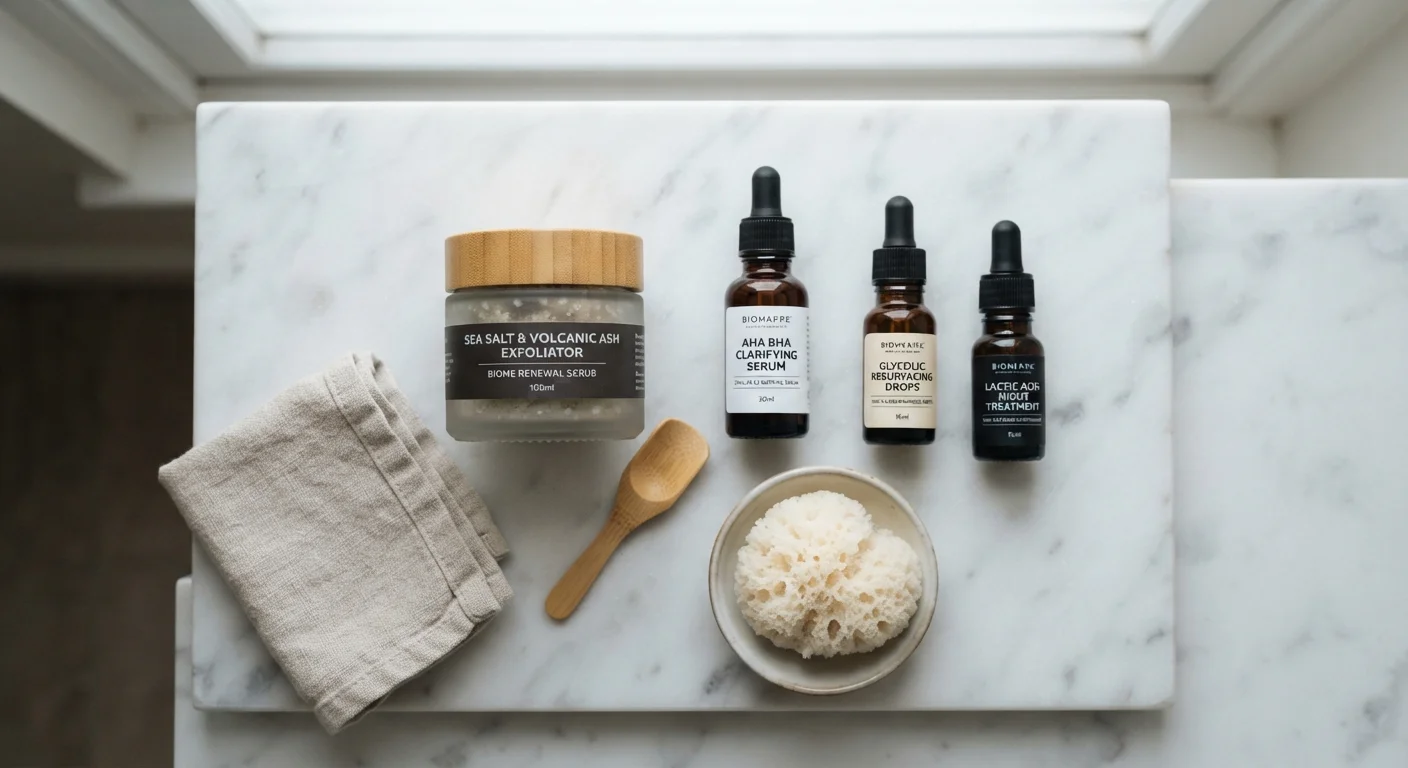
Photo credit: InGlimpse.com | Where Curiosity Finds Answers
In this article
Scrubs and acids both exfoliate, but they work very differently. Here's how to weigh each method against your skin type and goals.
Key Takeaways
- Physical exfoliation uses manual friction; chemical exfoliation uses acids or enzymes to dissolve dead skin cells.
- Neither method is universally superior — the right choice depends on your skin type and specific concerns.
- Over-exfoliating with either method can damage the skin barrier and worsen sensitivity.
- Chemical exfoliants (AHAs, BHAs, PHAs) are generally considered more consistent and less likely to cause micro-tears.
- Many dermatologists recommend starting slowly with either method and building frequency gradually.
How Each Method Actually Works
Exfoliation — the process of removing dead skin cells from the surface of the skin — is one of the most widely recommended steps in any skincare routine. But not all exfoliation is created equal, and the two main approaches operate on fundamentally different principles.
Physical exfoliation relies on friction. A scrub, cleansing brush, or textured cloth manually loosens and lifts dead cells from the skin's surface. The effect is immediate: skin often feels softer right after use. The limitation is that this mechanical action only works on the outermost layer and, if the particles are irregular or sharp, can cause micro-tears in the skin barrier.
Chemical exfoliation uses active compounds — primarily alpha-hydroxy acids (AHAs), beta-hydroxy acids (BHAs), or enzymes — to dissolve the bonds holding dead skin cells together. AHAs such as glycolic and lactic acid work at the surface and are water-soluble, making them well-suited for targeting dullness and uneven tone. BHAs, most notably salicylic acid, are oil-soluble and can penetrate into pores, making them particularly relevant for oily or acne-prone skin. PHAs (polyhydroxy acids) are a gentler, larger-molecule option often recommended for those with sensitivity.
Understanding which mechanism aligns with your skin's needs is the first step. For a fuller picture of how your skin type shapes product choices, see our guide to identifying your skin type.
Side-by-Side: Key Differences at a Glance
The table below summarises where the two approaches diverge across the criteria that matter most when building a routine.
| Criterion | Physical Exfoliation | Chemical Exfoliation |
|---|---|---|
| Mechanism | Manual friction removes surface cells | Acids/enzymes dissolve intercellular bonds |
| Depth of action | Surface only | Surface to within pore (BHAs) |
| Speed of results | Immediate smoothness | Gradual improvement over days/weeks |
| Skin barrier risk | Micro-tears possible with coarse particles | Irritation if concentration too high or overused |
| Best skin types | Normal, combination (gentle use) | Oily, acne-prone, sensitive (PHAs), dry (AHAs) |
| Learning curve | Low — intuitive to use | Moderate — requires understanding acid types |
| Sun sensitivity increase | Minimal | Yes, especially with AHAs |
One pattern worth noting: chemical exfoliants tend to deliver more even, consistent results because the active ingredient reaches skin uniformly rather than depending on how much pressure a person applies. Physical exfoliants, by contrast, give the user more moment-to-moment control — useful when you want to focus on specific areas like the nose or forehead.
Matching the Method to Your Skin Type and Concerns
No single exfoliation method suits every skin type. Here's how to think through the decision:
- Oily or acne-prone skin: BHAs are widely regarded as the most effective chemical option, as their oil-solubility allows them to work inside follicles. Gentle physical exfoliation can complement this, but avoid harsh scrubs that strip the barrier and trigger excess oil production.
- Dry or flaky skin: AHAs — particularly lactic acid, which also has mild humectant properties — can help improve cell turnover without stripping moisture. Physical scrubs used too aggressively on dry skin can exacerbate flakiness rather than resolve it.
- Sensitive or reactive skin: PHAs are often recommended as a starting point. Physical scrubs with uniform, rounded particles (such as sugar) are gentler than those with irregular fragments, but caution is still warranted.
- Combination skin: A targeted approach often works well — for example, a BHA to address the oily T-zone and a low-concentration AHA for drier areas.
~80%
Of dermatologists favour chemical exfoliants
A survey published in the Journal of Clinical and Aesthetic Dermatology found the majority of board-certified dermatologists preferred chemical over physical exfoliants for general recommendation to patients.
1–3x
Recommended exfoliation frequency per week
Most skincare guidelines suggest exfoliating one to three times weekly, depending on skin type and the strength of the product used.
Regardless of method, frequency matters as much as product choice. Most skin types respond best to exfoliating one to three times per week, allowing adequate time for the skin barrier to recover between sessions. Over-exfoliating — a common misstep — can lead to redness, sensitivity, and a compromised barrier. Our article on habits that quietly undermine a good skincare routine covers this and other frequent errors in more detail.
Using Exfoliants Safely Within Your Routine
Whichever method you choose, a few consistent practices help minimise the risk of irritation:
- Start low and slow. Begin with the lowest effective concentration or the gentlest physical option, and increase frequency only if your skin tolerates it well after several weeks.
- Apply SPF the morning after chemical exfoliation. AHAs in particular increase photosensitivity, making daily broad-spectrum sun protection non-negotiable.
- Avoid combining actives carelessly. Using a chemical exfoliant alongside retinol or vitamin C in the same application can overwhelm the skin. Our guide to layering skincare products explains the sequencing logic behind these combinations.
- Read ingredient labels. Knowing the concentration of an acid helps you gauge its strength before first use. If ingredient lists feel opaque, our ingredient label explainer demystifies the process.
A Note on Skin Aging and Exfoliation Needs
Cell turnover naturally slows with age, which can make exfoliation increasingly relevant through your 30s and 40s. However, skin may also become more sensitive over time, meaning the method and frequency that worked in your 20s may need adjusting. Our article on skincare by decade explores how priorities shift and when it may be worth reassessing your exfoliation approach.
This article is for general informational purposes only and is not a substitute for professional dermatological advice. If you have a skin condition, persistent irritation, or concerns about a new ingredient, consult a qualified dermatologist before making changes to your routine.

Author
Style Editorial Team
Style Editorial Team is the collective byline for our editorial team and contributor network. Articles published under this byline or an editorial pen name are researched, written, and reviewed according to our editorial standards for clarity, consistency, and independence before publication.
View all articles →