
Your Hair Type, Explained: Curl Patterns, Porosity, and Density
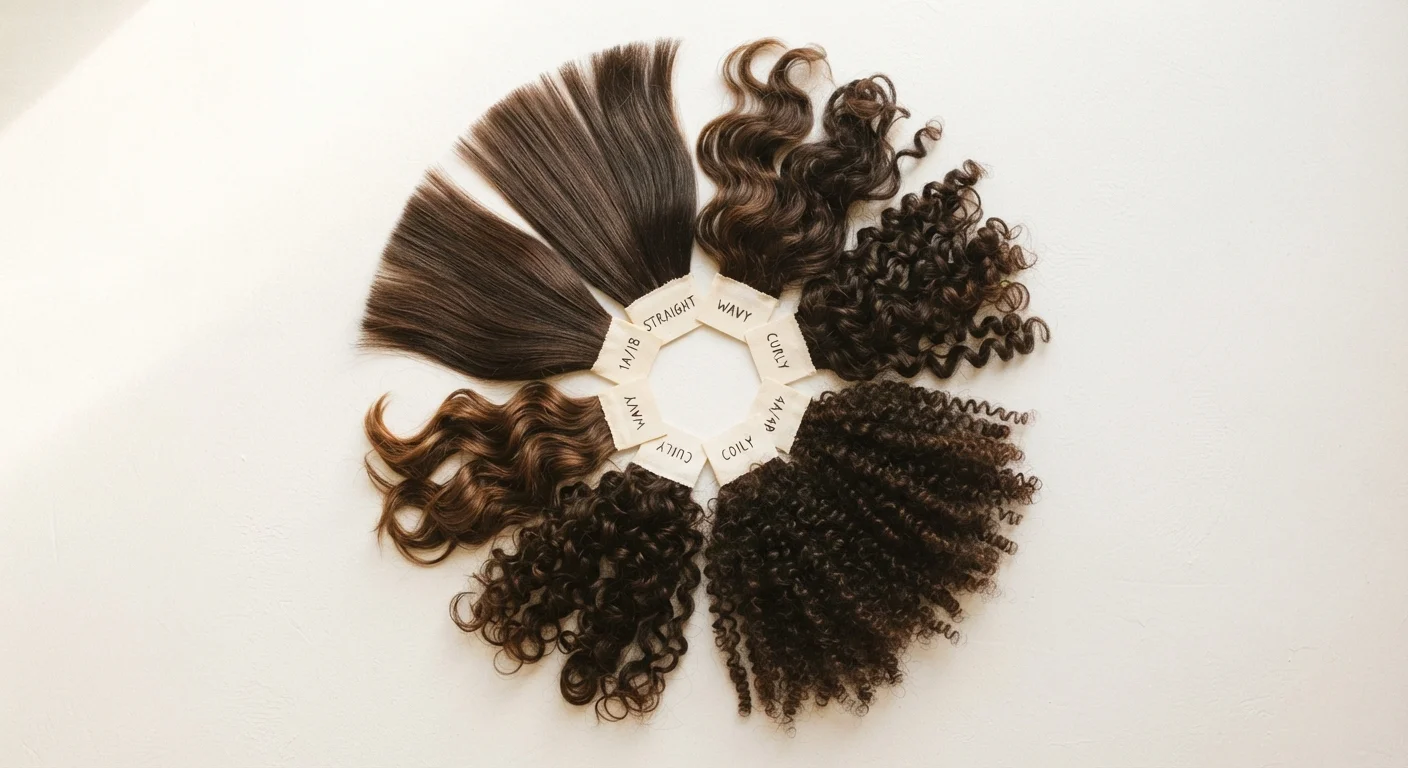
Photo credit: InGlimpse.com | Where Curiosity Finds Answers
In this article
Learn how to identify your hair type, porosity, and density — and why these traits determine which routines and products work for you.
Key Takeaways
- Curl pattern, porosity, and density are the three core traits that define your hair type.
- Porosity — how well your hair absorbs and retains moisture — is often the most critical factor in product selection.
- High-density hair and low-density hair typically require different product weights and application methods.
- No single hair care routine works universally; understanding your traits allows you to customize effectively.
- Most people have a combination of hair characteristics, not a single defining type.
Curl Pattern: The Shape of Your Strand
Curl pattern is typically the first characteristic people identify — it's the most visually obvious. The widely used numerical classification system sorts hair into four broad categories: Type 1 (straight), Type 2 (wavy), Type 3 (curly), and Type 4 (coily or kinky). Each category is further divided into subcategories — A, B, and C — to reflect the tightness or looseness of the curl or wave.
Type 2A hair forms soft, barely-there waves, while 2C waves are more defined and prone to frizz. Type 3A curls are loose and springy; 3C curls are tight corkscrews. Type 4 hair ranges from soft coils (4A) to densely packed zigzag patterns (4C) that may appear shorter than their actual length due to shrinkage.
It's worth noting that most people have more than one curl pattern on their head — the crown, sides, and nape often behave differently. Evaluating your hair in its natural, unmanipulated state (clean, air-dried, product-free) gives the most accurate picture. For a broader look at how these traits fit into your overall routine, see the full-spectrum hair care guide covering scalp health and styling.
Assess Curl Pattern on Wash Day
For the most accurate curl pattern reading, evaluate your hair after a gentle cleanse with no styling products applied. Diffuse or air-dry naturally, then observe. Applying creams or gels before assessing can stretch or alter your natural curl formation, making it harder to identify your true pattern.
Porosity: How Your Hair Handles Moisture
Porosity is arguably the most important trait to understand when building a hair care regimen. It describes how well your hair cuticle — the outermost, overlapping layer of each strand — opens and closes to absorb and retain moisture.
- Low porosity: Cuticles lie flat and tightly packed. Water and products sit on the surface rather than penetrating easily. Hair may take a long time to get fully wet and even longer to dry. Lightweight, water-based products tend to work better than heavy creams.
- Medium (normal) porosity: Cuticles allow moisture in and hold it reasonably well. This type is the most flexible and generally responsive to a wide range of products.
- High porosity: Cuticles are raised or have gaps, absorbing moisture readily but losing it just as fast. Hair may feel dry or brittle despite regular conditioning. Richer moisturizers and sealants (like oils applied after a water-based product) can help lock moisture in.
If you're constantly applying moisture products but your hair still feels parched, porosity may be the overlooked factor. Our article on why your hair feels dry no matter what you put on it explores this in detail. Similarly, choosing between a standard conditioner and a deep conditioner often depends on your porosity level — something covered in our guide on conditioners vs. deep conditioners vs. hair masks.
Porosity Can Be Affected by Damage
Chemical treatments like bleaching, relaxing, or repeated heat styling can raise and roughen the cuticle, causing previously low- or normal-porosity hair to behave as high porosity. If your hair's behavior seems to have changed significantly after a chemical process, it's worth reassessing your porosity rather than assuming your original type still applies.
Density and Strand Width: Volume and Texture
Density and strand width are two distinct measurements that are often conflated. Density refers to the number of hairs per square inch on your scalp. A simple way to assess it: look at your scalp through your hair. If it's immediately visible without parting, you likely have low density. If you have to search for it, density is probably high.
This matters for product and styling choices. High-density hair holds styles well but can feel weighed down by heavy products. Low-density hair may benefit from lighter formulas and volumizing techniques to avoid limpness.
Strand width (also called texture or coarseness) is about how thick each individual hair is. Fine strands are more fragile and can be overwhelmed by heavy oils; coarse strands are more resilient and may need more intensive moisture treatments to feel soft. You can gauge your strand width by rolling a single strand between your fingers — fine hair is barely perceptible, while coarse hair has a noticeable thickness.
These traits work in combination. High-density, coarse hair has entirely different needs than low-density, fine hair, even if both share the same curl pattern. Once you understand all three characteristics, you're ready to start building a hair care routine from the ground up that's genuinely tailored to your hair.
4
Main curl pattern categories in common classification
The 1–4 typing system, popularized by stylists and hair educators, provides a widely used shorthand for describing natural curl shape.
3
Levels of hair porosity recognized by hair professionals
Low, medium, and high porosity are the three tiers used by cosmetologists to guide moisture and product recommendations.
~100,000
Average number of hair strands on a human scalp
According to general dermatological reference ranges, most adults have between 80,000 and 120,000 individual hair follicles, though this varies by genetics and hair color.
Frequently Asked Questions

Author
Style Editorial Team
Style Editorial Team is the collective byline for our editorial team and contributor network. Articles published under this byline or an editorial pen name are researched, written, and reviewed according to our editorial standards for clarity, consistency, and independence before publication.
View all articles →