
Dry Kibble vs. Wet Food: Nutritional Trade-Offs Worth Knowing
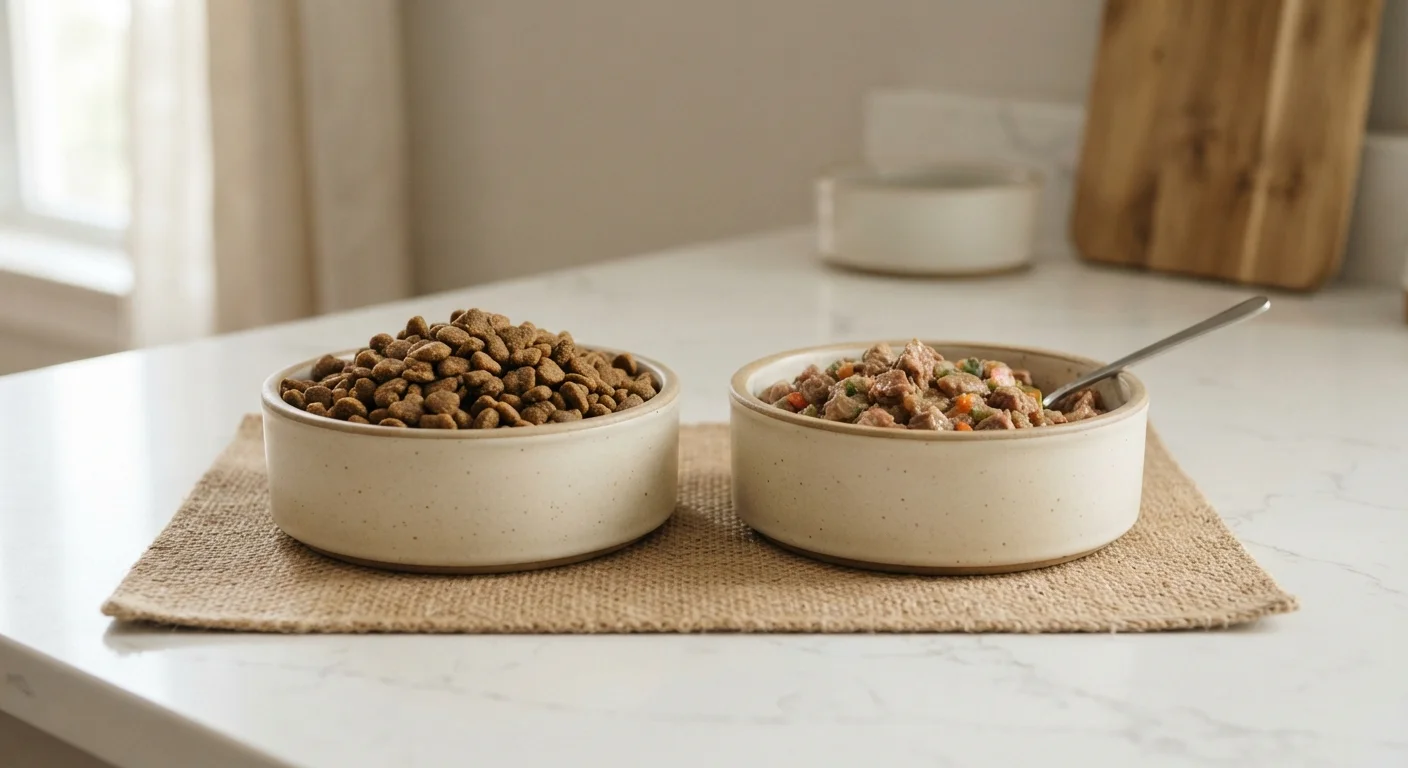
Photo credit: InGlimpse.com | Where Curiosity Finds Answers
In this article
How do dry and wet pet foods differ in moisture, protein density, and digestibility? Here's what the evidence suggests for dogs and cats.
Key Takeaways
- Wet food contains 70–80% moisture, making it a meaningful source of daily hydration — especially important for cats.
- Dry kibble is more calorie-dense by weight, so portion control is critical to preventing overfeeding.
- Both formats can meet AAFCO nutritional standards when properly formulated; format alone doesn't determine quality.
- Cats with urinary tract issues may benefit from wet food's higher water content, though a vet should guide any dietary change.
- Mixing dry and wet food can balance cost, convenience, and palatability without sacrificing nutritional adequacy.
Moisture Content: More Than Just Thirst
The most fundamental difference between dry and wet pet food is water content. Dry kibble typically contains 8–12% moisture, while canned or pouch-based wet food ranges from 70–82%. That gap has real physiological consequences, particularly for cats.
Cats evolved as desert-dwelling animals whose prey provided most of their hydration. Domestic cats fed exclusively on dry food often drink insufficient water to compensate, which can contribute to lower urinary tract disease and chronic kidney stress over time. Veterinary nutritionists frequently highlight increased dietary moisture as a practical strategy for cats with recurrent urinary issues — though any dietary change for a health condition should involve a veterinarian's guidance.
Dogs are more flexible drinkers and typically self-regulate water intake more reliably, but wet food can still benefit dogs who are ill, recovering, or simply reluctant to drink enough on their own. For more on how these needs shift across a pet's life, see how nutritional needs evolve from puppyhood to senior years.
| Criterion | Dry Kibble | Wet Food |
|---|---|---|
| Moisture content | 8–12% | 70–82% |
| Calorie density (by volume) | Higher | Lower |
| Protein (dry-matter basis) | Comparable when formulated well | Comparable when formulated well |
| Cost per serving | Generally lower | Generally higher |
| Shelf life (unopened) | 12–18 months | 2–5 years (canned) |
| Dental texture benefit | Mild abrasive effect | Minimal |
| Palatability for picky eaters | Variable | Generally higher |
| Ease of portion control | Easy to measure | Requires refrigeration after opening |
Calorie Density and Protein: Reading Past the Label
A common source of confusion is the raw protein percentage on a pet food label. Wet food may list 8–10% crude protein while kibble shows 25–30% — yet both can deliver similar protein on a dry-matter basis once moisture is removed from the equation.
To compare foods fairly, nutritionists use dry-matter basis (DMB) calculations, which strip out water and compare nutrients on equal footing. On this scale, a well-formulated wet food often delivers comparable or higher protein than many dry foods. Calorie density, however, remains higher in kibble — meaning a cup of dry food typically contains significantly more calories than the same volume of wet food. This makes portion discipline especially important with kibble to avoid gradual weight gain.
Digestibility is another factor the label doesn't capture directly. Research suggests that some wet foods show slightly higher apparent digestibility coefficients for protein and fat, though results vary considerably by formulation, protein source, and processing method. For a deeper look at how protein sources themselves compare, the comparison of animal vs. plant-based protein in pet food is worth reading alongside this article.
70–82%
Moisture in wet pet food
Compared to 8–12% in dry kibble — a difference with meaningful implications for feline hydration and urinary health.
~3–4x
Calorie density difference by volume
Dry kibble is roughly three to four times more calorie-dense by volume than wet food, underscoring the importance of weight-appropriate portioning.
~90%
US households feeding primarily dry food
Industry surveys consistently show dry kibble dominates American pet feeding practices, though wet food use as a supplement has grown steadily.
Formulation Quality: Format Isn't Everything
Neither kibble nor wet food is inherently superior — quality depends on formulation, not packaging. Both formats can meet the nutritional standards set by the AAFCO, the body whose model regulations most US states use to govern commercial pet food. An AAFCO "complete and balanced" statement on the label indicates the food has either been tested through feeding trials or formulated to meet established nutrient profiles.
Processing does affect nutrient availability to some degree. Kibble undergoes high-heat extrusion, which can reduce certain heat-sensitive nutrients — manufacturers typically compensate by adding these back post-processing. Wet food is usually cooked at lower temperatures (retort sterilization), which may preserve more naturally occurring nutrients but also introduces its own changes to protein structure.
Common misconceptions about ingredient quality in both formats are addressed in nutrition myths that veterinarians want pet owners to reconsider. Before switching your pet's food format entirely, this checklist for evaluating any pet food can help you assess what matters most.
Mixing Formats Is a Legitimate Strategy
Many veterinary nutritionists consider a mixed-feeding approach — offering wet food once daily and dry kibble at other meals — a practical middle ground. It increases overall moisture intake, improves palatability, and can reduce feeding costs compared to an all-wet diet. If you choose to mix, ensure the combined daily calorie intake stays within your pet's recommended range to avoid unintentional weight gain. Your veterinarian can help calculate appropriate portions for a mixed-feeding plan.

Author
Pets Editorial Team
Pets Editorial Team is the collective byline for our editorial team and contributor network. Articles published under this byline or an editorial pen name are researched, written, and reviewed according to our editorial standards for clarity, consistency, and independence before publication.
View all articles →